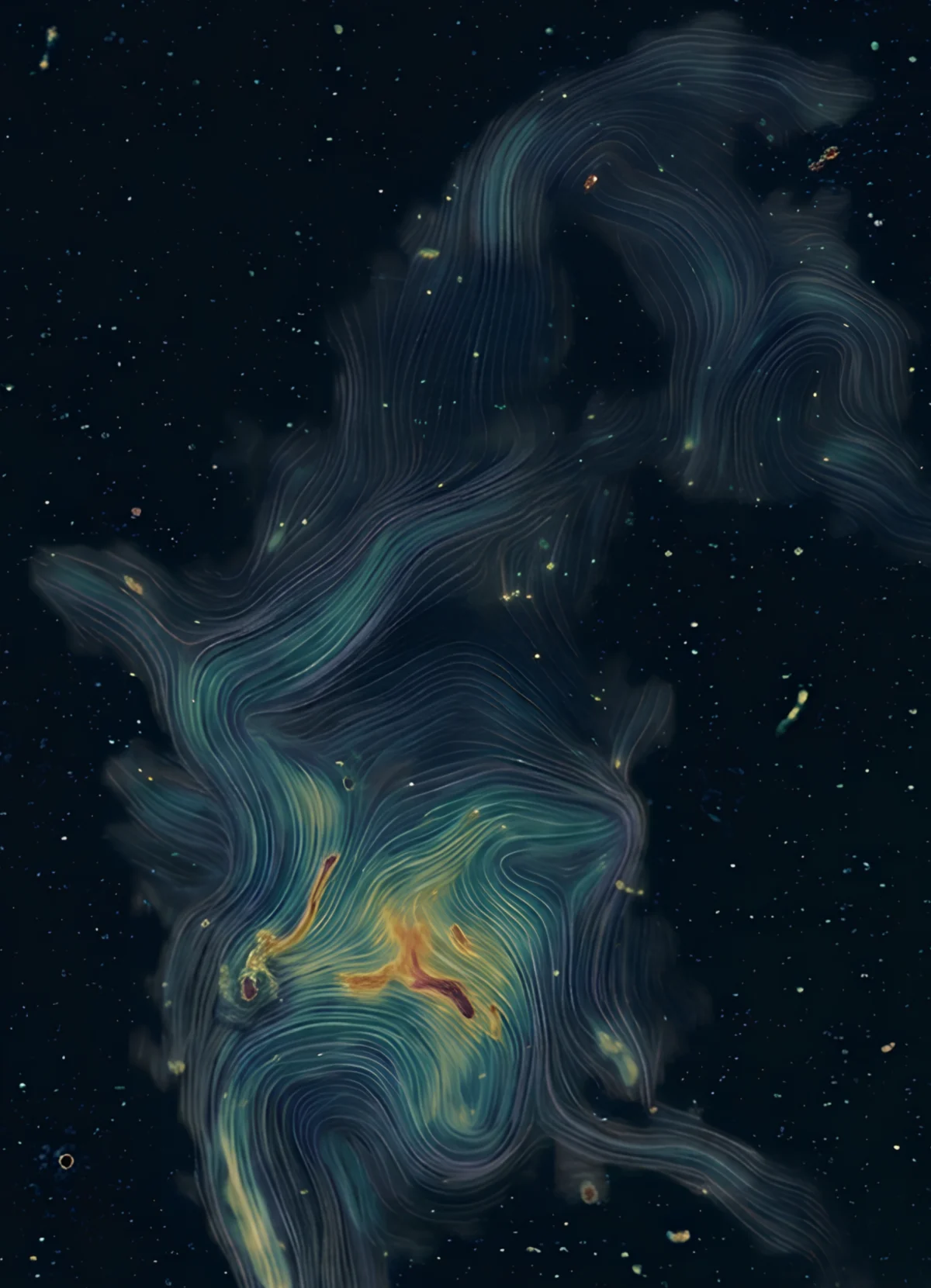
For the first time in the history of observational cosmology, astronomers have successfully reconstructed the complex magnetic architecture of an entire galaxy cluster, stretching from its dense, luminous core to its diffuse, outermost reaches. This monumental achievement, centered on the galaxy cluster Abell 2255, offers a rare glimpse into the "invisible" forces that govern the evolution of the universe’s largest structures.
The research, led by a team at the Italian National Institute for Astrophysics (INAF), utilizes unprecedented data captured by the Low Frequency Array (LOFAR)—a pan-European radio telescope network. By peering into the radio-frequency spectrum, scientists have moved beyond merely identifying where galaxies exist to mapping the magnetic fields that thread through the hot, ionized gas connecting them.
The Cosmic Laboratory: What is Abell 2255?
Located approximately one billion light-years from Earth, Abell 2255 has long been a subject of intense interest for astrophysicists. It is a massive, sprawling structure, acting as a "cosmic laboratory" for observing the violent, energetic processes involved in the assembly of the universe.
Galaxy clusters are the largest gravitationally bound structures in the cosmos. They are not merely collections of galaxies, but complex systems containing thousands of galaxies, vast reservoirs of superheated gas, and an even greater, mysterious component: dark matter. Within these clusters, magnetic fields permeate the intergalactic medium, though they are notoriously difficult to detect.
Abell 2255 is particularly famous for its spectacular radio emissions. These emissions are generated by relativistic electrons—particles accelerated to nearly the speed of light—interacting with the magnetic fields embedded within the cluster’s gas. By capturing these faint signals, researchers can "see" the magnetic scaffolding that supports the cluster’s internal dynamics.
Chronology of the Discovery: A 224-Hour Deep Dive
The road to this discovery was paved by the "LOFAR Galaxy Cluster Ultra-Deep Field" project. Recognizing that the signals from these weak magnetic fields are incredibly elusive, the research team committed to an extraordinary observational effort: 224 hours of continuous radio image collection.
This marathon of data gathering allowed the team to filter out background noise and focus on the faint, diffuse radio "glow" emanating from the cluster. Once the data was secured, the team employed an innovative, state-of-the-art data analysis technique. This method allowed them to correlate the radio signal intensity with the orientation of magnetic field lines, transforming raw radio maps into a structured, three-dimensional representation of the cluster’s magnetic topology.
This achievement marks a transition from "point-source" astronomy—where we look at individual objects—to "field-mapping" astronomy, where we look at the environment that connects these objects.
Supporting Data: Organization Amidst Chaos
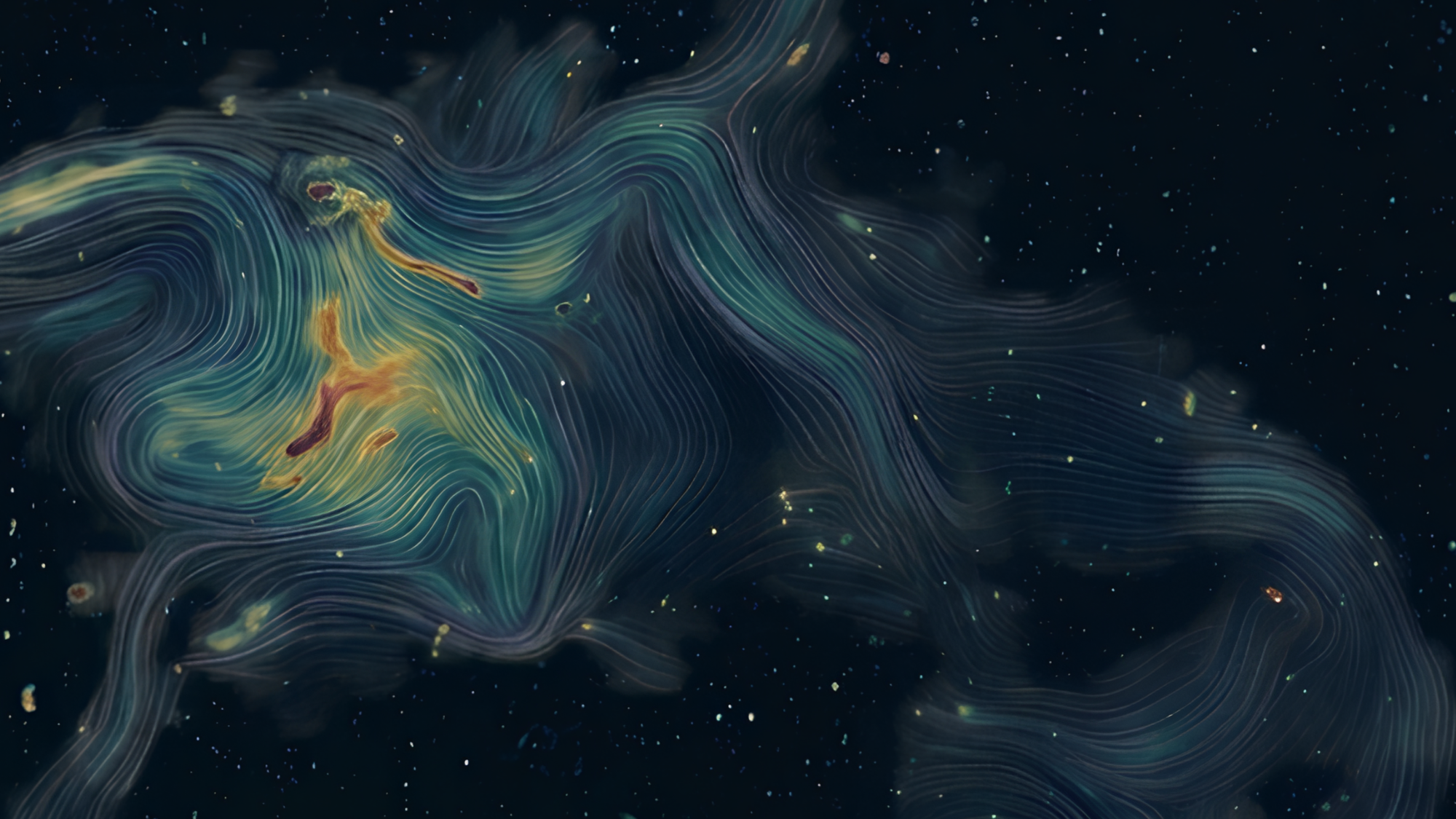
One of the most surprising findings from the study is that the magnetic fields within Abell 2255 are not, as previously hypothesized, a chaotic or random jumble of lines. Instead, the data reveals a high degree of organization.
The Mechanics of Magnetic Stretching
The team found that the magnetic fields follow specific geometric patterns. In certain regions, the fields stretch radially, aligning with the extended radio emissions. In other areas—specifically those dominated by massive shock waves—the magnetic fields are oriented tangentially.
These configurations are not coincidental. They are the direct result of the "accretion" process. As the galaxy cluster grows, it pulls in surrounding gas and dark matter. This influx of matter creates massive movements, turbulence, and shock waves within the cluster’s hot gas. As the gas flows, it acts like a fluid, physically "stretching" and "compressing" the magnetic field lines like taffy.
The Role of Relativistic Electrons
The research confirms that the magnetic fields serve as the essential catalyst for the radio emissions observed. Without these fields, the high-speed electrons would not emit the radio waves that LOFAR is designed to detect. The study proves that the intensity of these radio emissions is directly proportional to the strength and alignment of the magnetic field, providing a diagnostic tool for future cluster studies.
Official Perspectives: Insights from the Field
Andrea Botteon, the lead author of the study and a researcher at INAF, emphasized the significance of these findings in a recent statement.
"Obtaining very sensitive images of galaxy clusters at radio wavelengths is crucial to understanding how electrons are accelerated to relativistic speeds and magnetic fields are amplified on large cosmic scales," Botteon explained. He noted that the primary challenge of the research was the "elusiveness" of the signal. "We believe that the mechanism that ‘turns on’ these gigantic radio emissions is linked to the formation process of galaxy clusters."
Botteon’s team believes that by observing how these fields are shaped, they can effectively "read" the history of the cluster. "The coherence of the magnetic field lines observed in some regions of the cluster suggests that the morphology of the field is intimately linked to the dynamics of the gas in which it resides," he added.
This implies that the magnetic field is not a static background element, but a dynamic participant in the life cycle of the cluster. It is a record-keeper of the violent mergers and gravitational collapses that occurred millions, or even billions, of years ago.
Implications: Rewriting Our Understanding of Cosmic Evolution
The findings at Abell 2255 have profound implications for our understanding of the "Cosmic Web"—the vast, filamentary network of galaxies and dark matter that makes up the large-scale structure of the universe.
Shaping the Universe
For decades, cosmologists have understood that gravity drives the formation of galaxy clusters. However, the role of magnetic fields in this process has been largely theoretical. The observation that magnetic fields are "carved out" by the same dynamics that allow clusters to accrete gas suggests that magnetic fields are fundamental to the assembly of the universe. They are not merely an afterthought; they are a primary force shaping the distribution of matter.
New Frontiers in Astrophysics
This research serves as the first observational evidence linking galactic growth mechanisms to magnetic field morphology. This opens a new frontier in high-energy astrophysics. Future studies will likely aim to apply these same techniques to other massive clusters to see if the "magnetic blueprint" discovered in Abell 2255 is a universal feature.
If magnetic fields are indeed structured by gas dynamics in all clusters, it will force a significant revision of existing cosmological models. It suggests that magnetic pressure and tension may play a much larger role in resisting or accelerating gravitational collapse than previously assumed.
Conclusion: A New Window into the Invisible
The work conducted by the LOFAR team represents a paradigm shift. By successfully reconstructing the magnetic field of Abell 2255, astronomers have illuminated one of the darkest, most elusive components of the galaxy cluster environment.
The study, which has been accepted for publication in the journal Astronomy & Astrophysics and is currently available on the arXiv pre-print server, provides a roadmap for the next generation of radio astronomy. As technology improves and telescopes become even more sensitive, we will likely be able to map the magnetic web that connects every cluster in the universe, finally bringing the "invisible" architecture of our cosmos into sharp focus.
We are no longer just looking at the stars and galaxies; we are beginning to see the currents and pressures of the vast, magnetic ocean in which they swim. This is not just a study of a single cluster; it is the beginning of a deeper, more profound conversation about how the universe organizes itself on the grandest of scales.