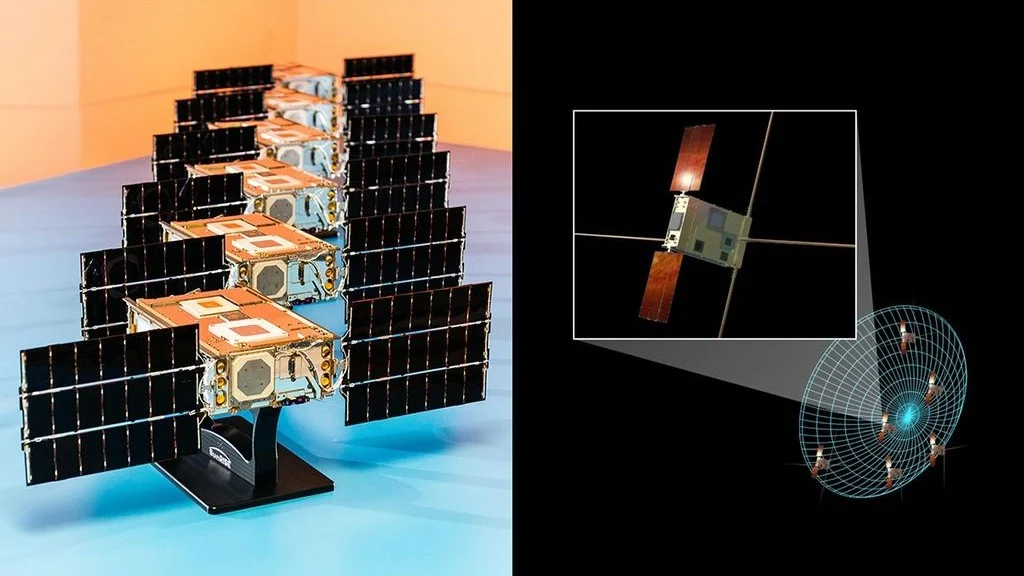
In a strategic shift for one of its most innovative heliophysics programs, NASA has announced that the Sun Radio Interferometer Space Experiment (SunRISE) mission will be launched aboard a SpaceX Falcon Heavy rocket. The decision marks a significant departure from the mission’s original flight manifest, which had earmarked the United Launch Alliance (ULA) Vulcan Centaur as the launch vehicle of choice. While NASA has kept specific details regarding the scheduling change brief, the move coincides with mounting technical scrutiny regarding the Vulcan Centaur’s performance during recent U.S. Space Force operations.
The Mission: Unlocking the Secrets of Solar Outbursts
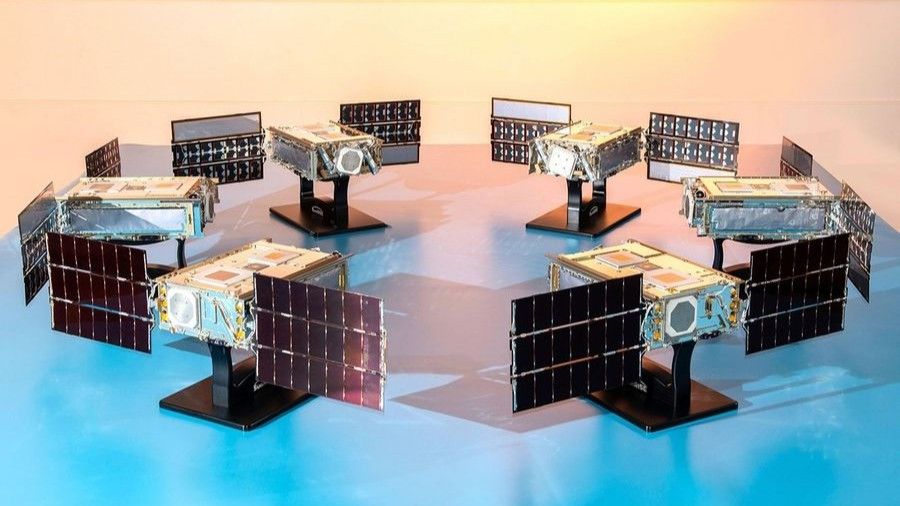
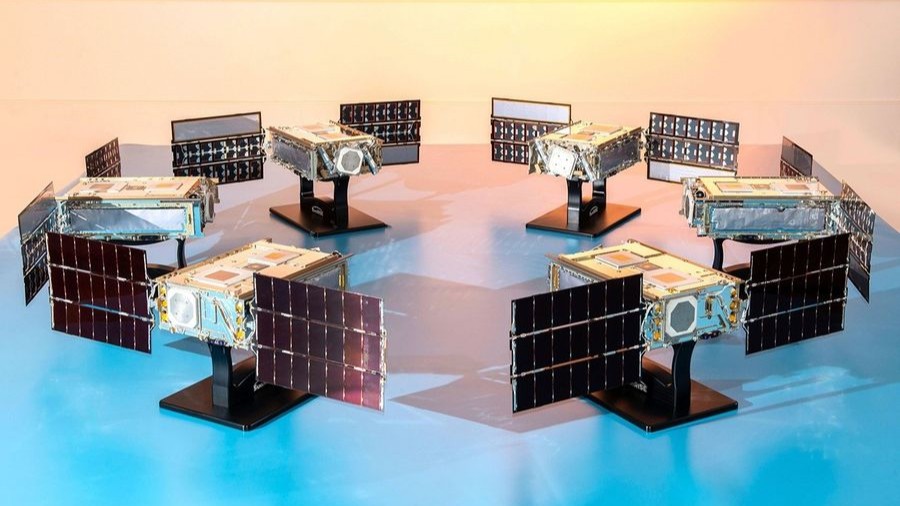
The SunRISE mission represents a pioneering approach to heliophysics. Comprising six small satellites—each roughly the dimensions of a standard mailbox—the mission is designed to function as a singular, distributed radio telescope. Managed by NASA’s Jet Propulsion Laboratory (JPL) in Southern California and led by a team of researchers at the University of Michigan, the mini-constellation will be deployed into an orbit approximately 22,000 miles (35,000 kilometers) above Earth.
Once in position, these satellites will spread out to form a giant "X" formation spanning roughly 10 miles (16 kilometers). Each satellite will extend 10-foot (2.5-meter) antenna booms, allowing the array to act as a massive radio interferometer. The primary objective is to observe and track solar radio bursts—intense, high-energy events that occur on the sun’s surface.
These radio bursts are critical harbingers of space weather; they travel through the solar system significantly faster than the charged particles that comprise a solar storm. By capturing the radio emissions, SunRISE will provide researchers with the data necessary to refine prediction models, offering a vital early-warning system for solar events that could threaten orbital infrastructure, global communications, and even the safety of astronauts in deep space.
A Change in Trajectory: The Shift to Falcon Heavy
The transition to SpaceX’s Falcon Heavy is more than a mere logistical swap; it reflects the complex, high-stakes nature of modern aerospace partnerships. SunRISE is a "rideshare" mission, meaning it is being launched alongside larger primary payloads, a program managed by the U.S. Space Force’s Space Systems Command (SSC).
The catalyst for this shift appears to be the recent performance of the ULA Vulcan Centaur. During the USSF-87 mission, the rocket encountered an anomaly in one of its solid rocket boosters—a recurrence of a similar glitch observed in previous test flights. Although the Vulcan successfully delivered its payload, the U.S. Space Force took the precautionary step of pausing national security launches on the vehicle until the root cause could be identified and rectified.
By moving SunRISE to a Falcon Heavy manifest, NASA and the Space Force are likely seeking to insulate the heliophysics project from potential delays stemming from the Vulcan’s ongoing technical review. This decision underscores the "mission assurance" priority that governs all U.S. space launches, particularly when dealing with high-value scientific assets like the SunRISE fleet.
Chronology of the SunRISE Development
The path to orbit for SunRISE has been a multi-year effort involving rigorous engineering and inter-agency coordination:
- Early Concept Phase: SunRISE was conceived as a "Mission of Opportunity" under the NASA Science Mission Directorate’s Explorers Program. It was selected for its cost-effective, high-impact potential to revolutionize our understanding of space weather.
- Engineering and Fabrication: Development was centered at the University of Michigan with oversight from NASA’s Goddard Space Flight Center. The "CubeSat" form factor allowed for the development of a constellation approach, which provides a level of spatial resolution impossible to achieve with a single, larger satellite.
- Launch Manifesting: Initially, the mission was assigned to the ULA Vulcan, positioning it as one of the key early customers for the new heavy-lift rocket.
- The Technical Pause: Following the anomalous behavior of the Vulcan booster during the USSF-87 mission, the Space Force implemented a suspension of national security launches on the platform.
- The Pivot: In mid-2026, NASA officially updated the mission profile to reflect a move to SpaceX’s Falcon Heavy, ensuring that the mission timeline remains as robust as possible despite the challenges facing the alternative launch provider.
The Technological Might of the Falcon Heavy
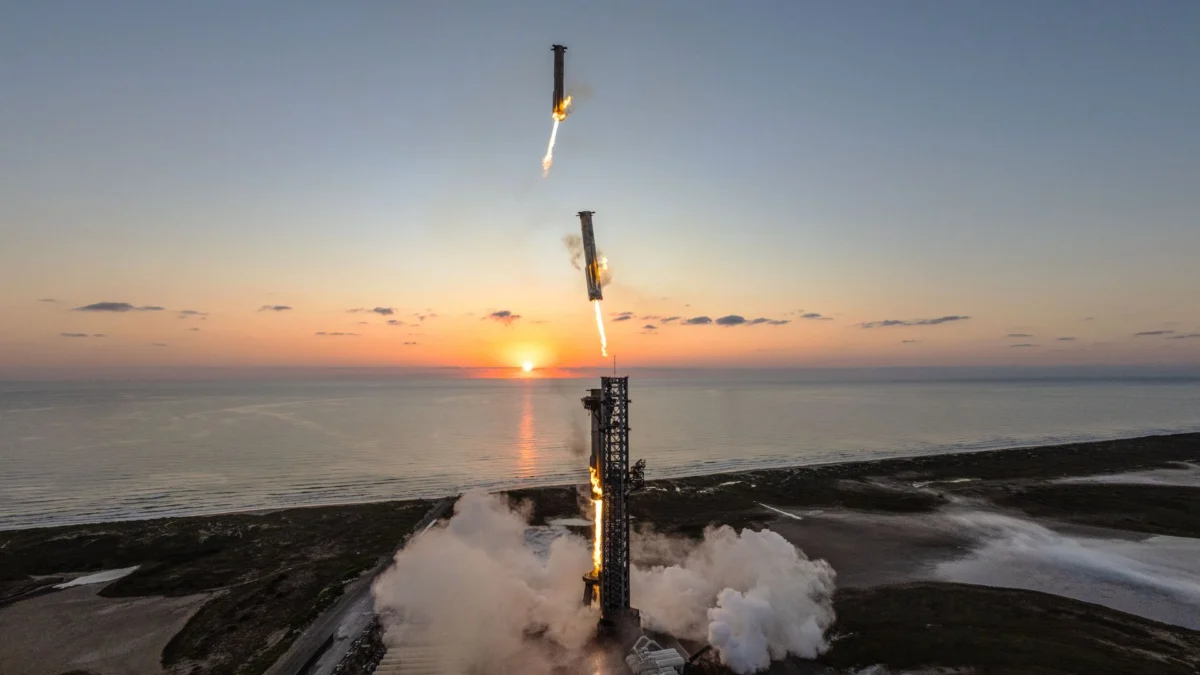
The Falcon Heavy is currently one of the most capable launch vehicles in the world. As a "heavy-lift" rocket, it is essentially a triple-booster configuration of the workhorse Falcon 9, providing immense thrust and the capability to deliver up to 58,860 pounds (26,700 kg) to a geostationary transfer orbit.
Since its debut in 2018, the Falcon Heavy has successfully completed 12 missions, including critical national security launches and commercial telecommunications deployments. The rocket’s proven reliability, combined with its frequent flight cadence, makes it an ideal candidate for "rideshare" missions like SunRISE, where the primary payload occupies the majority of the rocket’s capacity while secondary missions are "piggybacked" to their respective orbits.
With the Nancy Grace Roman Space Telescope also slated for a Falcon Heavy launch later this year, SpaceX’s launch vehicle has become a cornerstone of NASA’s upcoming scientific agenda.
The Threat of Space Weather: Why SunRISE Matters
The need for accurate space weather forecasting has never been more urgent. As human reliance on satellite technology for GPS, telecommunications, and financial data grows, our vulnerability to solar-induced interference increases exponentially.
In January of this year, Earth was impacted by one of the most significant solar radiation storms recorded in over two decades. Such events can wreak havoc on electronic components, inducing currents in power grids that can lead to large-scale blackouts, and creating radiation environments that are hazardous to high-altitude aviation and crewed space flight.
The SunRISE mission is not intended to serve as a real-time "alarm," but rather as a foundational research tool. By studying the radio bursts that precede solar particle events, scientists will gain a deeper understanding of the solar corona’s physics. This data will be fed into predictive models developed by the Space Weather Prediction Center and other global entities, effectively upgrading the "weather forecast" for the near-Earth space environment.
Official Responses and Strategic Implications
While officials at NASA and the Space Force have remained relatively tight-lipped regarding the specifics of the rocket swap, the shift is part of a larger trend of dynamic manifest management. The SSC has, in recent months, shifted several payloads between launch providers to optimize delivery schedules and prioritize mission security.
For NASA, the primary goal remains the successful deployment of the SunRISE constellation. "SunRISE will allow us to observe the Sun in a new way," said a spokesperson for the mission during a recent project update. "By using the radio spectrum, we are looking at the ‘engine’ of solar storms, allowing us to predict their behavior before they reach our planet."
The decision to trust the Falcon Heavy with this mission is a testament to the vehicle’s versatility. It also highlights the reality of the modern space economy: when technical hurdles arise with one provider, the existence of multiple, capable launch options allows mission planners to keep critical science moving forward.
Looking Ahead
As the launch window for SunRISE approaches later this year, the scientific community remains optimistic. The constellation represents a low-cost, high-reward approach to a problem that has plagued space exploration since the dawn of the satellite era.
While the change in launch vehicle has introduced a new variable into the mission’s timeline, it has also provided a degree of stability by distancing the mission from the current scrutiny surrounding the ULA Vulcan. For the teams at JPL and the University of Michigan, the final destination remains the same: a 10-mile-wide formation in high Earth orbit, keeping a watchful eye on our host star. The transition to a new rocket is simply the next chapter in an ambitious mission to safeguard our technological civilization from the unpredictable temper of the Sun.