WASHINGTON — In a major realignment of Western lunar exploration strategy, NASA and its international partners are shifting their focus from the orbital highway to the lunar dirt.
This week, Northrop Grumman and the Canadian Space Agency (CSA) announced sweeping plans to adapt technologies originally designed for NASA’s orbital lunar Gateway into critical infrastructure for a future permanent base on the surface of the Moon.
While specific details remain scarce, the dual announcements signal a profound tactical redirection for the Artemis program. Rather than prioritizing an intermediate outpost in high lunar orbit, the space agency and its primary contractors are fast-tracking the deployment of surface-based power, communications, and robotic systems. This shift, colloquially dubbed "the pivot," represents a major structural adjustment in how both public agencies and private aerospace giants plan to establish a long-term human presence on the Moon.
Main Facts
The restructuring of these multi-million and billion-dollar programs centers on two major pillars of the original Lunar Gateway architecture: Northrop Grumman’s Habitation and Logistics Outpost (HALO) module and Canada’s next-generation robotic arm, Canadarm3.
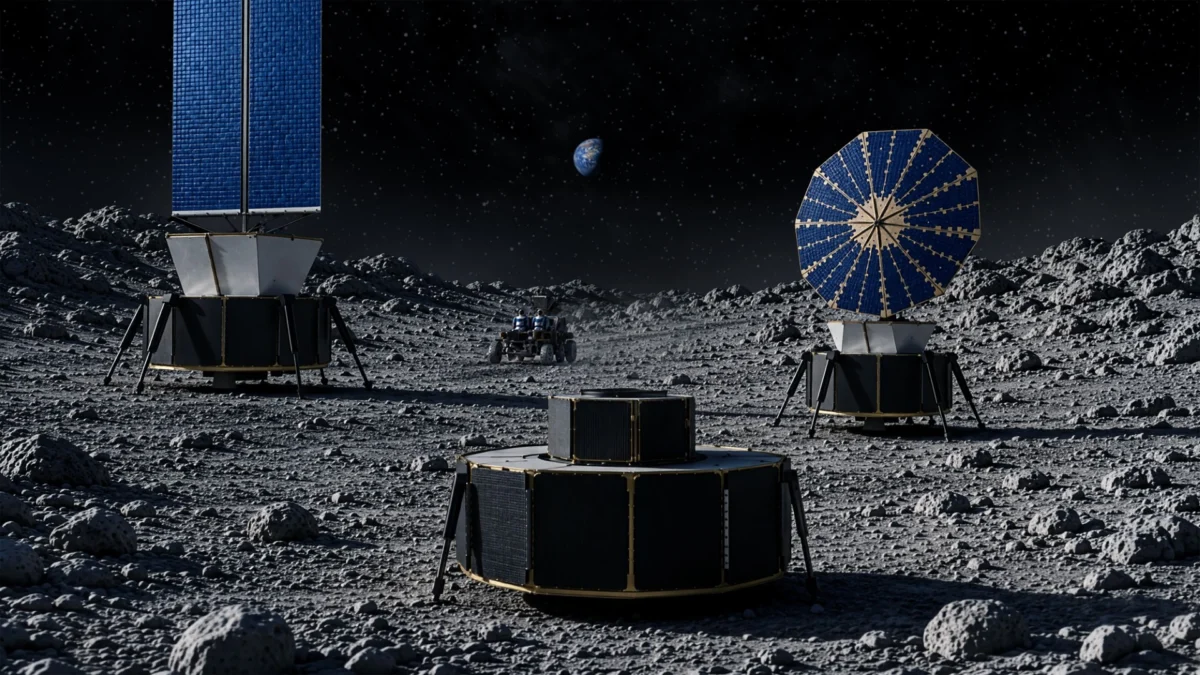
Northrop Grumman announced on August 4 that it will repurpose hardware and avionics systems originally engineered for the HALO module to support a series of lander missions. The company plans to execute three Lunar Infrastructure Demo (LID) missions to the lunar south pole.
These missions will deliver standardized power, data, and mechanical interfaces directly to the lunar surface. The goal of the LID initiative is to demonstrate how critical surface assets can remain operational, thermally protected, and connected during the treacherous 14-Earth-day lunar night, during which temperatures plunge to near -180°C (-292°F).
Canada’s Robotic Realignment
Following Northrop’s announcement, the Canadian Space Agency (CSA) revealed on August 6 that it is reshaping its contribution to the Gateway program. The technologies currently under development for Canadarm3—a highly autonomous robotic arm system—will be adapted for dual pathways: direct deployment on the lunar surface and integration into emerging commercial space stations in Low Earth Orbit (LEO).
MDA Space, Canada’s premier space technology firm, is the prime contractor for the C$1 billion ($717 million) Canadarm3 program and will oversee this transition.
NASA’s Strategic Shift
NASA confirmed the structural pivot, acknowledging that it is actively working with Northrop Grumman to finalize contracts for the three LID payloads. The agency plans to fly these technologies to the Moon using its Commercial Lunar Payload Services (CLPS) program.
All three demonstrations are scheduled to fly during Phase One of NASA’s Moon Base plans, which is projected to run through 2029. This represents a significant acceleration of surface-infrastructure deployment at the expense of the Gateway’s original assembly timeline.
Chronology
The transition from an orbital-first strategy to a surface-first campaign did not happen overnight. It is the result of shifting technical challenges, political pressures, and strategic reassessments over the last several years.
[2020–2021] ─── Northrop Grumman awarded HALO contract; MDA Space begins Canadarm3 development.
      │
[Early 2024] ── NASA internally reassesses Gateway timeline to prioritize surface operations.
      │
[May 2024] ──── MDA Space acknowledges ongoing discussions with CSA regarding Gateway's future.
      │
[July 2024] ─── Northrop Grumman CEO Kathy Warden confirms HALO contract restructuring.
      │
[Aug 4, 2024] ── Northrop Grumman formally announces three Lunar Infrastructure Demo (LID) missions.
      │
[Aug 6, 2024] ── Canadian Space Agency (CSA) announces the pivot of Canadarm3 technologies.
      │
[Aug 7, 2024] ── NASA and MDA Space executives confirm integration of payloads into CLPS and Phase One.
May 2020 – July 2021: NASA formalizes contracts for the initial elements of the Lunar Gateway. Northrop Grumman is awarded a sole-source contract to design and build the HALO module, derived from its successful Cygnus cargo spacecraft. Concurrently, Canada commits to providing the Canadarm3 robotic system, cementing its role as a key international partner.
Early 2024: Amid rising competition from China’s planned International Lunar Research Station (ILRS) and budgetary pressures within the Artemis program, NASA leadership begins an internal reassessment. The agency decides to de-emphasize immediate orbital assembly in favor of securing a foothold on the lunar surface.
May 2024: During an quarterly earnings call, executives at MDA Space reveal that while work on Canadarm3 is ongoing, they are in active discussions with the CSA regarding the future direction of the project, hinting at a major programmatic shift.
July 21, 2024: Northrop Grumman CEO Kathy Warden announces during a Q2 earnings call that the company is actively restructuring its HALO contract with NASA to pivot toward surface-enabling technologies.
August 4, 2024: Northrop Grumman officially announces the LID missions. A company spokesperson confirms that the first of these missions is targeted to launch before 2029 under Phase One of NASA’s revised lunar roadmap.
August 6, 2024: The CSA formally announces the redirection of Canadarm3, shifting its focus toward surface logistics and commercial LEO station applications.
August 7, 2024: NASA confirms to reporters that the LID payloads will be integrated into future CLPS flights and that contract negotiations with Northrop Grumman are being finalized. On the same day, MDA Space CEO Mike Greenley publicly voices support for the Canadian government’s strategic realignment.
Supporting Data
The shift in resources from orbit to the surface involves massive industrial contracts, complex logistics, and formidable engineering challenges.
Financial and Programmatic Scale
The financial footprints of both the HALO and Canadarm3 programs are substantial:
Program / Component
Prime Contractor
Original Destination
New Focus / Destination
Contract Value (approx.)
Target Timeline
HALO Module (Avionics/Power)
Northrop Grumman
Lunar Orbit (Gateway)
Lunar Surface (LID Missions)
Restructuring In Progress
Phase One (Through 2029)
Canadarm3
MDA Space
Lunar Orbit (Gateway)
Lunar Surface & LEO Stations
C$1 Billion ($717 Million)
Ongoing Development
CLPS Deliveries
Various (NASA-selected)
N/A
Lunar South Pole
Varies per task order
Pre-2029
Technical Challenges of the Lunar Night
The primary technical justification for Northrop’s LID missions is surviving the lunar night. This environment presents some of the harshest conditions in the solar system:
Duration: A single lunar night lasts approximately 14.5 Earth days (354 hours).
Temperature Plunge: Surface temperatures drop from a daytime high of 120°C (248°F) to a nighttime low of -130°C to -180°C (-202°F to -292°F). In permanently shadowed regions (PSRs) near the south pole, temperatures can hover permanently near -246°C (-411°F).
The Engineering Gap: Standard solar-powered landers cannot survive this period without heavy thermal insulation, advanced radioisotope heater units (RHUs), or highly specialized battery storage systems. Northrop’s LID missions aim to test scalable power distribution and thermal protection systems built on the high-reliability avionics originally designed for the long-duration environment of deep space orbit.
Official Responses
Key leaders across the aerospace sector have framed this strategic pivot as a pragmatic evolution of the Artemis campaign, designed to maximize return on investment and accelerate surface operations.
Northrop Grumman
David Schiller, vice president of civil space and sciences at Northrop Grumman, emphasized the maturity of the technology being repurposed:
"Our ready-to-fly, reliable HALO technologies allow NASA to move faster, putting in place robust infrastructure that can endure the lunar night and establish a strong blueprint for a future Moon Base."
Kathy Warden, Chief Executive of Northrop Grumman, explained the contractual transition during the company’s July earnings call:
"We are working with NASA to take the technology that we were developing under the HALO program and still have that contribute to their future Gateway plans. We are in the process of restructuring the contract to do that."
Canadian Space Agency (CSA)
In its official statement, the CSA highlighted the commercial and operational benefits of diversifying the Canadarm3 portfolio:
"Early deployment of robotics technologies on the moon is a key step in validating Canadian capabilities and positioning industrial expertise for future logistics activities on the lunar surface. At the same time, advancements made through Canadarm3 also offer the potential for these cutting-edge robotic systems to be adapted for space projects in low Earth orbit, creating new commercialization opportunities linked to emerging space stations."
MDA Space
Mike Greenley, Chief Executive of MDA Space, expressed strong alignment with the Canadian government’s decision during an August 7 earnings call:
"As the global effort to live and work on the moon builds momentum, MDA Space is in a strong position to expand our involvement in this endeavor. We really appreciate Canada announcing its support for what we call the pivot, focusing on the lunar surface. We’re going to work through that now in terms of contractually what that looks like, to make sure that all gets definitized properly as we go forward into the future."
NASA
A NASA spokesperson confirmed the programmatic shift, explicitly tying the changes to the agency’s evolving strategic priorities:
"[The avionics and power systems are] now being repurposed following NASA’s shift from an orbital-focused lunar strategy to one centered on surface operations."
Implications
The decision to pivot key Gateway technologies to the lunar surface has profound implications for the international space community, the commercial aerospace sector, and the geopolitical race to the Moon.
The Status of the Lunar Gateway
The redirection of HALO and Canadarm3 components raises serious questions about the timeline—and ultimate viability—of the Lunar Gateway. Initially envisioned as a permanent orbital station serving as a staging point for human landings and deep-space missions, the Gateway has faced persistent criticism from space advocates who view it as an unnecessary bottleneck.
By diverting key life support, power, and robotic elements to surface-level technology demonstrations, NASA is effectively delaying the assembly of the orbital station. While the agency maintains that the Gateway remains part of its long-term architecture, the "pivot" strongly suggests that the immediate priority has shifted to establishing a functional, survivable outpost on the lunar dirt.
       ORBITAL-FOCUS STRATEGY                         SURFACE-FOCUS STRATEGY (THE PIVOT)
┌──────────────────────────────────┐                 ┌──────────────────────────────────┐
│          Lunar Gateway           │                 │         Artemis Moon Base        │
│  - Orbital staging post          │                 │  - Immediate surface presence    │
│  - Heavy assembly in orbit       │   ───► Shift    │  - Survival of the lunar night   │
│  - Gateway-to-surface shuttling  │                 │  - Rapid power/utility deployment│
└──────────────────────────────────┘                 └──────────────────────────────────┘
Accelerating the Commercial Lunar Economy
By utilizing the Commercial Lunar Payload Services (CLPS) program to deliver Northrop’s LID payloads, NASA is reinforcing its commitment to a commercial services model. Rather than managing every aspect of launch and landing, NASA acts as a customer, purchasing rides on privately developed landers (such as those built by Intuitive Machines, Astrobotic, or Firefly Aerospace).
If Northrop’s LID missions successfully demonstrate standardized power and data interfaces on the surface, it could create a "plug-and-play" utility grid on the Moon. This would allow smaller commercial payloads to survive the lunar night by simply plugging into a central, Northrop-provided power distribution hub.
Geopolitical Competition
The strategic pivot is heavily influenced by the timeline of the Chinese-led International Lunar Research Station (ILRS), which aims to establish a functional robotic base at the lunar south pole by the early 2030s, followed by crewed missions.
If NASA focused too heavily on building an orbital station first, it risked allowing China to establish the dominant presence on the lunar surface. By redirecting ready-to-fly hardware from the HALO program to the surface via CLPS, the United States and its partners can deploy infrastructure to the south pole much faster, establishing operational norms and claiming vital territory under the framework of the Artemis Accords.
Industrial Diversification for Partners
For Canada and MDA Space, the adaptation of Canadarm3 technology for commercial LEO stations is a vital hedge against government program delays. With commercial space stations like Axiom Station, Voyager Space’s Starlab, and Orbital Reef currently in development to replace the aging International Space Station (ISS) by 2030, a highly capable, autonomous robotic arm has a lucrative commercial market.
By adjusting the scope of Canadarm3, MDA Space can sell its advanced robotics directly to commercial station operators, ensuring that Canadian space technology remains dominant in Earth orbit even as humanity expands its presence to the lunar surface.