"Houston, we have a working comm link again."
These words, crackling across the void of space on Tuesday, August 25, 2026, marked the successful conclusion of a high-stakes maintenance operation 250 miles above Earth. NASA astronaut Anil Menon and European Space Agency (ESA) astronaut Sophie Adenot completed a complex, multi-stage spacewalk to replace a critical Space-to-Ground antenna (SGANT) on the exterior of the International Space Station (ISS). This vital repair not only restores full communication redundancy for the orbital laboratory but also serves as a testament to the enduring necessity of human intervention in the harsh environment of low Earth orbit.
The Mission: A Critical Infrastructure Upgrade
The International Space Station relies on a sophisticated network of hardware to maintain a constant stream of telemetry, high-definition video, and mission-critical data between the orbiting crew and ground controllers at NASA’s Johnson Space Center in Houston. The SGANT system is the primary conduit for this flow of information.
In November 2025, one of the station’s two primary SGANT assemblies began to experience significant degradation, eventually losing its ability to track the Tracking and Data Relay Satellites (TDRS) that act as the station’s "internet" connection to Earth. While the station remained safe and operational due to a secondary antenna, the loss of one unit removed a crucial layer of redundancy. A system failure of this magnitude necessitates a prompt response; in space, infrastructure is not merely for convenience—it is a lifeline.
The repair mission was split into two distinct phases. The first, conducted on August 18, saw Menon and Adenot successfully remove the failed dish. However, due to time constraints inherent in the grueling physical demands of an Extravehicular Activity (EVA), the installation of the replacement unit was deferred to this second outing.
Chronology of the August 25 Spacewalk
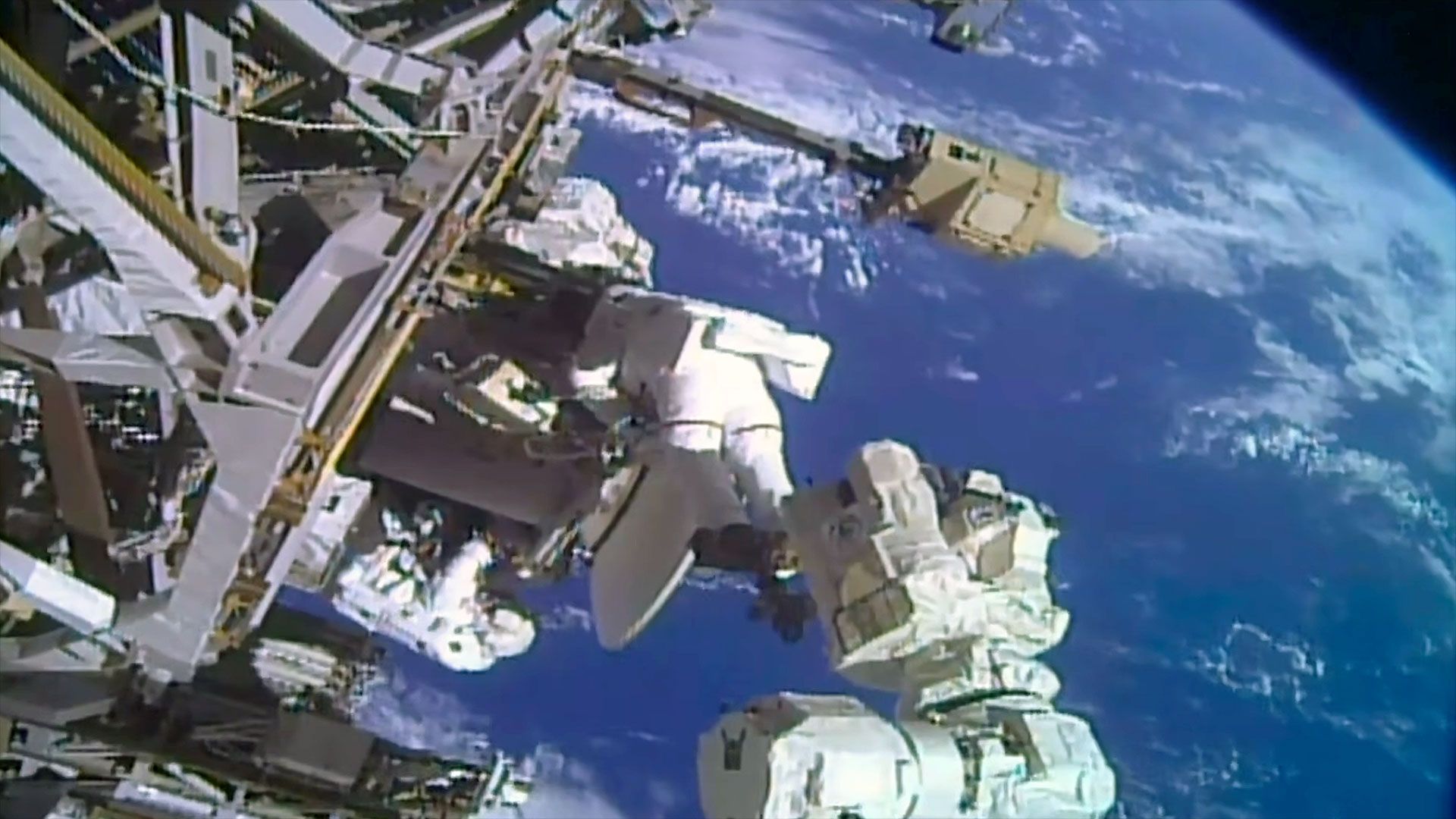
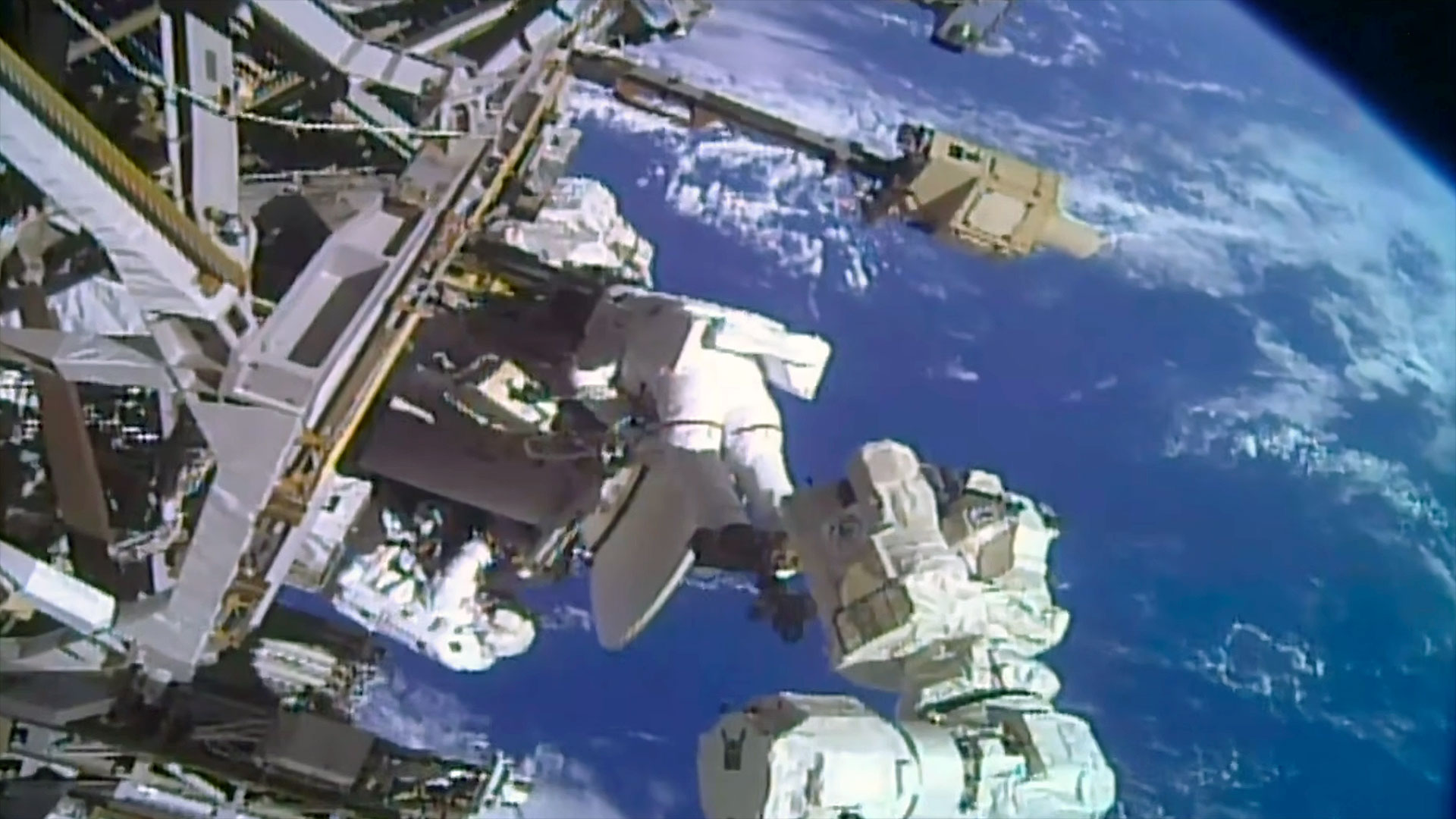
The operation began at 8:27 a.m. EDT (1227 GMT), initiating what would become a 6.5-hour marathon of orbital engineering. The task required a choreographed ballet of human precision and robotic assistance.
Phase 1: Retrieval and Maneuvering
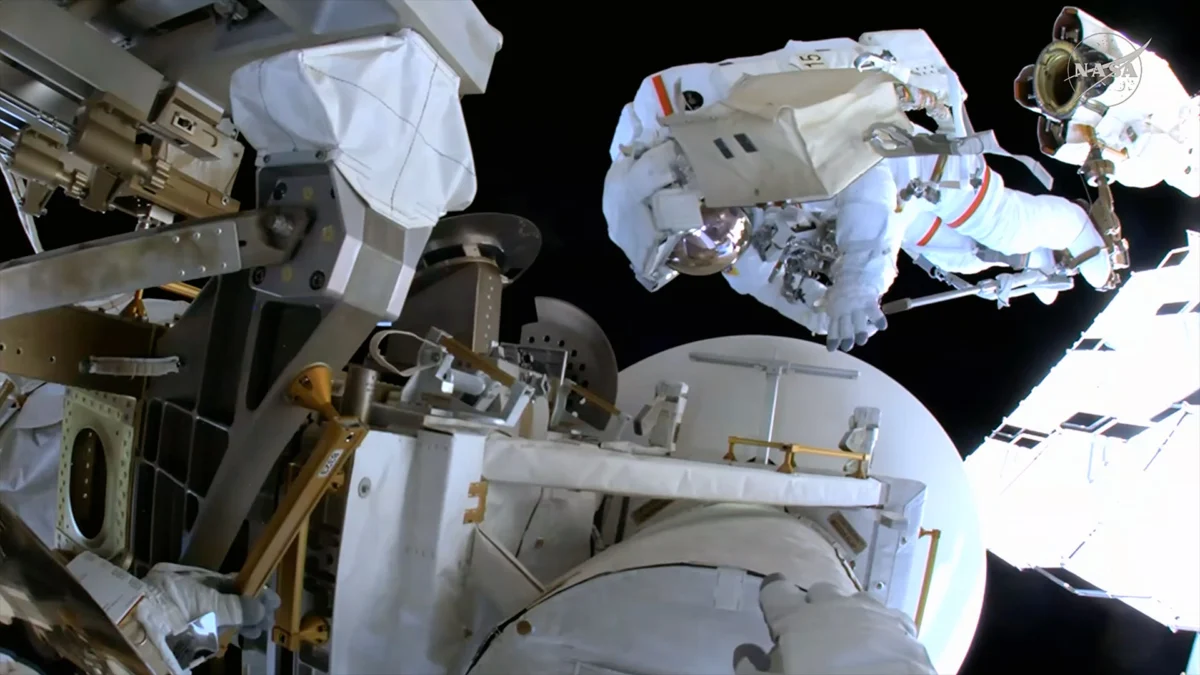
With the station’s Canadarm2 robotic arm serving as the primary transport, Menon was positioned at the end of the robotic appendage, while Adenot maneuvered along the exterior of the station using handrails. Their first objective was to retrieve a spare antenna assembly from an external stowage position. This was not a simple "grab and go"; each movement in microgravity requires careful stabilization to prevent debris or accidental impact with the station’s fragile solar arrays.
Phase 2: The Installation
Once the spare antenna was secured, Menon—still mounted on the Canadarm2—was moved to the Z-1 truss. Here, the pair worked in tandem to mount the hardware. The process involved precise alignment and the securing of electrical and data connections to the station’s power grid. Every bolt and connector must be handled with specialized tools designed to work in bulky, pressurized gloves, a challenge that consistently tests the limits of astronaut dexterity.
Phase 3: Cleanup and Final Stowage
Following the successful installation and verification of the new antenna, the duo turned their attention to the failed unit, which had been temporarily secured on the Z-1 truss during the previous week’s spacewalk. In a final act of orbital housekeeping, Menon transferred the heavy, decommissioned assembly to an External Stowage Platform (ESP-3) on the starboard side of the truss. By clearing the work area, the crew ensured the long-term safety of the station’s exterior environment.
The mission concluded at 2:57 p.m. EDT (1857 GMT), marking a total duration of 6 hours and 30 minutes.
Supporting Data: The Human and Technical Toll
The scale of this operation is highlighted by the statistics of the EVA. This was the 283rd spacewalk in the history of the International Space Station, a testament to the decades of maintenance required to keep the outpost functional.
- Anil Menon’s Record: This mission served as Menon’s third EVA, bringing his total time spent working in the vacuum of space to 19 hours and 20 minutes.
- Sophie Adenot’s Milestone: As the first woman and only the fifth citizen of France to perform a spacewalk, Adenot has quickly become a pivotal figure in European space exploration. This mission raised her total EVA time to 12 hours and 53 minutes.
- The Technical Standard: The pair utilized U.S. Extravehicular Mobility Unit (EMU) spacesuits, which have been the backbone of station maintenance for years. This was the 98th time these specific suits have been used for an ISS assembly or repair mission.
Official Responses: A Moment of Levity in the Void
Spaceflight is a serious business, but the camaraderie between the flight crew and Mission Control remains a vital component of mission success. Following the confirmation that the antenna was successfully installed and communicating with Earth, Mission Control broke the professional tension with a moment of musical humor.
Anne McClain, acting as the CAPCOM (Capsule Communicator) from Houston, took to the radio to congratulate the team, parodying The Buggles’ 1979 hit "Video Killed the Radio Star."
"On behalf of CAPCOM and I, we’re going to count down like a bolt: ‘3, 2, 1… You just saved the video dish, you just saved the video dish,’" McClain sang.
The reaction from the astronauts was one of genuine relief and amusement. "Oh my god, it is hard to top that," Menon replied, his voice filled with laughter. "I want to thank the entire team on executing this complex, time-critical operation successfully."
This interaction underscores the deep trust required between the astronauts and the ground teams. The "video dish" mentioned in the song is not merely a piece of hardware; it is the visual link that allows researchers, families, and the general public to connect with the work happening in orbit.
Implications for Future Operations
The successful repair of the SGANT assembly has immediate and long-term implications for the International Space Station:
- Redundancy and Reliability: By restoring the second antenna, the ISS has regained its full suite of communications capabilities. In the event of another failure, the station is no longer "single-threaded," meaning a single hardware malfunction will not result in a total loss of high-speed data transmission.
- Validation of EVA Procedures: The transition from a two-part, multi-week repair mission highlights the refined nature of current ISS maintenance protocols. The ability to stage components on the exterior and return to them days later is a vital skill that will be essential for future lunar and Martian surface operations.
- Extension of Station Life: As the ISS approaches its third decade of habitation, the frequency of such maintenance tasks is expected to rise. The success of Menon and Adenot demonstrates that the station remains fully capable of being maintained and upgraded by human crews, keeping the dream of a permanent human presence in space alive.
As the crew returns to their primary research objectives, the station continues its silent orbit around the Earth, now with a stronger, more resilient voice. The repair of the Space-to-Ground antenna stands as a reminder that even in an era of autonomous robotics, there is no substitute for the problem-solving capabilities of human explorers. The success of this mission is a victory for the international partnership that sustains the ISS, ensuring that the station remains a beacon of scientific discovery for years to come.