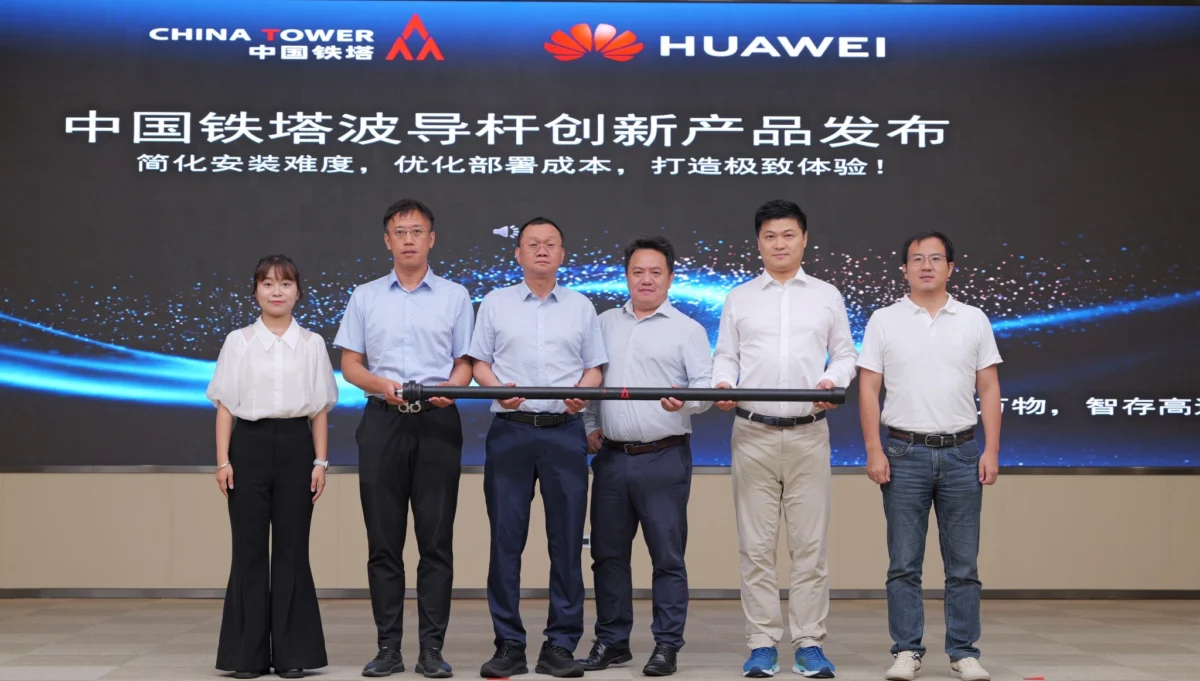
On August 4, a significant milestone in telecommunications infrastructure was reached at the China Tower Industrial Park. China Tower, the world’s largest telecommunications tower infrastructure provider, and global technology giant Huawei Technologies Co., Ltd. officially unveiled "TunnelStar," a groundbreaking waveguide product designed to redefine mobile network performance in one of the industry’s most challenging environments: tunnels.
As mobile consumption patterns shift toward data-heavy applications like 5G-A, AI, and high-definition live streaming, the demand for robust connectivity—even deep underground—has transitioned from a luxury to a critical utility. TunnelStar represents a strategic response to this demand, promising a paradigm shift in how rail and road tunnels handle signal propagation, uplink capacity, and long-term network evolution.
The Landscape: Challenges of Underground Connectivity
To understand the significance of TunnelStar, one must first appreciate the scale and complexity of China’s transit infrastructure. With over 10,000 kilometers of operational subway lines and more than 25,000 kilometers of railway tunnels, the logistical footprint is immense.
However, tunnels have historically been "black holes" for cellular coverage. Traditional signal distribution systems, such as leaky cables, have struggled to keep pace with the rapid evolution of 5G and 5G-Advanced (5G-A) technologies. The industry has faced a "trilemma" of constraints:
- Physical Space: Tunnels are inherently cramped, with limited space for mounting heavy equipment.
- Operational Complexity: Installation and maintenance are hindered by strict safety regulations and the need to coordinate with rail traffic schedules, making retrofitting old tunnels an expensive and labor-intensive nightmare.
- Technical Limitations: Higher frequency bands (essential for 5G) have poor penetration and propagation characteristics in narrow, enclosed, and often concrete-lined tunnel environments.
As users increasingly rely on smartphones for high-capacity uplink activities—such as uploading video content, participating in cloud-based collaborative work, or real-time streaming—the current infrastructure is showing signs of strain. Weak uplink coverage in tunnels has become a bottleneck, resulting in dropped calls, buffering during travel, and inconsistent data speeds.
Chronology of Development: A Strategic Partnership
The development of TunnelStar was not an overnight success but the result of a deliberate, multi-year collaboration between China Tower and Huawei.
- Early Phase (Identification): Recognizing that traditional distributed antenna systems (DAS) and leaky cables were reaching their theoretical limits regarding bandwidth and signal propagation, the two companies identified the need for a fundamental shift in electromagnetic field management.
- Design and R&D: The partnership leveraged Huawei’s deep R&D expertise in signal processing and China Tower’s unparalleled understanding of infrastructure deployment and site management. Together, they explored the physics of radio wave propagation within hollow, cylindrical, or rectangular tunnel environments.
- The "Excitation" Breakthrough: The core innovation of TunnelStar lies in its proprietary excitation source. By precisely controlling the electromagnetic field distribution at the point of signal injection, the team managed to force wireless signals to propagate more efficiently, minimizing signal loss caused by tunnel walls and structural obstructions.
- Pilot Validation (Q2 2024): Before the public launch, the solution underwent rigorous field testing. In Wuhan and Guangzhou, TunnelStar was deployed to handle 3.5GHz and 4.9GHz frequency bands. These trials served as the litmus test for the solution’s design targets, confirming that the hardware could survive the environmental rigors of a tunnel while delivering consistent performance gains.
Technical Performance and Data Insights
The technical specifications of TunnelStar reveal why it is being hailed as a potential industry standard. Compared to traditional leaky cable systems, the performance metrics reported by the joint project team are significant:
1. Superior Coverage and Speed
TunnelStar provides a 10dB improvement in edge coverage, a metric that effectively translates to a larger, more reliable service area within a tunnel. This means fewer "dead zones" for commuters. Furthermore, users can expect a 40% increase in data speed, a tangible upgrade for anyone attempting to download or stream while in transit.
2. Uplink Optimization
One of the most pressing requirements for 5G-A is uplink capacity. TunnelStar includes a 9dB gain amplification feature specifically for uplink signals, leading to a 20% increase in uplink speed. This is critical for the modern user experience, enabling seamless real-time uploads and high-quality video conferencing from the depths of a subway system.
3. Future-Proofing for 6G
Perhaps most strategically, TunnelStar is designed with an eye toward the future. It is a full-band and full-bandwidth solution capable of supporting the transition to 6G. This "evolutionary" design allows operators to upgrade their frequency bands without requiring a complete overhaul of the physical infrastructure, significantly lowering the Total Cost of Ownership (TCO).
Official Perspectives: Aligning Vision with Infrastructure
The launch ceremony featured senior executives from both organizations, who underscored the collaborative spirit of the project.
"China Tower is committed to driving the digital transformation of the transport sector," noted a representative from China Tower. "By combining our unified planning capabilities with Huawei’s innovative R&D, we are moving past the ‘patchwork’ solutions of the past toward a cohesive, high-performance network infrastructure."
Huawei’s executives echoed this sentiment, emphasizing that the TunnelStar project represents the convergence of high-level physics and practical civil engineering. "We weren’t just looking to build an antenna; we were looking to reshape the environment in which signals travel. The success of TunnelStar in the Wuhan and Guangzhou trials proves that even the most constrained spaces can be optimized for the future of mobile connectivity."
Implications: A New Benchmark for Digital Travel
The introduction of TunnelStar carries profound implications for the telecommunications industry and the general public.
For Telecom Operators
For carriers, the primary benefit is operational efficiency. China Tower’s model of co-construction and shared infrastructure is maximized by TunnelStar. Because the system is more efficient and easier to install, operators can reduce the number of equipment sites needed to achieve the same level of coverage. This reduces energy consumption, lowers site rental costs, and simplifies the maintenance lifecycle.
For the Public
The "digital travel experience" is a growing priority for smart cities. For commuters, the improvement is immediate: the subway becomes a mobile office or an entertainment hub. For transit authorities, high-quality connectivity is essential for safety, real-time passenger information, and the potential integration of future IoT-based traffic management systems.
For the Industry
TunnelStar sets a new benchmark for "ultimate mobile network coverage." It demonstrates that the industry is moving away from generic, "one-size-fits-all" hardware toward scenario-specific solutions. By addressing the specific electromagnetic challenges of tunnels, China Tower and Huawei have provided a blueprint for how to solve similar problems in other challenging environments, such as high-speed rail lines, large-scale stadiums, and complex subterranean commercial complexes.
Looking Ahead: The Road to 6G and Beyond
The launch of TunnelStar is merely the first step in a broader roadmap. As the partnership between China Tower and Huawei continues to evolve, the focus will shift toward further integration of AI-driven network management and the refinement of materials to further reduce the size and weight of the waveguide components.
Both organizations have pledged to continue their iterative development, ensuring that as 5G-A matures and 6G technologies emerge from the laboratory, the physical infrastructure in China’s transit systems remains ready to support them.
By prioritizing the "digital life" of the public, China Tower and Huawei have signaled that the underground infrastructure of the future will not be a place of isolation, but an extension of the high-speed, hyper-connected world above ground. As tunnel networks continue to expand across the globe, the lessons learned from the TunnelStar deployment will likely serve as a foundational reference for infrastructure developers worldwide, proving that with enough engineering ingenuity, the barriers to connectivity can be dismantled, one tunnel at a time.