Nearly a decade ago, amidst the damp, gray backdrop of the 2017 "March for Science" in Washington D.C., a quiet, serendipitous moment occurred that would resonate far beyond the confines of a rain-drenched tent. As the atmosphere buzzed with the collective passion of thousands of scientists and advocates, a brief, unassuming encounter took place between a young journalist and one of the most transformative figures in the history of astronomy: Nancy Grace Roman.
Today, that encounter serves as a poignant prelude to a monumental milestone in space exploration. With the impending launch of the Nancy Grace Roman Space Telescope—a flagship observatory poised to rewrite our understanding of dark energy and exoplanets—it is time to revisit the life, the wit, and the indomitable spirit of the woman known affectionately as the "Mother of Hubble."
The Architect of Modern Astronomy: Main Facts
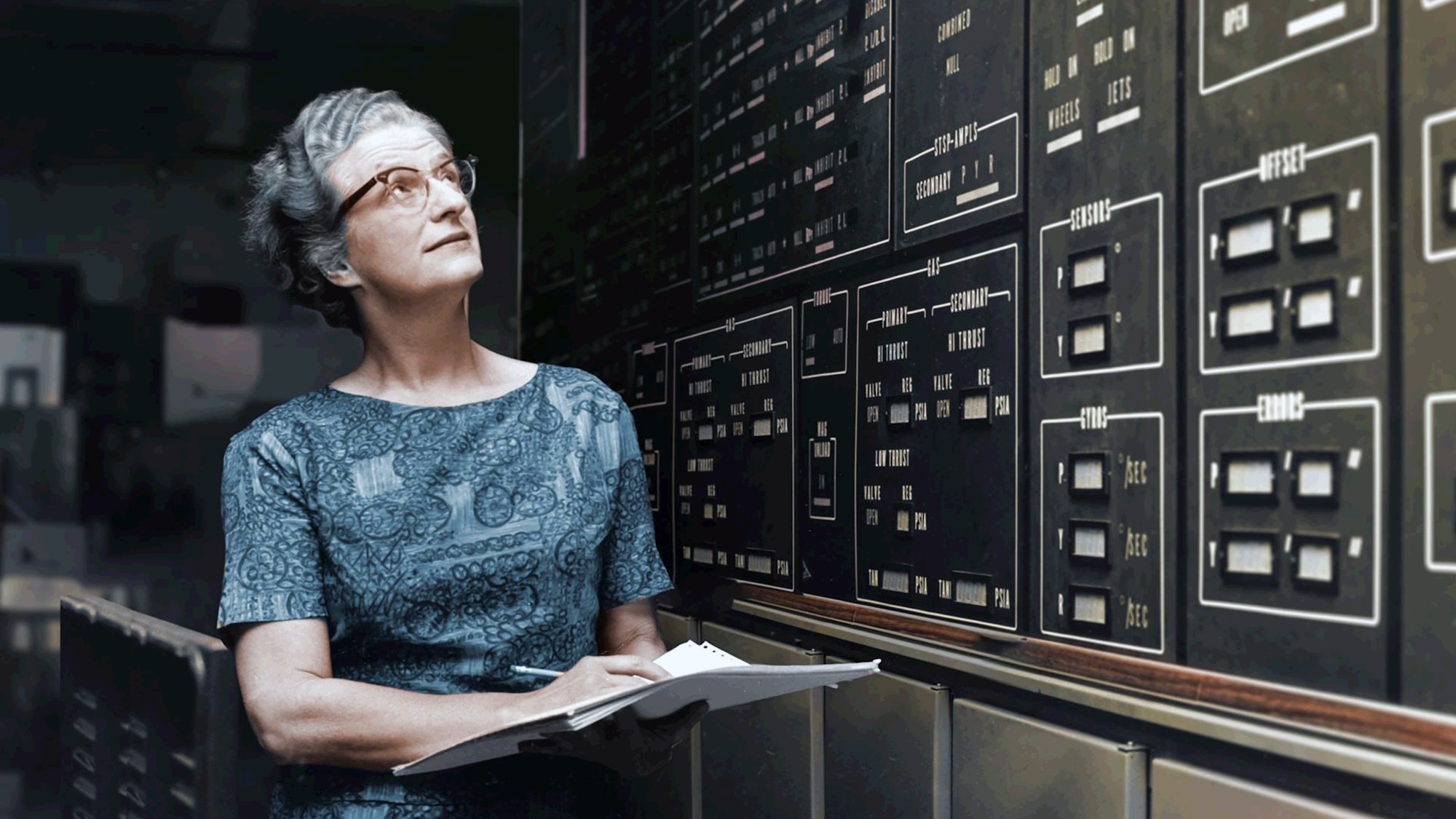
Nancy Grace Roman was not merely an astronomer; she was the foundational architect of NASA’s orbital observatory program. Born in 1925, Roman’s career spanned the transition from ground-based telescopic observation to the revolutionary era of space-based exploration. In 1959, she joined the newly formed NASA, becoming the agency’s first Chief of Astronomy and the first woman to hold an executive position within the organization.
Her legacy is cemented by her relentless advocacy for the Hubble Space Telescope. At a time when the scientific community was skeptical about the feasibility and necessity of a massive, space-borne observatory, Roman spearheaded the planning, funding, and engineering oversight that eventually brought Hubble to life. She did not just support the project; she engineered the institutional framework that allowed it to survive political and budgetary headwinds. Without her, the vibrant, high-definition images of the cosmos that define modern astronomical education might never have graced our screens.
A Life of Pioneering: Chronology of a Trailblazer
To understand the weight of the upcoming telescope launch, one must look back at the trajectory of Roman’s life:
- Early Life (1925–1946): Born in Nashville, Tennessee, Roman developed an early fascination with the night sky. Despite societal pressures that discouraged women from pursuing careers in the hard sciences, she earned a B.A. in astronomy from Swarthmore College in 1946 and a Ph.D. from the University of Chicago in 1949.
- The NASA Years (1959–1979): Upon joining NASA, Roman took on the Herculean task of organizing the agency’s astronomy program. She was instrumental in the development of the Orbiting Solar Observatories and the International Ultraviolet Explorer.
- The Hubble Campaign (1970s): During this decade, Roman traveled extensively to lecture and build consensus among the scientific community regarding the need for a large space telescope. Her ability to translate complex physics into compelling arguments for Congress proved to be the project’s saving grace.
- The Post-NASA Era: Following her retirement, Roman remained an active advocate for women in STEM, frequently mentoring the next generation of scientists and ensuring that the door she had kicked open remained wide for those who followed.
- The Final Chapter (2018): Nancy Grace Roman passed away at the age of 93, leaving behind a field of science that looked vastly different—and infinitely more expansive—than the one she had entered as a young student.
Beyond the Lens: Supporting Data and Scientific Impact
The Nancy Grace Roman Space Telescope, formerly known as the Wide-Field Infrared Survey Telescope (WFIRST), is designed to be the spiritual successor to both Hubble and the James Webb Space Telescope (JWST). While Hubble provided the clarity, and Webb provides the deep-infrared sensitivity to peer into the dawn of time, the Roman Telescope is built for breadth.
Its primary mission involves a "wide-field" view of the universe, allowing it to survey the sky at a speed 100 times faster than Hubble. Key objectives include:
- Dark Energy Mapping: By observing millions of galaxies, the telescope will provide data to help scientists understand the mysterious force causing the universe’s expansion to accelerate.
- Exoplanet Census: Using a technique called gravitational microlensing, the mission aims to detect thousands of new planets orbiting distant stars, providing a comprehensive "census" of our galaxy’s planetary diversity.
- Coronagraph Technology: The telescope will test advanced hardware capable of blocking the glare of a host star to image planets directly, a critical step in the search for Earth-like worlds.
Echoes of Greatness: A Personal Reflection
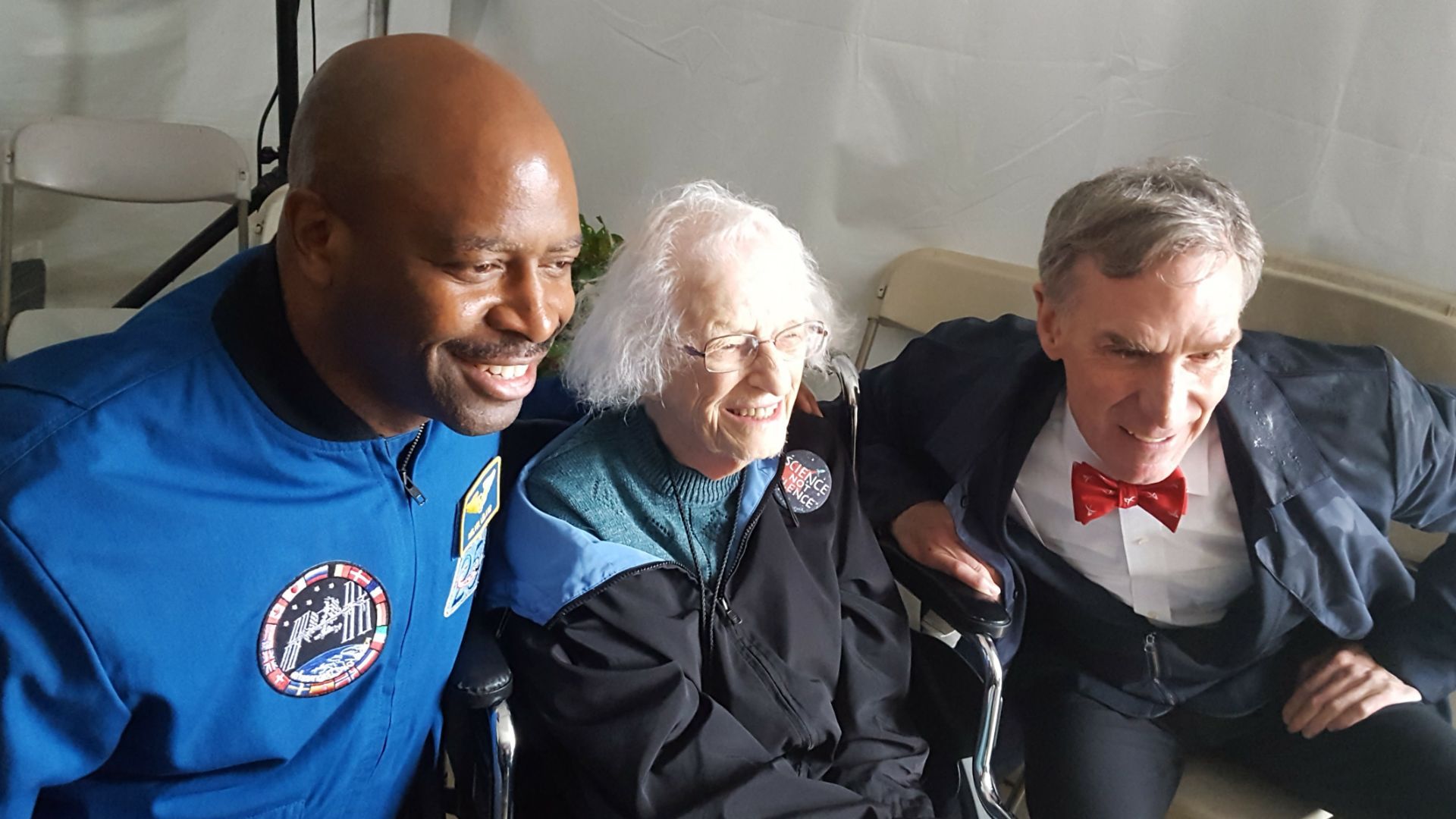
Standing in that tent in 2017, the gravity of the moment was palpable. Bill Nye, a figure whose own career has been dedicated to science communication, leaned in to whisper, "That’s Nancy Roman." To be in the presence of someone who had fundamentally changed the human perspective of the cosmos was overwhelming.
When I introduced myself, admitting I was "starstruck," her response—"You know, I have a thing for stars"—was a masterclass in humility and wit. It was a brief, human moment that underscored a larger truth: even the giants of science are driven by a simple, childlike wonder. Watching her interact with other legends like NASA astronaut Leland Melvin, it was clear that her influence transcended generations. They didn’t just see a retired administrator; they saw the woman who made their own journeys into science and space possible.
Official Responses and Institutional Recognition
NASA’s decision to name the new telescope after Roman was a rare and deliberate honor. Thomas Zurbuchen, former Associate Administrator of NASA’s Science Mission Directorate, noted at the time of the naming, "It is fitting that the telescope which will do so much to uncover the mysteries of the universe bears the name of Nancy Grace Roman, the woman who made space-based astronomy a reality."
The scientific community has echoed this sentiment, viewing the telescope as a monument to her vision. Unlike many missions named after historical figures, the Roman Telescope is intended to be a workhorse—a tool that reflects her pragmatic approach to science. It is designed to be highly efficient, collaborative, and transformative, embodying the same characteristics that defined her professional tenure.
Implications for the Future
The launch of the Nancy Grace Roman Space Telescope marks the beginning of a new era in astrophysics. By combining the vast datasets of the Roman mission with the high-resolution imagery from Webb and the legacy of Hubble, astronomers are entering a "golden age" of observational data.
The implications are profound. We are moving from a phase of discovery—finding the first exoplanets or the first galaxies—to a phase of statistical analysis. We are no longer just looking at the stars; we are mapping the architecture of the universe itself.
As the countdown to the launch continues, the memory of that 2017 meeting remains a reminder of the human element behind the technology. Nancy Grace Roman never saw the telescope that bears her name reach the stars, but she spent her entire life ensuring that humanity would eventually possess the tools to reach them ourselves. She always had a thing for stars, and now, as her namesake telescope prepares to ascend into the black void, she will finally be among them, watching as we continue to unlock the mysteries of the deep cosmos she loved so dearly.