In the modern theater of operations, the gap between "boots on the ground" and the decision-making command center is shrinking, but the technical requirements to maintain that link are growing exponentially more complex. As military forces shift toward highly contested, data-heavy environments, the demand for resilient, lightweight, and secure satellite communications (SATCOM) has never been more acute.
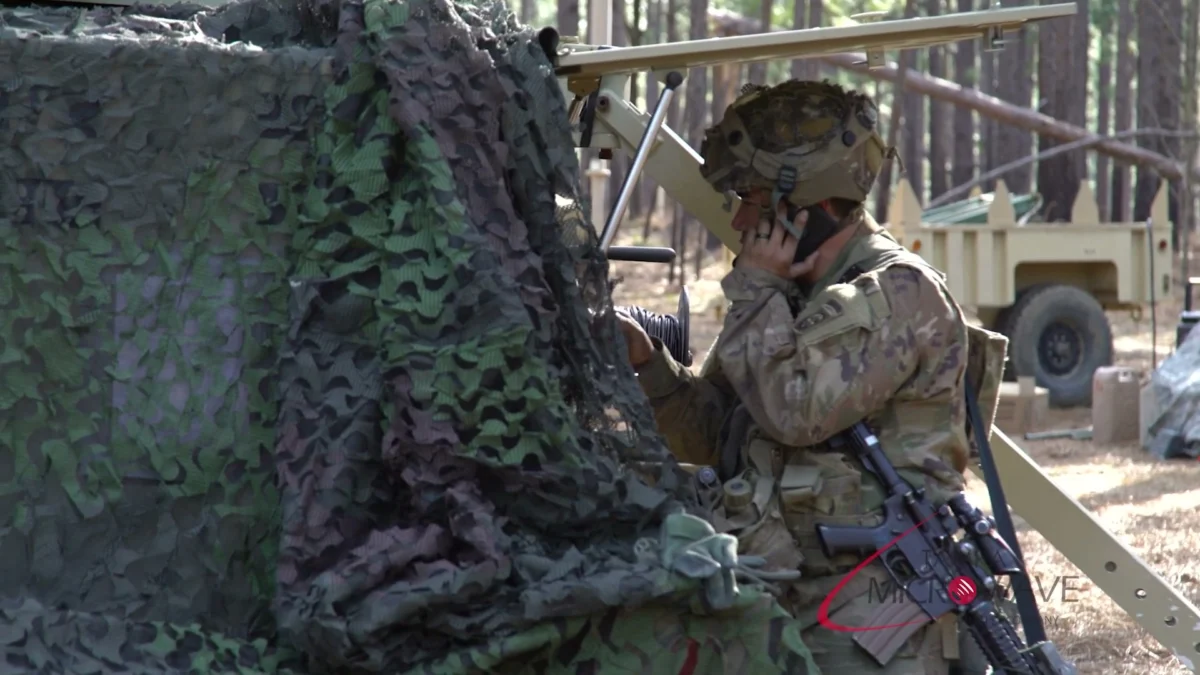
At the Association of the United States Army (AUSA) annual meeting, the discourse surrounding modernization focused heavily on the "dismounted soldier"—the frontline infantryman who requires reliable connectivity to complete mission objectives under duress. To understand the state of this technology, we sat down with Aaron Brosnan, President of Tampa Microwave, a Thales company, to discuss how the industry is pivoting to meet the demands of a new era of warfare.
Main Facts: The New Paradigm of Tactical SATCOM
The primary challenge facing contemporary dismounted forces is the "tyranny of distance" combined with the threat of electronic warfare (EW). Traditional SATCOM systems, once bulky and prone to interception or jamming, are undergoing a radical transformation.
Thales and Tampa Microwave have positioned themselves at the vanguard of this evolution by focusing on three core pillars: portability, resilience, and integration.
- Portability: For the dismounted soldier, every ounce matters. The latest iterations of tactical SATCOM terminals are designed to be man-packable, fitting into standard-issue rucksacks without sacrificing the high-throughput capabilities required for modern digital battlefield applications.
- Resilience: In an age where near-peer adversaries utilize sophisticated signal-jamming capabilities, the ability to switch between satellite constellations and frequency bands instantaneously—often referred to as "Multi-Orbit, Multi-Domain" capability—is no longer a luxury; it is a necessity.
- Secure Integration: The modern terminal is not merely an antenna; it is an integrated gateway. It must bridge the gap between secure radio networks, tactical cloud computing, and high-bandwidth satellite uplinks, ensuring that a soldier’s situational awareness device remains connected to the Common Operating Picture (COP).
Chronology: The Journey Toward Miniaturized Connectivity
The trajectory of tactical communications has been defined by a relentless drive toward miniaturization and digitalization.
- The Early 2000s: Tactical SATCOM was largely vehicle-mounted. Dismounted soldiers relied on line-of-sight radios, which were limited by terrain and distance.
- The 2010s: The introduction of Man-Portable Satellite Terminals (MPST) began to change the game. However, these systems were often cumbersome, requiring specialized training and significant setup time, making them vulnerable in high-tempo environments.
- 2020–2024: The emergence of "Software-Defined" hardware. As Thales integrated Tampa Microwave into its ecosystem, the focus shifted from hardware-centric design to software-defined architectures. This allows terminals to receive over-the-air updates, adapting to new waveforms and satellite protocols without the need for physical equipment replacement.
- The AUSA 2024/2025 Outlook: The current focus is on "Low Probability of Detection" (LPD) and "Low Probability of Intercept" (LPI). The industry is now racing to deploy terminals that are virtually invisible to enemy spectrum monitoring while maintaining robust uplink speeds.
Supporting Data: The Technical Demands of the Modern Battlefield
To understand why the work of Tampa Microwave is critical, one must look at the data requirements of the modern infantry squad. A decade ago, a squad needed voice and basic text messaging. Today, a squad is a sensor-rich entity.
- Data Throughput: Modern tactical operations involve Unmanned Aerial Systems (UAS) streaming high-definition video, real-time biometric data of soldiers, and massive GIS mapping files. This requires an exponential increase in bandwidth compared to the narrowband tactical radios of the past.
- SWaP-C Optimization: The military utilizes the acronym SWaP-C (Size, Weight, Power, and Cost) as its primary metric for equipment procurement. Tampa Microwave’s latest terminals have achieved a 30% reduction in weight compared to systems deployed just five years ago, while simultaneously doubling the power efficiency.
- Latency Requirements: With the rise of "sensor-to-shooter" loops—where target data from a drone must reach an artillery piece in seconds—latency must be kept in the sub-200ms range. Through advanced modem integration, Thales has demonstrated the ability to maintain these speeds even when operating on disparate satellite constellations (LEO, MEO, and GEO).
Official Perspectives: The View from the Front Lines
During our conversation at AUSA, Aaron Brosnan emphasized that the technology is ultimately about "human-centric connectivity."
"When we look at the dismounted soldier, we aren’t just looking at a radio," Brosnan explained. "We are looking at the critical node of a much larger network. If that soldier loses their connection, they lose their access to the intelligence, surveillance, and reconnaissance (ISR) data that keeps them alive. Our mission is to ensure that when they need to reach back, the network is not just available, but invisible and secure."
Brosnan noted that the partnership between Thales’ global reach and Tampa Microwave’s specialized engineering has allowed them to rapidly iterate on designs based on feedback from current operational theaters. "We are not building for the lab; we are building for the muddy, contested terrain of the real world," he added.
Military procurement officials have echoed this sentiment, noting that the modularity of these new systems allows them to adapt to different regional requirements. Whether operating in the dense forests of Eastern Europe or the arid, expansive deserts of the Middle East, the equipment must perform identically.
Implications: Strategic Deterrence and Future Warfare
The implications of these advancements in SATCOM extend far beyond the tactical squad level. They represent a fundamental shift in the strategic calculus of military power.
1. Enhancing Strategic Flexibility
By providing dismounted forces with "reach-back" capabilities that were previously reserved for command centers, military leaders can decentralize command. This "Mission Command" philosophy is bolstered by the fact that smaller units can operate independently, knowing they remain tethered to the global intelligence network.
2. Countering Near-Peer Electronic Warfare
The integration of frequency-hopping technology and advanced satellite tracking means that even if an adversary successfully jams a primary frequency, the system can automatically hop to a secondary or tertiary band. This "self-healing" network capability is the cornerstone of surviving in a contested electromagnetic environment.
3. Sustainability and Lifecycle Management
The Thales-Tampa Microwave model focuses on an "open architecture" approach. By utilizing standard interfaces, the military can swap out modules as technology evolves. This prevents the "vendor lock-in" that plagued military communications for decades and ensures that the systems purchased today will remain relevant for the next ten to fifteen years.
4. The Human Factor: Reducing Cognitive Load
Perhaps the most understated implication is the reduction in cognitive load for the soldier. When technology "just works," the soldier can focus on the mission rather than troubleshooting hardware. Thales’ push toward automated acquisition and tracking means that a soldier can set up a high-speed satellite link in minutes, in total darkness, under fire, without needing an engineering degree.
Conclusion
As the global security environment becomes increasingly volatile, the ability to communicate securely and reliably is the ultimate force multiplier. The collaboration between Thales and Tampa Microwave, showcased at AUSA, highlights an industry-wide realization: the soldier is the most important sensor in the network.
By prioritizing the needs of the dismounted force—weight, speed, and absolute reliability—these companies are ensuring that even as the battlefield becomes more complex, the individual soldier remains empowered. As we move forward, the evolution of tactical SATCOM will continue to be a primary driver of success in both asymmetric conflicts and potential high-intensity warfare. The technology is evolving, and with it, the capability of the modern infantryman to dominate the digital battlefield.