Main Facts: A Digital Leap for European Sovereignty
In a significant expansion of its international footprint, Canadian aerospace giant MDA Space has secured a contract valued at over $100 million CAD (approximately $72 million USD) to supply advanced digital antenna subsystems for the European Union’s IRIS² (Infrastructure for Resilience, Interconnectivity and Security by Satellite) constellation.
Under the agreement with prime contractor Thales Alenia Space, MDA Space will provide its proprietary Aurora broadband digital phased array antennas and digital antenna controllers. These components, which feature advanced digital beamforming capabilities, are slated for integration into the first 66 Low-Earth Orbit (LEO) satellites that will form the cornerstone of the IRIS² network. The authorization to proceed, announced this past Friday, marks a pivotal alignment between North American satellite manufacturing expertise and the European Commission’s ambitious vision for a sovereign, secure, and ultra-high-speed connectivity infrastructure.
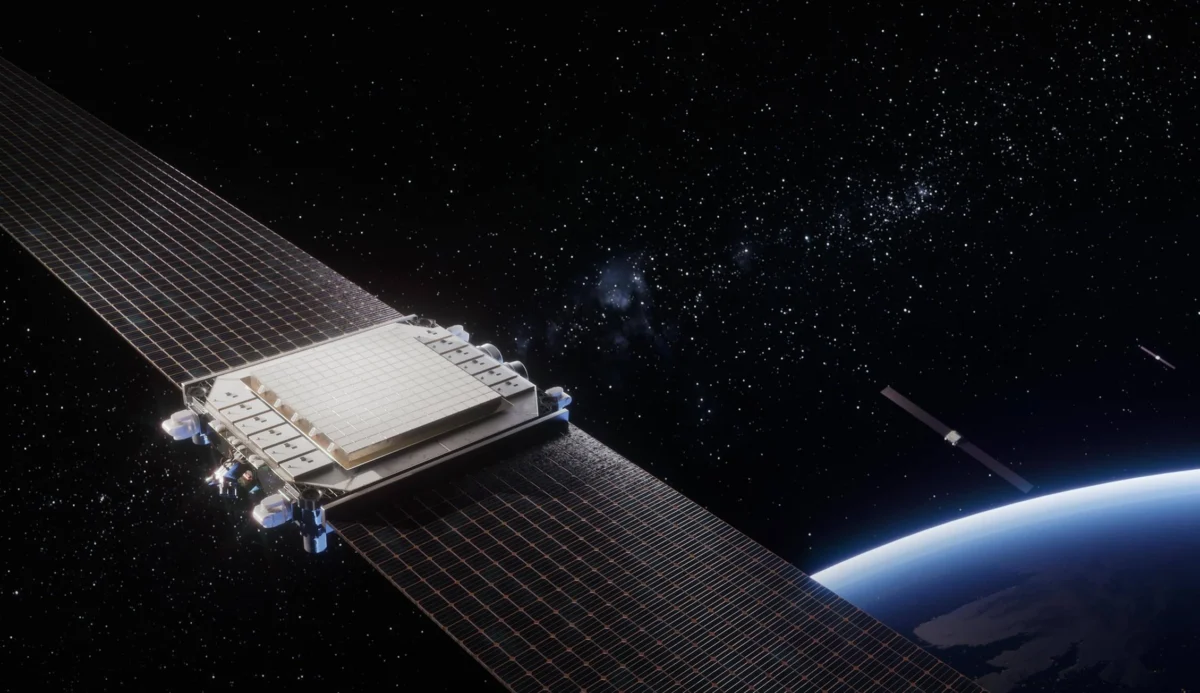
The Aurora direct radiating arrays (DRA) represent a significant technological upgrade for the constellation. By enabling dynamic, software-defined beamforming, these antennas allow the IRIS² satellites to adjust their coverage areas and capacity in real-time, effectively optimizing bandwidth distribution for both governmental users and commercial enterprise clients across Europe and beyond.
Chronology: The Road to IRIS²
The development of the IRIS² program represents one of the most significant geopolitical shifts in the global space economy. Below is a timeline of the events leading up to this strategic partnership.
2022–2023: Genesis of European Sovereignty
Following the geopolitical instability in Eastern Europe and the subsequent realization of Europe’s dependence on foreign satellite constellations, the European Commission accelerated the development of IRIS². The goal was clear: establish an independent, multi-orbital satellite system that provides secure connectivity for governmental, military, and commercial use.
September 2026: The Strategic Procurement Shift
The program took a major leap forward in September 2026 when Eutelsat officially awarded the contracts for the LEO component of IRIS². The procurement strategy was split to ensure both technological diversity and industrial capacity:
- Airbus: Tasked with the manufacturing of 66 Ka-band satellites, representing the high-capacity "Layer 1" of the constellation.
- Aerospacelab: Selected to build an additional 264 dual Ku/Ka-band satellite platforms, focusing on broader network coverage.
- Thales Alenia Space: Retained as the primary partner for the payloads, serving as the systems integrator for the sophisticated telecommunications hardware.
November 2026: The MDA Space Partnership
Following the selection of prime contractors, the focus shifted to the supply chain. On the second Friday of November 2026, the formal authorization for MDA Space to begin manufacturing the antenna subsystems was confirmed. This milestone effectively locked in the technological roadmap for the Layer 1 satellites, ensuring they are on track for their scheduled 2029 launch.
Supporting Data: The Aurora Advantage
The contract revolves around the deployment of MDA’s Aurora product line. In the context of LEO constellations, where thousands of satellites move at high velocities relative to the Earth’s surface, the antenna subsystem is the most critical bottleneck for performance.
Technical Specifications and Capabilities
- Digital Beamforming: Traditional antennas often rely on mechanical movement or fixed-spot beams. Aurora’s digital beamforming allows the satellite to "steer" its connectivity beams electronically in milliseconds. This allows the IRIS² constellation to track users on the ground with surgical precision, even in high-density traffic scenarios.
- Scalability: The architecture of the Aurora array is modular. This allows Thales Alenia Space to integrate these subsystems into the Airbus-built buses with minimal configuration friction, significantly reducing the "time-to-orbit" for each satellite.
- Interoperability: One of the core requirements of IRIS² is the ability to interface with existing ground infrastructure. MDA’s digital antenna controllers are designed to be software-agnostic, meaning they can handle multiple waveforms and frequency bands simultaneously—a critical requirement for a multi-layered, multi-orbit constellation.
Financial and Market Impact
- Contract Value: ~$100M CAD ($72M USD).
- Production Volume: 66 shipsets for the initial Layer 1 deployment.
- Launch Horizon: 2029.
- Market Position: This contract solidifies MDA Space’s transition from a sub-contractor of components to a strategic partner in major global infrastructure projects, positioning the company as a key competitor to US-based satellite hardware manufacturers.
Official Responses: Aligning Global Interests
The collaboration has been met with significant optimism from both sides of the Atlantic.
The Perspective from MDA Space
MDA Space CEO Mike Greenley described the contract as a "landmark moment," emphasizing that the deal validates the company’s heavy investment in digital antenna research and development over the past decade.
"This critical role reflects the confidence Thales Alenia Space and the European Commission have placed in our ability to offer quickly performing, interoperable connectivity that meets the requirements of the Layer 1 satellites," Greenley noted in his formal statement. "The Aurora technology was designed specifically for the next generation of LEO constellations, where agility and signal intelligence are not merely features, but absolute requirements."
The European Strategic View
While Thales Alenia Space has remained focused on the integration logistics, the European Commission’s rhetoric surrounding the IRIS² program has consistently emphasized "strategic autonomy." By bringing in MDA Space, the EU is balancing its need for internal industrial participation with the practical necessity of utilizing "best-in-class" technology, even when sourced from allied nations. The partnership demonstrates a nuanced approach to the space race: prioritizing the performance of the final asset to ensure the security of the continent.
Implications: The Future of Sovereign LEO Networks
1. Shift in Global Supply Chains
The IRIS² contract signals a maturing of the global satellite supply chain. For years, the market was dominated by vertically integrated giants. Now, the industry is moving toward a "best-of-breed" modular approach. By selecting Airbus for the platform, Thales for the payload integration, and MDA Space for the critical antenna subsystems, the EU is creating a benchmark for how multi-national space projects will be executed moving forward.
2. Impact on the 2029 Launch Window
The 2029 launch target for the first 66 satellites is ambitious. By securing the Aurora antenna contract now, the consortium has mitigated one of the primary risks—hardware production delays. With the authorization to proceed in place, MDA Space can now begin the long-lead procurement of semiconductor components and radiation-hardened electronics required for the flight models.
3. The "Aurora" Effect on Future Bids
This contract acts as a massive "proof of concept" for MDA Space. If the Aurora system performs as expected during the 2029 deployment, MDA will likely become the go-to provider for future phases of IRIS² and potentially other international constellations looking to upgrade their hardware. The ability to demonstrate that Canadian-manufactured components can meet the rigorous security and performance standards of the European Commission is a significant competitive advantage.
4. Geopolitical Resilience
IRIS² is designed to provide secure, encrypted, and redundant communication lines that cannot be easily intercepted or disabled. By integrating digital beamforming—which is much harder to jam than traditional wide-beam broadcasts—MDA Space’s antennas are effectively contributing to the defense-readiness of the European Union. This contract is not merely a telecommunications deal; it is a vital contribution to the digital architecture of European security.
Conclusion
As the space industry enters a period of unprecedented expansion, the partnership between MDA Space and Thales Alenia Space serves as a blueprint for success. By combining the agility of Canadian aerospace innovation with the massive infrastructure scale of European industrial policy, the IRIS² project is positioning itself to be more than just a competitor to existing LEO networks—it is aiming to set the standard for secure, high-performance, and resilient space-based connectivity for the next several decades. With the $100 million contract now officially moving from procurement to production, all eyes will be on the 2029 launch pad.