Main Facts: A New Paradigm for Orbital Connectivity
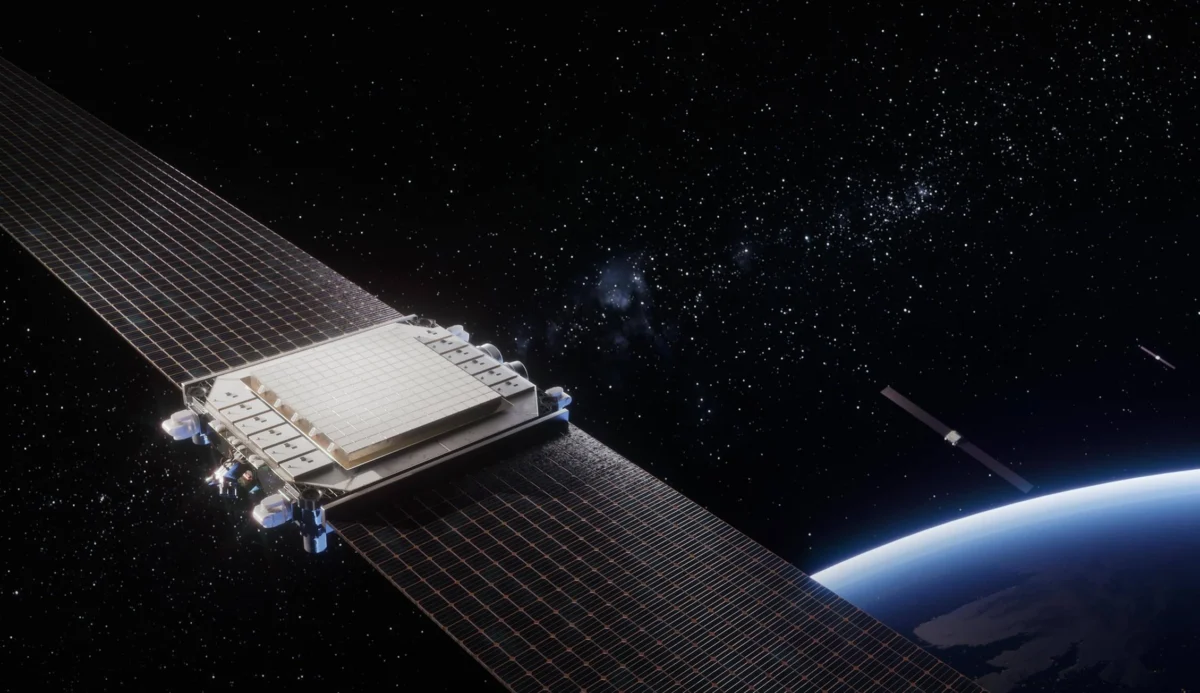
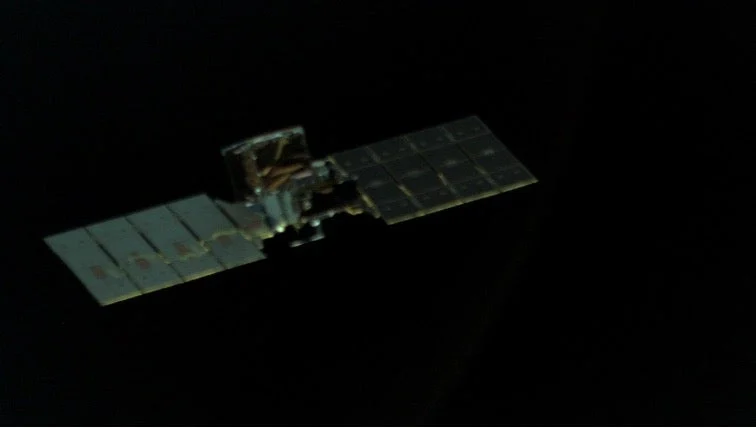
In a significant leap forward for the burgeoning space economy, Santa Fe-based Solstar Space has successfully demonstrated the viability of "Wi-Fi in space." During a recent Rendezvous and Proximity Operations (RPO) mission, the company’s Deke Space Communicator—an experimental communications payload integrated onto the Momentus Vigoride-7 orbital service vehicle—successfully acted as a data bridge between a NASA cubesat and ground controllers at the Johnson Space Center (JSC).
The demonstration, which leveraged the Iridium satellite constellation to relay telemetry and high-fidelity sensor data, marks a critical milestone in orbital networking. By enabling wireless data transfer between independent spacecraft in motion, Solstar is addressing one of the most persistent bottlenecks in modern spaceflight: the "connectivity silo," where proximity operations are often hindered by limited bandwidth and cumbersome communication protocols.
Over the course of a 30-minute high-stakes maneuver, the Deke system successfully ingested, processed, and transmitted more than 2,300 files. These files included high-resolution imagery, optical data, infrared sensor readings, and critical LiDAR telemetry, proving that wireless local area networks (WLAN) can function reliably in the harsh, high-velocity environment of Low Earth Orbit (LEO).
Chronology of the Demonstration
The mission was a result of meticulous planning between NASA, Momentus, and Solstar Space. The timeline of the engagement serves as a blueprint for future multi-spacecraft operations:
- Pre-Mission Integration: The Deke Space Communicator was integrated into the Vigoride-7 vehicle prior to launch. The system was designed to remain dormant until the RPO phase, at which point it was activated to create a localized Wi-Fi "bubble" around the Vigoride-7 spacecraft.
- The Approach Phase: NASA’s R5-S10 cubesat initiated its formation-flying sequence, maneuvering into close proximity with the Momentus vehicle. During this phase, the Deke unit began its automated handshake protocols to establish a wireless link with the approaching cubesat.
- The Data Harvest: As the cubesat performed its proximity assessment—scanning the exterior of the Vigoride-7 to monitor structural health and operational performance—the Deke unit captured the data stream in real-time.
- The Relay Window: Once the 30-minute window of proximity operations concluded, the Deke unit utilized the Iridium satellite network to "backhaul" the massive dataset. This allowed NASA engineers at the Johnson Space Center to receive mission-critical imagery and sensor telemetry without waiting for traditional, intermittent ground station passes.
Supporting Data: The Metrics of Connectivity
The success of the Solstar demonstration is best measured by the volume and variety of data handled during the test. The Deke unit demonstrated its capability to serve as an intelligent router for diverse sensor suites.
Technical Breakdown of the Data Payload:
- Total Data Volume: 2,300+ individual files transmitted.
- Sensor Diversity: The payload processed inputs from optical sensors, infrared thermal cameras, and LiDAR arrays, demonstrating the ability to handle heterogeneous data streams simultaneously.
- Throughput Efficiency: By utilizing Wi-Fi transmission for the short-range link, the system minimized the power requirements for the cubesat’s primary transmitter, instead offloading the relay responsibility to the more robust Deke unit.
- Latency Mitigation: By bypassing the need to wait for direct-to-ground communication windows, the system provided near real-time visibility into the RPO mission, significantly reducing the "information lag" that typically characterizes deep-space and orbital proximity maneuvers.
The use of the Iridium network—a constellation known for its global coverage—proved essential. By acting as the bridge between the LEO environment and the ground, Solstar effectively turned the Vigoride-7 into an orbital communications hub, a role that will be increasingly vital as the number of active satellites in LEO continues to climb.
Official Responses and Industry Vision
The implications of this test have not gone unnoticed by the architects of the space economy. Brian Barnett, the founder and CEO of Solstar Space, emphasized that this demonstration is the first step toward a more interconnected orbital infrastructure.
"This important program shows how Solstar’s technology can help spacecraft stay connected and deliver critical mission data in near real-time to flight controllers, space operators, and mission operations engineers," Barnett stated. "We are effectively laying the groundwork for more capable and coordinated activity in space. The future of orbital logistics depends on the ability of disparate vehicles to talk to one another as easily as devices on an office network."
NASA’s participation in the demonstration highlights the agency’s interest in maturing "proximity operations" technologies. As NASA looks toward future missions involving automated docking, refueling, and debris removal, the ability to maintain a persistent, high-bandwidth data link between the service provider (Momentus) and the client (the cubesat) is no longer a luxury—it is a requirement.
Implications: The Future of Orbital Logistics
The successful deployment of in-space Wi-Fi has profound implications for the commercial space sector, touching on three primary areas: orbital servicing, space situational awareness (SSA), and the democratization of space data.
1. The Dawn of Orbital Servicing
As the orbital environment becomes increasingly crowded, the ability to perform "health checks" on satellites is paramount. Future service vehicles will need to inspect, repair, and upgrade older assets. The Solstar technology facilitates this by allowing the inspector (the cubesat) to dump large datasets onto the host vehicle (the service provider) immediately, ensuring that human operators on the ground have the full context needed to approve or modify repair procedures in real-time.
2. Enhanced Space Situational Awareness (SSA)
With thousands of satellites operating in LEO, collisions and proximity risks are at an all-time high. The ability to network sensors—turning multiple independent satellites into a distributed sensor array—would revolutionize SSA. If every satellite in a formation could share its LiDAR and optical data via a localized wireless network, operators could build a comprehensive 3D map of their surroundings, rather than relying on disparate, fragmented data points.
3. Reducing the "Cost of Complexity"
Currently, space communications are proprietary, cumbersome, and expensive. By standardizing communication protocols through Wi-Fi-like interfaces, Solstar is lowering the barrier to entry for smaller companies. If a startup can build a cubesat that "speaks" standard Wi-Fi, they no longer need to develop complex, custom radio-frequency hardware to transmit data to ground stations. They can simply hitch a ride on an existing orbital network infrastructure, much like a smartphone connects to a public hotspot.
The Road Ahead
The Momentus Vigoride-7 mission is only the beginning. Solstar Space has indicated that they intend to scale this technology, moving toward higher bandwidths and more sophisticated mesh networking capabilities. As the "Space Economy" moves from the conceptual phase to the industrialization phase, the need for an "orbital internet" becomes undeniable.
The Deke Space Communicator has proven that the vacuum of space is no longer a barrier to reliable, high-speed data transmission. By integrating the same principles of connectivity that power our terrestrial lives into the architecture of our spacecraft, the industry is paving the way for a more robust, safe, and efficient space-faring future. The lessons learned from the Vigoride-7 demonstration will undoubtedly serve as the foundation for the next generation of satellite constellations, orbital repair depots, and autonomous exploration missions.