In the silent, frigid expanse of the vacuum, a veteran Japanese spacecraft has performed a feat of navigation so precise it borders on the miraculous. On July 5, 2026, the Japan Aerospace Exploration Agency’s (JAXA) Hayabusa2 probe executed a high-speed, hyper-close flyby of the near-Earth asteroid Torifune. The maneuver, which brought the craft within a hair’s breadth of the asteroid’s surface, has not only returned unprecedented imagery but has also signaled a paradigm shift in how humanity conducts planetary defense and asteroid reconnaissance.
A Double Surprise: The Discovery of Torifune’s Nature
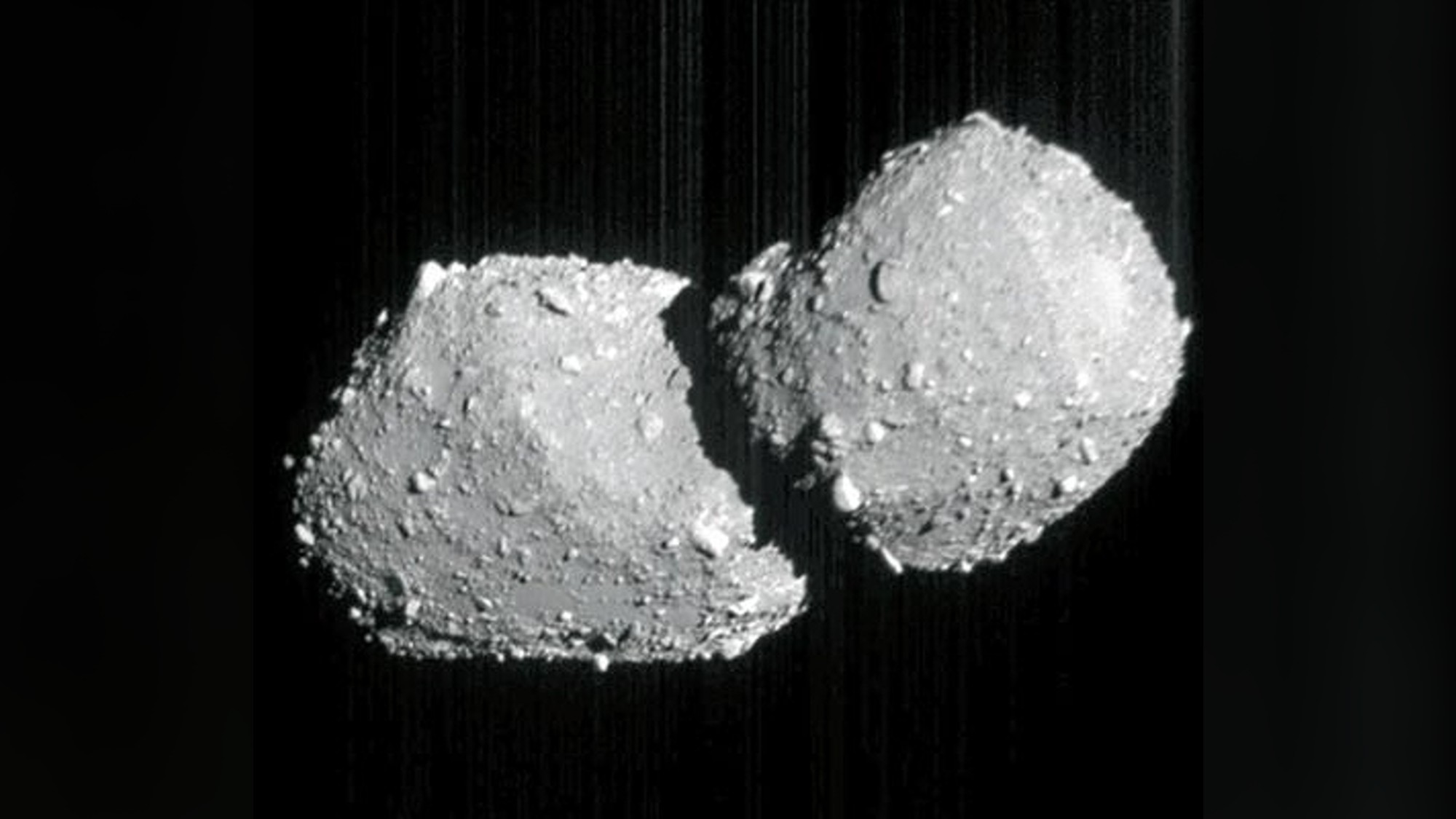
When the first telemetry data packets arrived at JAXA’s Sagamihara Campus on the morning of July 6, the mission team was met with a dual revelation. First, the Optical Navigation Camera (ONC-T) had captured images of higher fidelity and larger scale than the most optimistic mission planners had dared to hope. Second, and perhaps more scientifically profound, was the nature of the target itself.
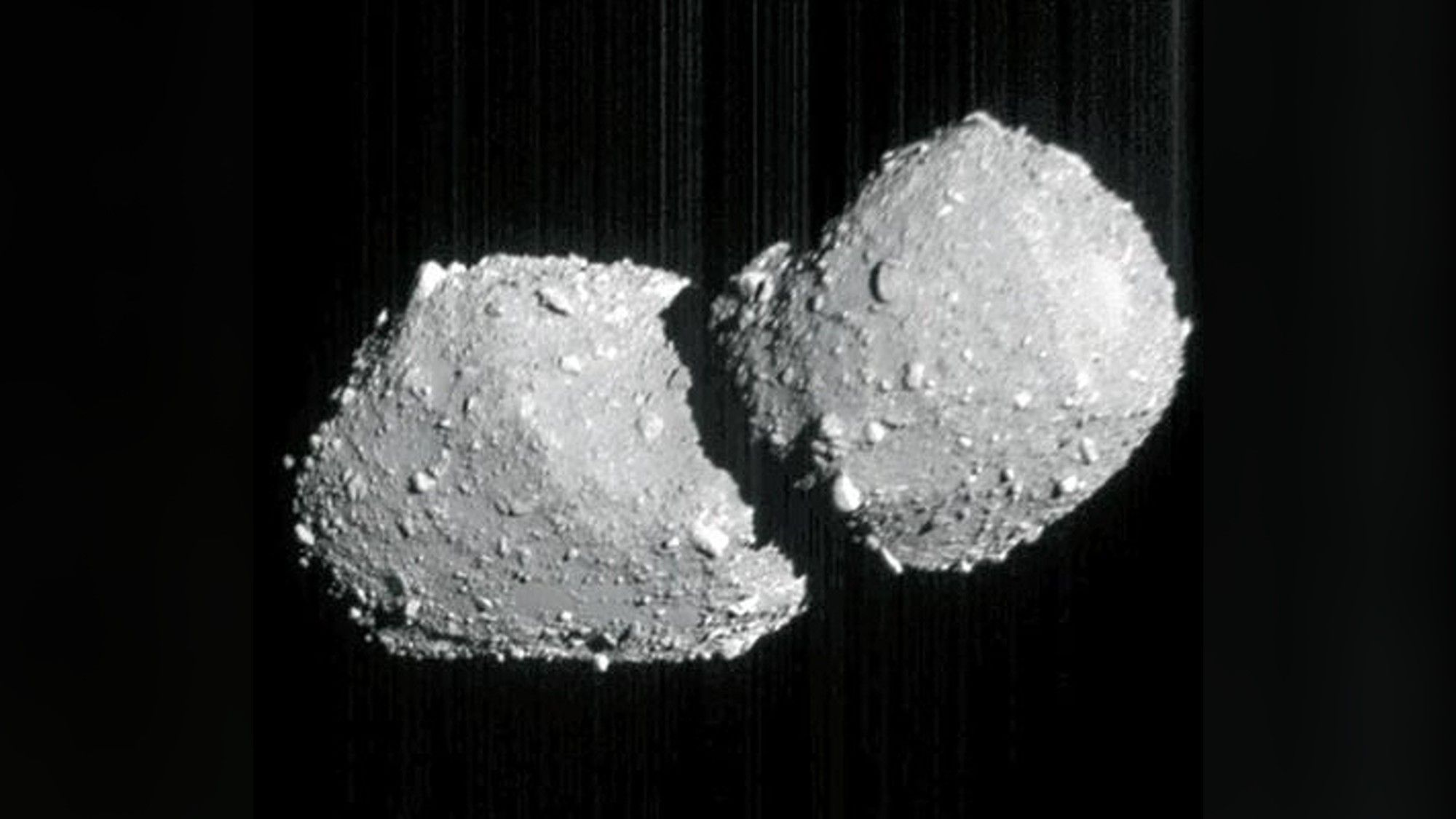
Torifune, a previously enigmatic near-Earth object, revealed itself to be a "contact binary"—a celestial structure formed by two distinct lobes of rock that have drifted into one another and bonded under the influence of their mutual gravitational pull. The resulting images show a grey, double-lobed body, its surface scarred and blanketed with boulders of varying sizes, providing a stark, high-contrast look at the primitive building blocks of our solar system.
"We did not imagine such a contact binary," said Makoto Yoshikawa, the former Hayabusa2 mission manager, during a presentation at the Asteroids, Comets and Meteors conference in Poznan, Poland. "Originally, we didn’t think we could have such a very big image. Maybe we will take a very small one, but the image was much larger than we expected."
The Chronology of a High-Stakes Gamble
The success of the Torifune flyby was the culmination of a grueling, months-long internal debate within JAXA. Hayabusa2, having successfully returned pristine samples from the asteroid Ryugu to Earth in 2020, was never originally intended for such an aggressive maneuver.
The Planning Phase
Traditionally, asteroid flybys are conducted at a "safe" distance of roughly 100 kilometers (62 miles). However, the science team realized that at such a range, the probe’s cameras would struggle to resolve the global shape of a small target like Torifune. The engineering team, tasked with the health of an aging spacecraft, initially pushed back.
The Escalation
The mission requirements shifted from a standard observation to a "high-speed reconnaissance" pass. Engineers eventually proposed a 10-kilometer distance, which the science team deemed acceptable. Yet, the ambition of the mission grew. Just one month before the scheduled encounter, extended mission team leader Yuya Mimasu proposed a radical reduction: a flyby distance of just 800 meters (roughly 2,625 feet) from the asteroid’s center.
The Execution
The decision sparked heated internal debate. Critics argued that the risks were too high: the target’s dimensions were not precisely known, and the spacecraft’s optics had been degraded by dust from the Ryugu sampling campaign. Nevertheless, the navigation team developed new, sophisticated onboard guidance software to account for the lack of ground-based communication lag during the final approach. On June 19, the probe successfully detected Torifune, transitioning from ground-based guidance to autonomous onboard control just three hours before the closest approach on July 5.
Technical Feats and Scientific Payoff
The flyby was a triumph of engineering, but the scientific harvest was equally significant. While the Optical Navigation Camera captured the public’s imagination with high-resolution photos, the entirety of the probe’s instrument suite was firing.
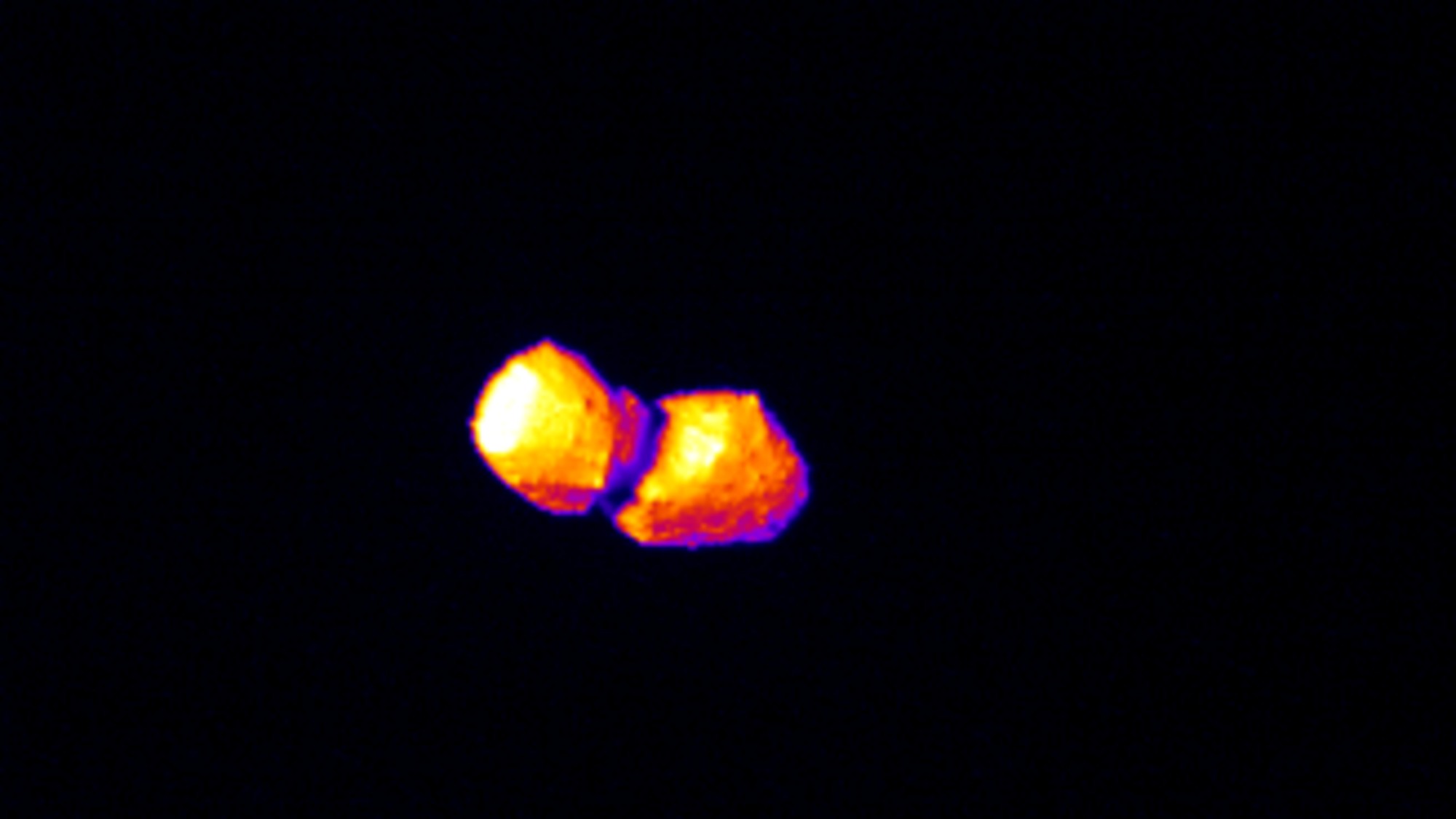
- Thermal Infrared Imager (TIR): This instrument captured nine critical seconds of thermal data moments before the closest approach. By recording the heat emission, the TIR provided independent verification of the contact binary structure, helping scientists understand the density and thermal inertia of the two lobes.
- Laser Altimeter (LIDAR): Hayabusa2 performed what is believed to be the first successful LIDAR ranging measurement during a high-speed asteroid flyby. This data is invaluable for constructing a 3D model of the asteroid’s geometry.
- Near Infrared Spectrometer (NIRS3): Data from this instrument is currently being processed to determine the mineralogical composition of the asteroid’s surface, which will shed light on the origin of the two lobes.
However, the "data drought" remains. Of the total 300 MB of science data gathered, only the most urgent 25 MB have been downlinked to Earth. Because Hayabusa2 is currently maneuvering to begin a long cruise phase—requiring four months of ion engine operations—the remainder of the data will not reach Earth for several months.
Official Responses and the Future of Planetary Defense
JAXA officials have been quick to frame this mission not just as a scientific success, but as a strategic milestone. In his closing remarks at the Poznan conference, Yoshikawa noted that the mission represents a massive leap forward in planetary defense.
"JAXA has acquired the technology to collide spacecraft with a small celestial body," Yoshikawa explained. By performing a high-speed, 5.3-kilometer-per-second (3.3 miles per second) flyby with such extreme precision, JAXA has essentially demonstrated the feasibility of "fast reconnaissance." In a planetary defense scenario, where an unknown asteroid might be identified on a collision course with Earth, the ability to launch a rapid-response probe to characterize the target’s size, shape, and structure—before a kinetic impactor is sent to nudge it off course—is the difference between a successful deflection and a catastrophic impact.
The Road Ahead: 1998 KY26
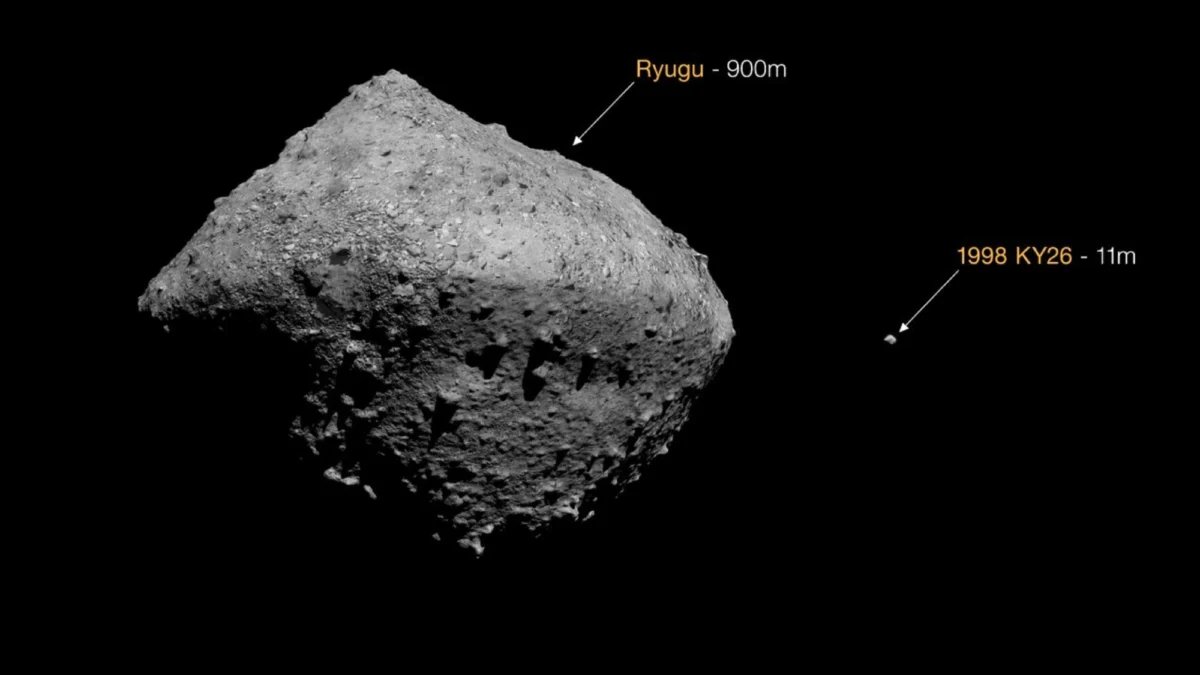
While the Torifune flyby was a spectacular deviation, it is not the finale for Hayabusa2. The spacecraft’s primary objective for its extended mission remains the tiny, rapidly rotating asteroid 1998 KY26.
Measuring only 36 feet (11 meters) in diameter, 1998 KY26 represents a class of objects that are notoriously difficult to study due to their small size and high spin rates. Hayabusa2 is scheduled to rendezvous with this target in 2031. Before that, the spacecraft will conduct two Earth flybys in 2027 and 2028 to adjust its trajectory, utilizing the gravity of our home planet to slingshot toward its final destination.
As Hayabusa2 continues its voyage, the mission serves as a testament to the longevity of well-engineered hardware and the ingenuity of the scientists who refuse to let a mission end when the primary objectives are checked off. By pushing the boundaries of what a "retired" spacecraft can do, JAXA is not only uncovering the secrets of the primitive solar system but is also ensuring that, should a dangerous rock ever head toward Earth, we will be prepared to look it in the eye and push back.