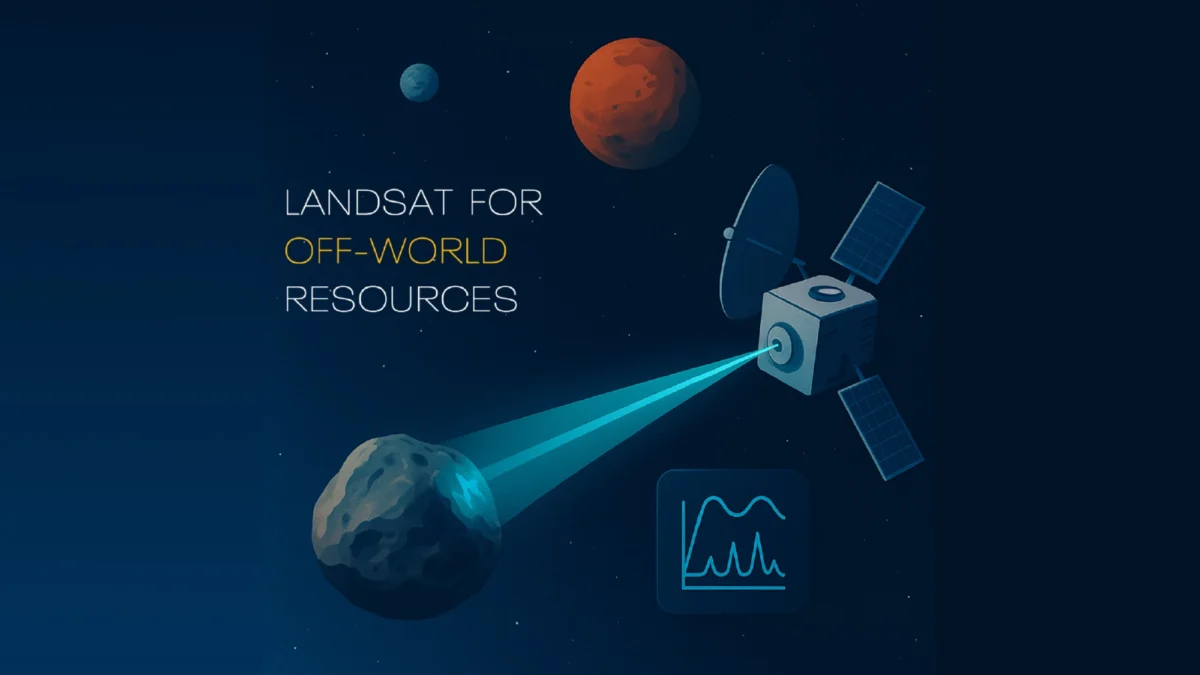
For over half a century, the U.S. government’s Landsat program has served as the gold standard for Earth observation. By capturing high-resolution mineralogical data and climate patterns from orbit, Landsat has transformed our understanding of our home planet’s resources and environmental shifts. Now, a bold new NASA initiative seeks to replicate this "mineral intelligence" on a cosmic scale.
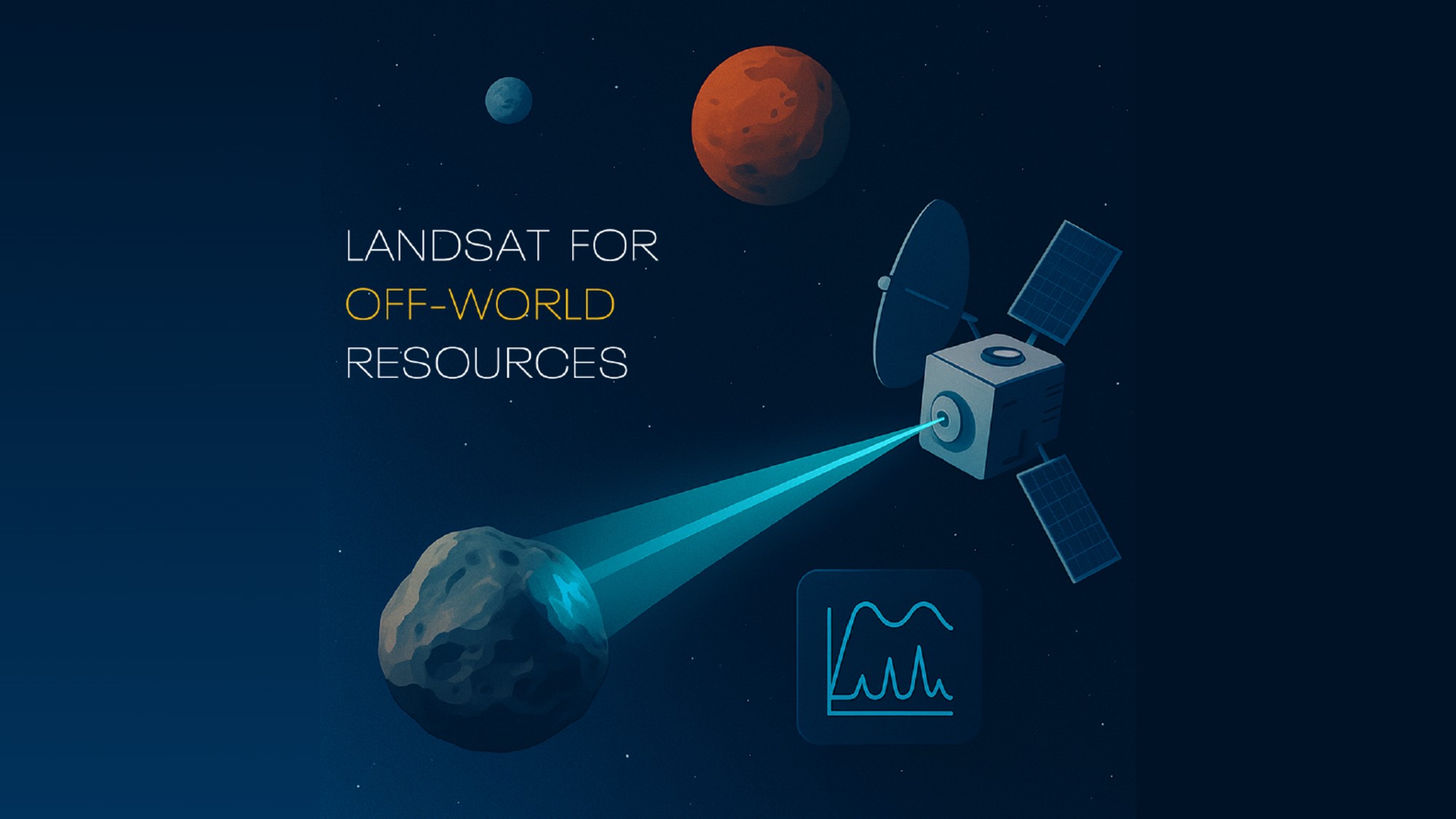
The project, whimsically titled "Interworld Slingshot Resource Surveys," is currently in its early research phase under the NASA Innovative Advanced Concepts (NIAC) program. It aims to develop a fleet of agile, highly sophisticated spacecraft capable of scanning the moon, asteroids, and even the moons of Mars, identifying valuable resources before a single human or rover ever touches the surface.
The Strategic Imperative: Why We Need Space-Based Prospecting
The push for lunar exploration is no longer just about national prestige; it is a high-stakes race for sustainable infrastructure. With NASA’s Artemis program targeting the establishment of a permanent lunar base in the 2030s, the agency is under increasing pressure to secure critical resources.
The primary objective is the identification of accessible water ice, metals, and volatile elements like helium-3—a potential fuel source for future fusion energy. As global powers, particularly China, aggressively pursue lunar mining capabilities, the United States faces a strategic mandate to map these resources with precision.
"The thing most likely to stop space mining may be that we cannot afford to prove there is anything worth mining," says Pablo Sobron, the principal investigator of the Slingshot project and a research scientist at the SETI Institute. "Land in the wrong place and you can lose an entire exploration program or a company, and nobody has enough money to keep sending spacecraft and hoping for the best."
Sobron’s insight highlights the "high-stakes" nature of space exploration. Current mission profiles rely on blind landings or limited surface-level testing. If a multi-billion-dollar mission lands in a mineral-poor region, the financial and temporal losses are catastrophic. Slingshot offers a preventative solution: orbital scouting that provides a detailed inventory of a landing site’s composition before the mission is fully committed.
How It Works: The Physics of Orbital Spectroscopy
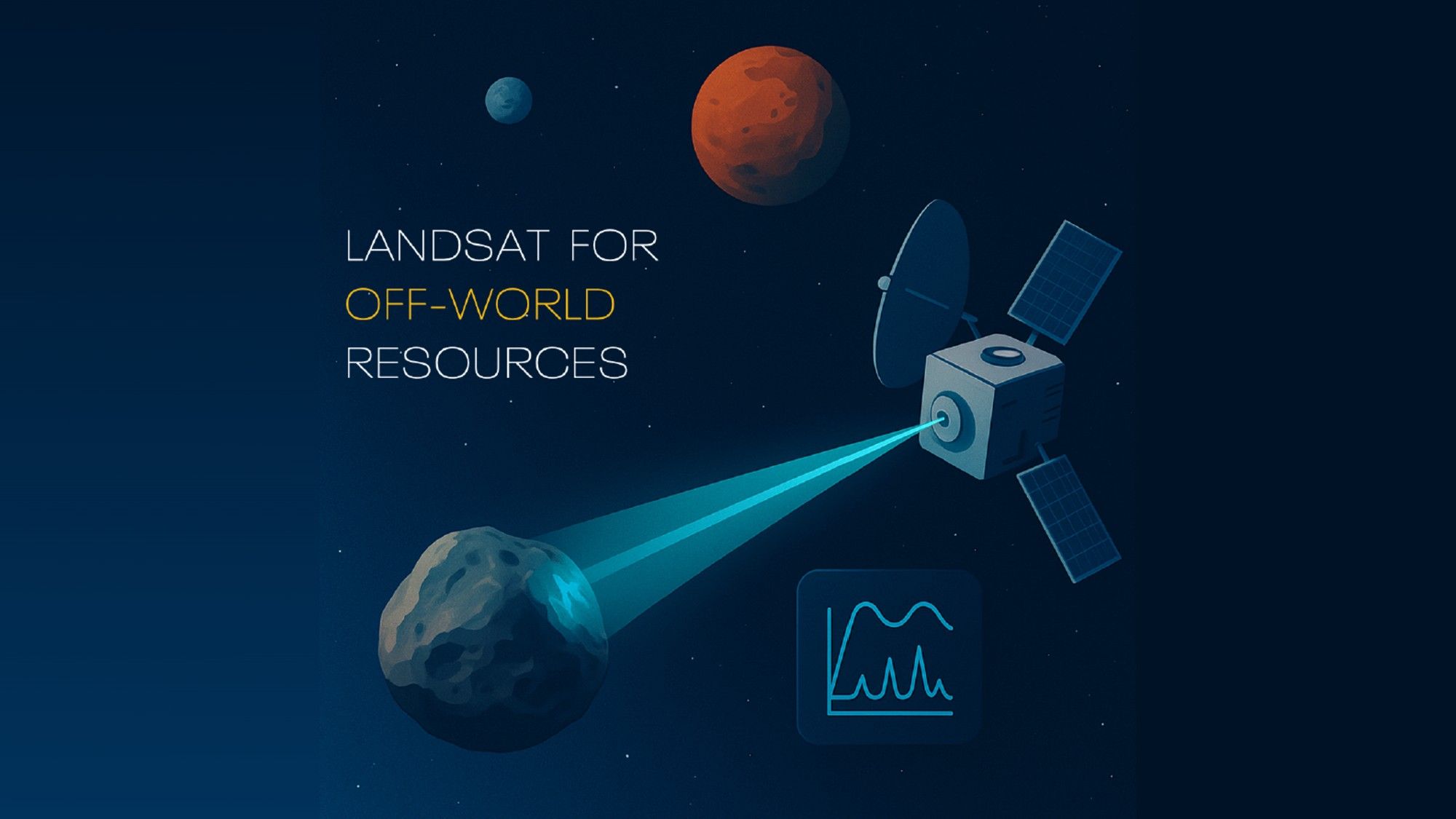
At the heart of the Slingshot concept is the adaptation of Raman spectroscopy for long-range use. Raman spectroscopy is a well-established scientific technique used to determine the molecular structure of materials. When a laser is fired at a target, the reflected light undergoes a shift in energy—a "Raman scattering"—that acts as a chemical fingerprint, allowing scientists to identify specific minerals, water, and organic compounds.
On Mars, the Perseverance rover uses this technology to analyze rocks in its immediate vicinity. However, moving this capability from the surface to an orbiting spacecraft is a monumental engineering challenge.
"The main challenge for Interworld Slingshot Resource Surveys is the distance involved," the SETI Institute explained in a recent project overview. "Raman scattering is very faint and hard to detect. The project team says that only about one photon in 10 trillion is Raman-scattered."
Previous testing by Sobron’s team successfully demonstrated long-distance Raman measurements at ranges of approximately 120 meters (393 feet). The Slingshot project aims to push this boundary to a staggering 30 to 50 kilometers (19 to 31 miles). Achieving this would allow a spacecraft to survey vast lunar or asteroidal landscapes from a stable, safe orbit, effectively turning the entire target body into a "laboratory" without the need for surface-level deployment.
A Chronology of the Slingshot Concept
The evolution of the Slingshot project follows the rigorous, multi-stage development cycle typical of high-risk, high-reward space technology:
- Pre-Conceptual Development: The foundational research into long-distance spectroscopy began with localized field tests on Earth, proving that Raman signals could be retrieved from beyond the immediate contact range.
- NIAC Phase 1 Selection: In 2024, NASA officially accepted the Interworld Slingshot Resource Surveys into its NIAC portfolio, awarding the team approximately $175,000 for a nine-month study. This phase is dedicated to feasibility: testing laser optics, photon detection sensitivity, and orbital mechanics.
- The Current Roadmap: The project is currently focused on optimizing the "pointing and tracking" requirements. Because the target is so far away, the spacecraft must maintain a laser lock on a moving surface target while traveling at high orbital velocities.
- The Future (Phase 2 and Beyond): Should the Phase 1 study prove successful, the team will apply for Phase 2 funding, which would provide more substantial resources over a two-year period to move toward building a flight-ready prototype.
Supporting Data: The Power of NIAC
The NASA Innovative Advanced Concepts program is the agency’s "skunkworks" for the future. It specializes in funding ideas that sound like science fiction but are backed by solid theoretical physics. While the path from a NIAC grant to a launch pad is notoriously long and fraught with technical hurdles, the program serves as an essential incubator for technologies that eventually become standard practice.
One notable success, the Solar Neutrino Astro-Particle Physics CubeSat (SNAPPY), recently demonstrated that small, highly specialized spacecraft—a "CubeSat" class—could successfully deploy in space to perform complex physics experiments. Slingshot hopes to follow this trajectory, utilizing the efficiency of small satellite architecture to perform deep-space prospecting that previously would have required massive, expensive flagship missions.
Implications for Global Space Commerce
The potential success of the Slingshot technology could shift the entire economic model of space exploration. By drastically lowering the cost of resource identification, NASA is not just enabling its own missions; it is potentially opening the door for the private sector.
- Risk Mitigation: Mining companies could use Slingshot-style orbital data to select sites with the highest yield of water ice, reducing the risk of "dry" mining operations.
- Scientific Discovery: Beyond mining, the ability to perform high-resolution spectral mapping from orbit would be a revolutionary tool for planetary scientists, allowing them to map the geological history of worlds like Phobos or Ceres with unprecedented speed.
- The Geopolitical Balance: As the U.S. looks to maintain its lead in the "New Space Age," the ability to rapidly survey and claim mineral-rich lunar poles is a significant geopolitical asset. The nation that understands the lunar surface best will likely control the logistics of future lunar bases.
Challenges and Future Outlook
Despite the optimism surrounding the project, significant technical hurdles remain. The laser power required to detect one photon in 10 trillion at a distance of 50 kilometers is non-trivial. It requires precise beam divergence control, sophisticated noise-reduction sensors, and advanced orbital positioning to keep the spacecraft stable.
Furthermore, the "slingshot" nature of the mission—the idea that the spacecraft would fly from the moon to an asteroid, then to a Martian moon—demands incredible propulsion efficiency. The team is currently studying how to utilize gravitational assists and low-energy orbital transfers to make this multi-destination journey possible without carrying massive amounts of chemical fuel.
If the team can solve the problem of signal-to-noise ratio in their spectroscopic measurements, the Interworld Slingshot Resource Surveys could fundamentally change how we explore the solar system. We would no longer be guessing where to land; we would be arriving with a detailed geological map in hand, ready to extract the resources necessary to make humanity a multi-planetary species.
As the team concludes their nine-month Phase 1 study, the global space community watches with interest. If Sobron and his colleagues at the SETI Institute succeed, the "Slingshot" may well become the catalyst that turns the dream of space mining into a tangible, economic reality.