WASHINGTON — In a move that signals a profound shift in the architecture of American space-based defense, the U.S. Space Force has officially partnered with the Pentagon’s secretive "Golden Dome" office to overhaul how the military manages orbital data. The service announced this week that Viasat, Inc. has been selected to design and operate a new Missions Operation Center (MOC), a critical technological linchpin designed to act as the central nervous system for the burgeoning Space Data Network (SDN) Backbone.
The contract, an indefinite delivery/indefinite quantity (IDIQ) agreement with a ceiling of $450 million, marks a significant acceleration in the Trump administration’s push to unify disparate satellite constellations into a cohesive, survivable missile defense shield. As the Space Force moves away from siloed, vendor-specific systems, Viasat’s role as the primary integration partner will be to ensure that the "Golden Dome"—the administration’s flagship missile defense initiative—remains functional, resilient, and responsive in the face of increasingly sophisticated adversary jamming and electronic warfare capabilities.
The Strategic Mandate: Connecting Sensors to Shooters
At its core, the SDN Backbone is designed to solve one of the most pressing problems in modern warfare: data latency. Historically, military satellites have operated in stovepipes—a communications satellite, a missile-warning sensor, and a tactical relay often could not "speak" to one another without significant human intervention or ground-based rerouting.
The MOC will change this by serving as the software-defined orchestrator for the entire network. Functioning as a high-tech evolution of the classic telephone exchange, the MOC will autonomously manage traffic across multiple satellite constellations, including the high-speed, low-latency low Earth orbit (LEO) backbone currently being built by SpaceX.
“The MOC establishes the mission operations layer needed to integrate the diverse space data transport and space exchange systems being developed across related efforts,” said Lt. Col. Alexa Eggert, materiel leader for the SDN Backbone program at the Space Systems Command (SSC). “By bringing the systems together in one place, it positions us to deliver a more integrated mission capability across multiple constellations and systems.”
Chronology: Building the Golden Dome
The path to this contract reflects a rapid pivot in defense procurement policy since 2025.
- May 20, 2025: President Donald Trump formally introduces the "Golden Dome" initiative in the Oval Office, framing it as the ultimate deterrent against hypersonic and ballistic missile threats.
- Early 2026: The Department of Defense pivots to an "open-architecture" philosophy, moving away from monolithic satellite programs in favor of a proliferated, multi-vendor LEO constellation.
- May 2026: SpaceX secures a $2.29 billion contract to accelerate the deployment of the SDN Backbone, providing the physical hardware (satellites) for the transport layer.
- February 2027: The Space Force releases the formal solicitation for the Missions Operation Center, seeking a partner capable of managing the software-defined complexity of a multi-vendor network.
- Current Date: Viasat is named the primary integration partner, tasked with building the software and operational infrastructure to connect the SpaceX hardware with existing sensor grids.
Technical Implications: Why Orchestration Matters
The technical challenge of the MOC lies in "network orchestration." In a conflict scenario, space becomes a contested domain. Adversaries will likely employ directed-energy weapons, cyberattacks, and signal jamming to degrade U.S. communications.
The MOC is designed to counter these threats through dynamic routing. If a primary data path becomes congested or compromised by jamming, the MOC’s algorithms will instantaneously "hop" data traffic to a secondary constellation—perhaps switching from a dedicated military link to a commercial LEO node without human intervention. This capability is essential for the Golden Dome, which requires split-second data transmission to calculate missile trajectories and guide interceptors.
The center will provide:

- Cross-Constellation Interoperability: A universal translator for data protocols used by different contractors.
- Autonomous Traffic Management: Real-time load balancing to prevent bandwidth bottlenecks.
- Resiliency Analytics: Predictive monitoring that identifies potential service degradation before a failure occurs.
- Cyber-Hardened Command: A centralized, secure hub for managing the encrypted data flows that underpin the U.S. nuclear and conventional missile defense posture.
Official Responses and Industry Outlook
The selection of Viasat is seen by industry analysts as a tactical win for the "open-architecture" approach championed by Space Systems Command. By decoupling the satellite hardware (SpaceX) from the network management software (Viasat), the Space Force is attempting to prevent vendor lock-in and foster a more competitive, responsive supply chain.
“In this role, Viasat, Inc. will serve as the network and mission system integration partner as SSC expands its open-architecture ecosystem across multiple space-segment providers,” the SSC stated in its press release.
For Viasat, this contract represents a transition from a hardware-focused telecommunications firm to a high-level systems integrator for the Department of Defense. The company’s ability to manage large-scale, software-defined networks is being put to its most rigorous test yet: supporting the foundational architecture of a national missile defense shield.
Strategic Implications: A New Era of Space Warfare
The integration of the SDN Backbone through the MOC marks the end of an era where space operations were viewed as static, long-term investments. Instead, the "Golden Dome" reflects a view of space as a dynamic, maneuverable battlefield.
The "All-Domain" Connection
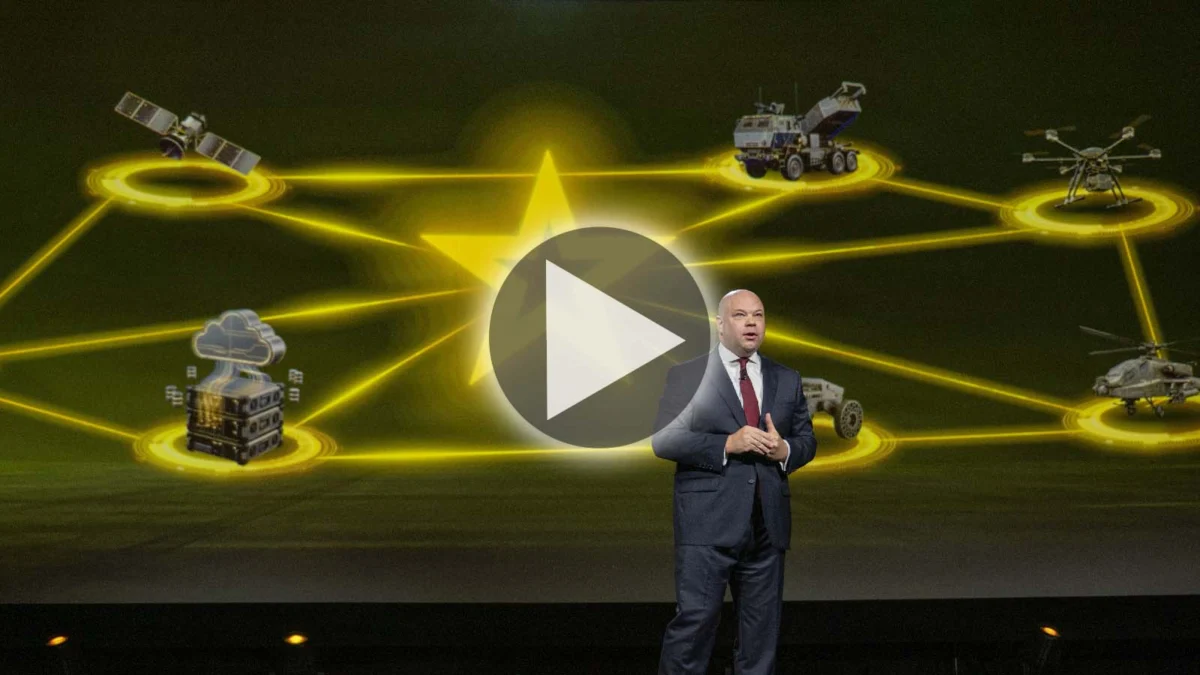
The ultimate goal of this initiative is to link space-based sensors to shooters across all domains—land, sea, air, and space. A sensor on a satellite detecting a missile launch will now be able to feed data directly into the MOC, which then distributes targeting coordinates to naval ships, land-based missile batteries, and aerial assets simultaneously.
Deterrence and Escalation
Critics have raised concerns that a more integrated and "resilient" missile defense system could inadvertently encourage risk-taking by reducing the perceived vulnerability of the U.S. homeland. However, proponents within the Trump administration argue that the Golden Dome is purely defensive. By ensuring that the U.S. can track and intercept incoming threats with near-perfect reliability, they contend that the system removes the incentive for adversaries to use missile diplomacy, thereby stabilizing global tensions.
Budgetary Considerations
With a $450 million ceiling, the MOC contract is significant, but it is likely only the first of many. As the SDN Backbone expands to include more commercial partners and international allies, the complexity of the orchestration task will grow. The challenge for Viasat and the Space Force will be scaling this "digital telephone exchange" without compromising the security or reliability of the Golden Dome.
As the program moves into its implementation phase, all eyes will be on how the Space Force balances the speed of commercial innovation with the rigorous requirements of military-grade missile defense. The success of the MOC will not only define the effectiveness of the Golden Dome but will likely serve as the blueprint for all future military space operations in the mid-21st century.
The transition toward a fully integrated, software-defined space architecture is no longer a theoretical goal—it is now an active, multibillion-dollar reality. As the MOC comes online, the U.S. military is effectively betting that its ability to manage data in real-time will be the most potent weapon in its arsenal.