
On August 29, 1965, the recovery ship USS Lake Champlain pulled a small, scorched capsule from the choppy waters of the Atlantic Ocean. Inside were NASA astronauts Gordon Cooper and Pete Conrad, emerging from the cramped, humid confines of the Gemini 5 spacecraft. They had just completed a record-breaking eight-day mission that fundamentally altered the trajectory of human spaceflight. By proving that the human body—and the spacecraft supporting it—could endure the rigors of long-duration orbital flight, Cooper and Conrad effectively cleared the runway for the Apollo program and the eventual lunar landings.
The Context: A Race Against Time and Biology
In the mid-1960s, the Space Race between the United States and the Soviet Union was reaching a fever pitch. Human spaceflight was still in its infancy; only four years prior, Soviet cosmonaut Yuri Gagarin had become the first human to orbit the Earth, a feat that lasted a mere 108 minutes.
By 1965, the United States was playing catch-up. While NASA had successfully completed earlier missions under the Project Gemini banner, the longest duration achieved by an American crew was only four days. For President John F. Kennedy’s mandate—to land a man on the moon and return him safely to Earth by the end of the decade—NASA needed to demonstrate that astronauts could survive in space for at least eight days. This was the estimated time required for a round-trip lunar mission. Gemini 5 was, in essence, the ultimate dress rehearsal for the moon.
Chronology of the Mission: From Launch to Splashdown
The mission began on August 21, 1965, at the Cape Canaveral Air Force Station in Florida. Perched atop a powerful Titan II rocket, the Gemini 5 spacecraft lifted off, carrying Commander Gordon Cooper and Pilot Pete Conrad into the void.

The First Days: Ambitious Goals and Early Glitches
From the outset, the mission was designed to test the limits of both man and machine. The primary objectives were ambitious: a long-duration flight, a rendezvous demonstration with a specialized pod, and a suite of complex scientific experiments.
However, trouble emerged early. Shortly after reaching orbit, a pressure issue developed in the spacecraft’s fuel cell oxygen tank. The fuel cells were critical; they were the primary source of electrical power for the mission. With the power supply compromised, flight controllers at Mission Control in Houston were forced to make a difficult decision: they canceled the rendezvous demonstration. The astronauts were instructed to power down non-essential systems to conserve energy, turning their spacecraft into a "drifting" laboratory.
The "Eight Days or Bust" Reality
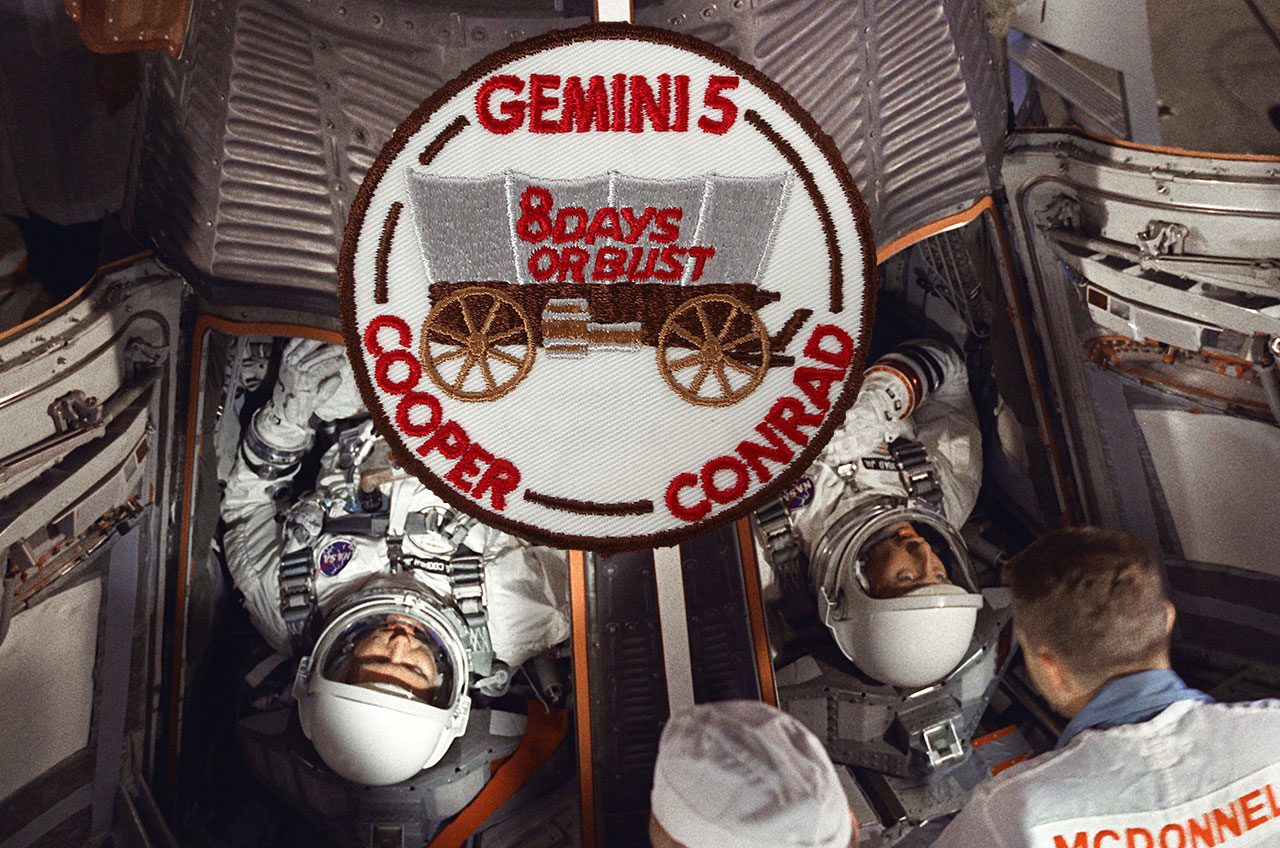
Despite the technical setbacks, the crew pressed on. Pete Conrad, known for his humor, famously described the cramped quarters of the Gemini capsule as "eight days in a garbage can." The lack of space meant the astronauts could barely move, and the environmental control system struggled to keep the cabin at a comfortable temperature, leading to significant discomfort.
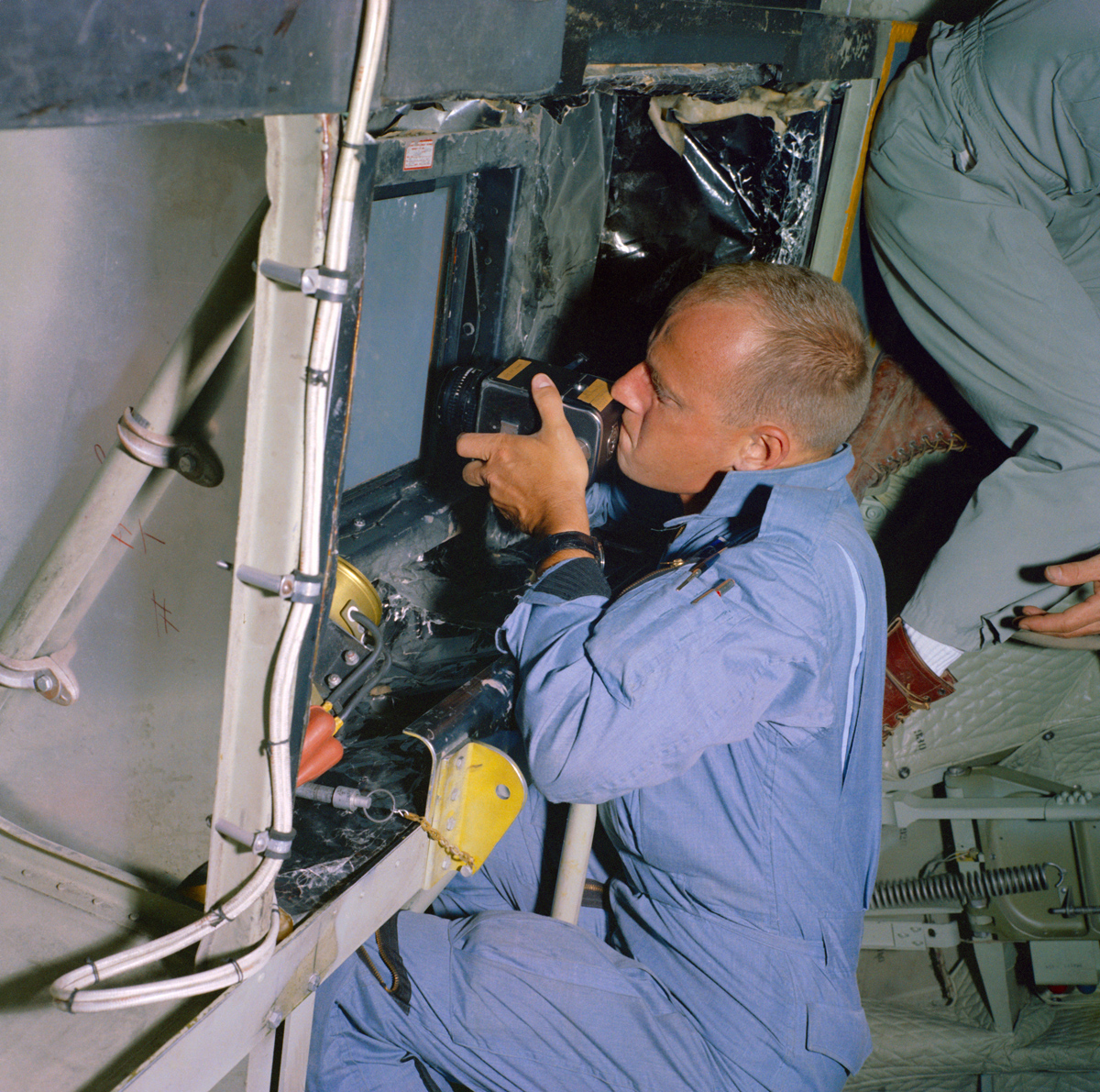
On the fifth day, the mission faced another hurdle when the maneuvering thrusters began to fail. Demonstrating remarkable ingenuity, the crew adopted a "drift-and-correct" technique, allowing the spacecraft to stabilize itself and conserving what little fuel remained. Throughout these hardships, they continued their observational duties, documenting weather patterns and conducting medical experiments to monitor the effects of microgravity on the human body.

Splashdown and Recovery
After 190 hours and 56 minutes in orbit, the mission concluded on August 29, 1965. The capsule splashed down in the Atlantic, just 80 miles off-target, where the crew was retrieved by the USS Lake Champlain. They returned as record-breakers, having surpassed the previous endurance record of five days set by Soviet cosmonaut Valery Bykovsky in 1963.
Supporting Data: Engineering and Medical Breakthroughs
The success of Gemini 5 was not measured in miles, but in data. The mission provided NASA with critical insights into two specific areas:
1. Fuel Cell Technology
Gemini 5 was the first mission to utilize fuel cells for power rather than traditional batteries. While the initial pressure drop caused concern, the fact that the system operated for eight days provided invaluable engineering data. This proved that hydrogen-oxygen fuel cells were a viable, high-energy power source for the upcoming Apollo Command and Service Modules.
2. Human Physiology in Microgravity
Medical teams were eager to observe how the astronauts handled the prolonged weightlessness. Upon recovery, the crew showed signs of weight loss and muscle fatigue, but were otherwise in excellent health. This data provided the physiological baseline needed to confirm that humans could safely survive the transit to the moon.
Official Responses and Public Perception
NASA’s official reports from the era emphasize the "resilience of the crew." At the time, the agency noted, "Although both had lost weight, they were in good physical condition after their record-breaking eight days in space."
The mission also introduced a piece of space culture that remains standard today: the mission patch. Gordon Cooper, wanting to celebrate the mission’s theme, designed a patch featuring a Conestoga wagon and the motto "8 Days or Bust." This became an iconic symbol of the era, reflecting the spirit of exploration and the "pioneer" mentality that characterized the early astronaut corps.
The public, captivated by the drama of the mission, viewed Cooper and Conrad as heroes who had overcome significant technical failure to secure a vital victory in the Space Race. The "8 Days or Bust" slogan became a rallying cry for the American public, signaling that the U.S. was finally prepared to meet the Soviet challenge head-on.
Implications: The Foundation of Modern Spaceflight
The legacy of Gemini 5 is immeasurable. Without the endurance data gathered during this mission, the Apollo program would have been delayed by years, if not canceled entirely.
Bridging the Gap to Apollo
Gemini 5 effectively served as the bridge between the short, ballistic flights of the Mercury program and the complex, long-duration requirements of the lunar landings. By proving that a two-man crew could function for over a week in a confined environment, NASA gained the confidence to proceed with the more complex rendezvous and docking procedures required for the Apollo lunar module.
A New Standard for Long-Duration Missions
Today, an eight-day mission seems modest. We now live in an era of the International Space Station, where astronauts routinely spend six months or more in orbit. The longest single spaceflight, an astounding 437 days, was set by Valeri Polyakov on the Mir station in the 1990s. Yet, every long-duration mission today is a descendant of the lessons learned by Cooper and Conrad. They were the ones who first pushed past the psychological and physiological barriers of space, proving that humans were not meant to be mere visitors to the cosmos, but inhabitants.
Preserving History
For those who wish to connect with this piece of history, the Gemini 5 spacecraft is currently on display at Space Center Houston. It stands as a testament to a time when engineering was a matter of trial and error, and when the courage of two men inside a "garbage can" was enough to propel humanity toward the stars.
As we look toward future missions to Mars and beyond, the story of Gemini 5 remains a poignant reminder: progress in space is never linear. It is defined by the ability to adapt, the courage to endure, and the relentless pursuit of knowledge in the face of uncertainty.