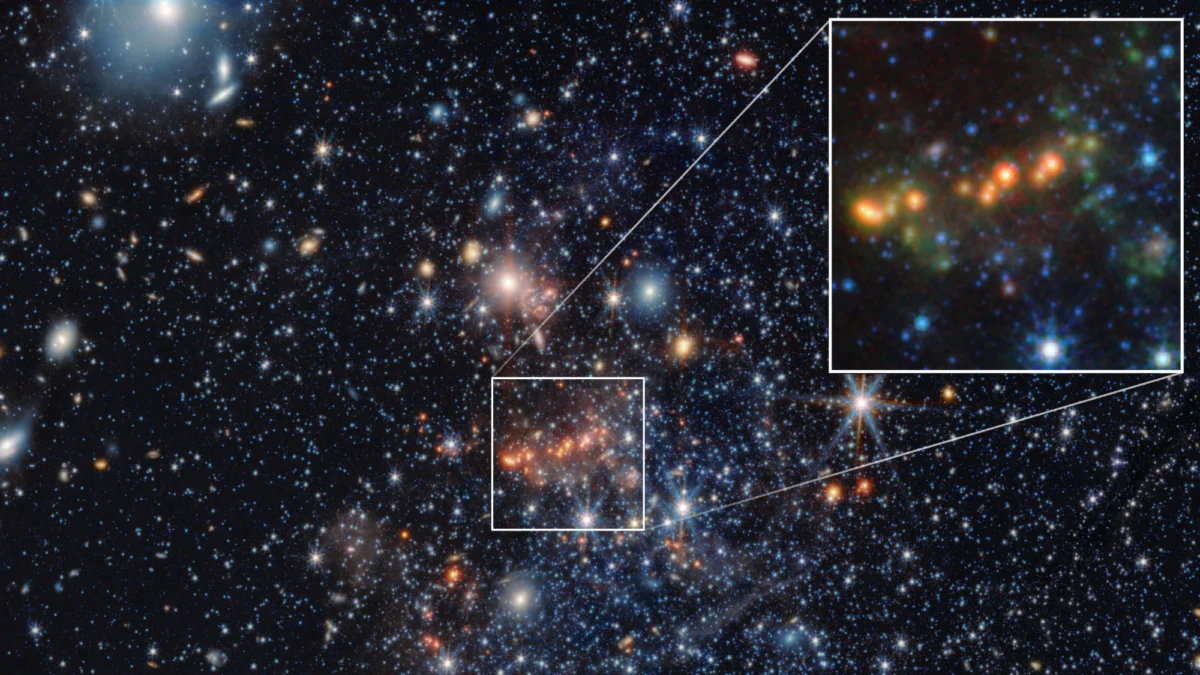
The James Webb Space Telescope (JWST) has once again peered through the veil of time, but in a surprising twist, it has done so by looking into our own "cosmic backyard." Astronomers, led by a team from the National Institute for Astrophysics (INAF), have utilized the unparalleled sensitivity of the JWST to solve a fundamental puzzle: how did the infant universe, initially barren and chemically simple, transform into the complex, star-filled cosmos we inhabit today?
The answer, it seems, lies in the "dust factories" of the early universe. By studying the nearby dwarf galaxy Sextans A, researchers have gained a vital window into the mechanisms that seeded the cosmos with heavy elements—the building blocks of planets, stars, and eventually, life itself.
The Chemistry of the Early Universe
To understand the significance of this discovery, one must first understand the primordial state of the universe. Shortly after the Big Bang, the cosmos was a relatively monotonous place. It was composed almost exclusively of hydrogen and helium, with only a trace amount of lithium. There were no planets, no rocky surfaces, and certainly no biological life.
The first generation of stars, known as Population III (Pop III) stars, were the universe’s original alchemists. Born from the gravitational collapse of vast, pristine clouds of hydrogen and helium, these behemoths burned with intense heat. Within their nuclear furnaces, they forged the first "metals"—a term astronomers use to describe any element heavier than helium, such as carbon, oxygen, and iron.
When these massive, short-lived stars reached the ends of their lives, they detonated as violent supernovae. These cataclysmic explosions scattered their newly forged metallic bounty across the interstellar medium (ISM), enriching the gas clouds from which subsequent generations of stars would be born. This cycle of stellar birth, death, and enrichment is the engine of galactic evolution.
Sextans A: A Living Fossil in Our Backyard
Directly observing the very first galaxies is one of the primary missions of the James Webb Space Telescope. However, despite its revolutionary infrared capabilities, the distance to these primordial systems makes detailed analysis of their internal processes a monumental challenge. The light from these ancient structures is faint, redshifted by the expansion of the universe, and obscured by the sheer scale of the distances involved.
To bypass this hurdle, Dr. Claudio Gavetti and his colleagues at INAF turned their gaze to Sextans A. Located approximately 4.6 million light-years away, Sextans A is a dwarf galaxy that serves as a modern-day analog for the primitive conditions of the early universe.
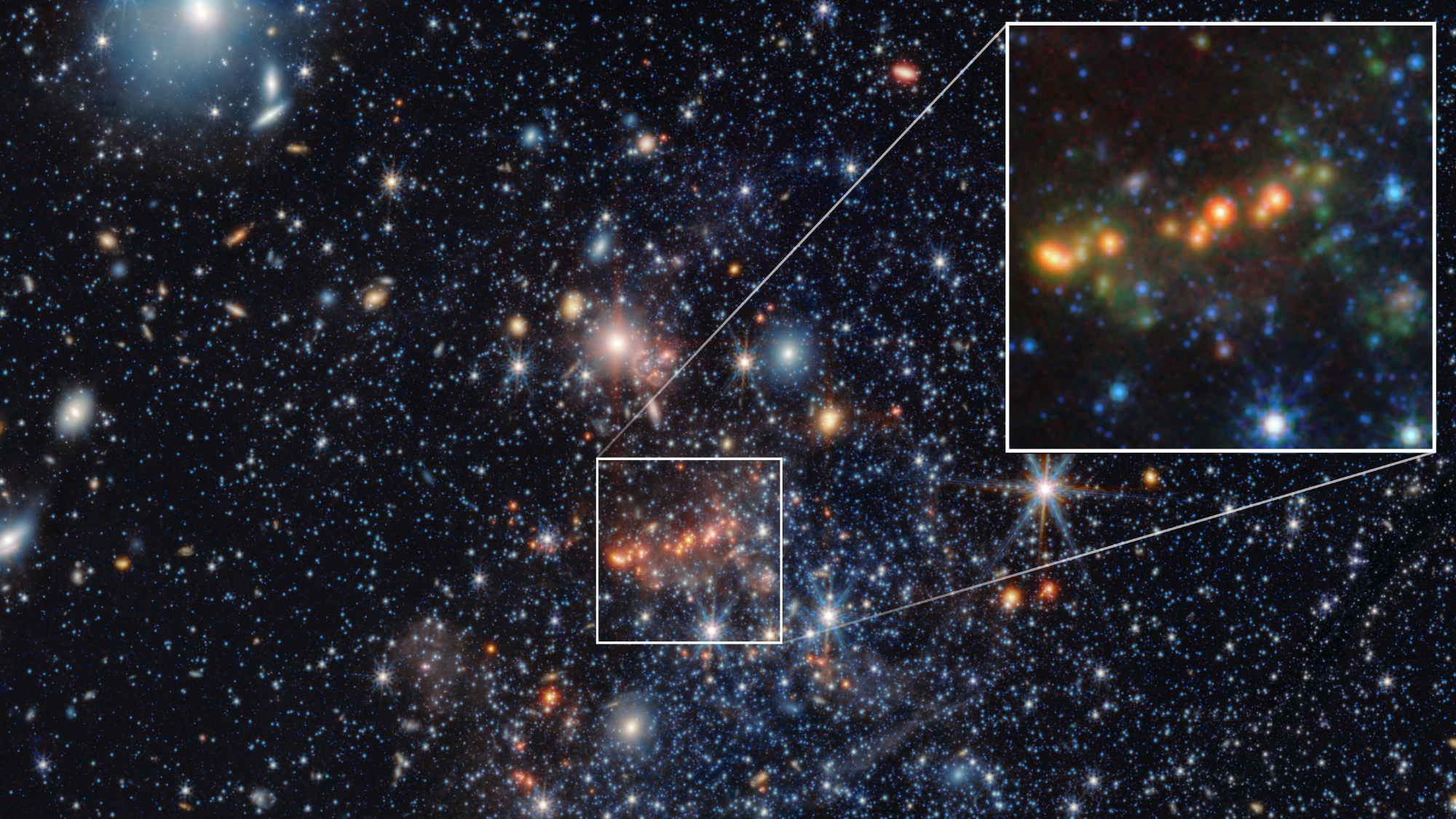
"Directly studying the galaxies that populated the early universe is still very difficult," explains Dr. Gavetti. "Observing a nearby galaxy like Sextans A, which presents similar chemical conditions, offers us a precious opportunity to understand how the first generations of stars evolved and what role they played in transforming the interstellar medium."
Sextans A is uniquely qualified for this study because it is exceptionally metal-poor. It is estimated to contain only 1% to 7% of the heavy elements found in our own Sun. This low "metallicity" makes it an ideal laboratory for observing how stars evolve in an environment that mimics the low-metal conditions of the early universe.
Chronology of Discovery: Mapping the Asymptotic Giant Branch
The research team utilized two of the JWST’s most powerful instruments: the Near-InfraRed Camera (NIRCam) and the Mid-Infrared Instrument (MIRI). These tools provided the high-resolution imagery necessary to conduct a census of the galaxy’s stellar population, specifically focusing on a critical phase of stellar evolution known as the "asymptotic red giant branch" (AGB).
The AGB Phase Explained
The AGB phase represents the twilight years of stars with masses roughly between 0.8 and 8 times that of the Sun. As these stars exhaust the helium in their cores, they develop an inert carbon-oxygen heart. Surrounding this core, nuclear fusion continues in alternating shells of helium and hydrogen. This energetic process causes the outer layers of the star to expand dramatically—or "puff out"—leading to a massive increase in luminosity.
It is during this phase that stars become prolific dust producers. The cool, extended outer atmospheres of AGB stars provide the perfect environment for gas to condense into solid dust grains. These grains are then pushed out by the star’s radiation pressure, enriching the surrounding galaxy.
Data Findings
The JWST observations revealed a complex portrait of stellar evolution within Sextans A:
- Dust Production: The team identified that approximately 90% of the observed AGB stars were not surrounded by significant dust envelopes. This suggests that the phase of heavy dust production is relatively short-lived or specific to certain mass ranges.
- The Dust Factories: A select group of about 20 stars was found to be embedded in thick, obscuring shells of dust. These stars, the researchers determined, formed between 2 billion and 3 billion years ago and possessed an initial mass roughly 1.5 times that of our Sun.
- Chemical Evolution: By mapping these stars, the team could calculate the rate at which dust is being returned to the interstellar medium, providing a clearer timeline for how metal-poor galaxies eventually transition into more chemically enriched systems.
Implications for Modern Astrophysics
The implications of this study are far-reaching. By identifying exactly which types of stars act as the primary "dust factories" in low-metallicity environments, astronomers can better calibrate their models of the early universe.
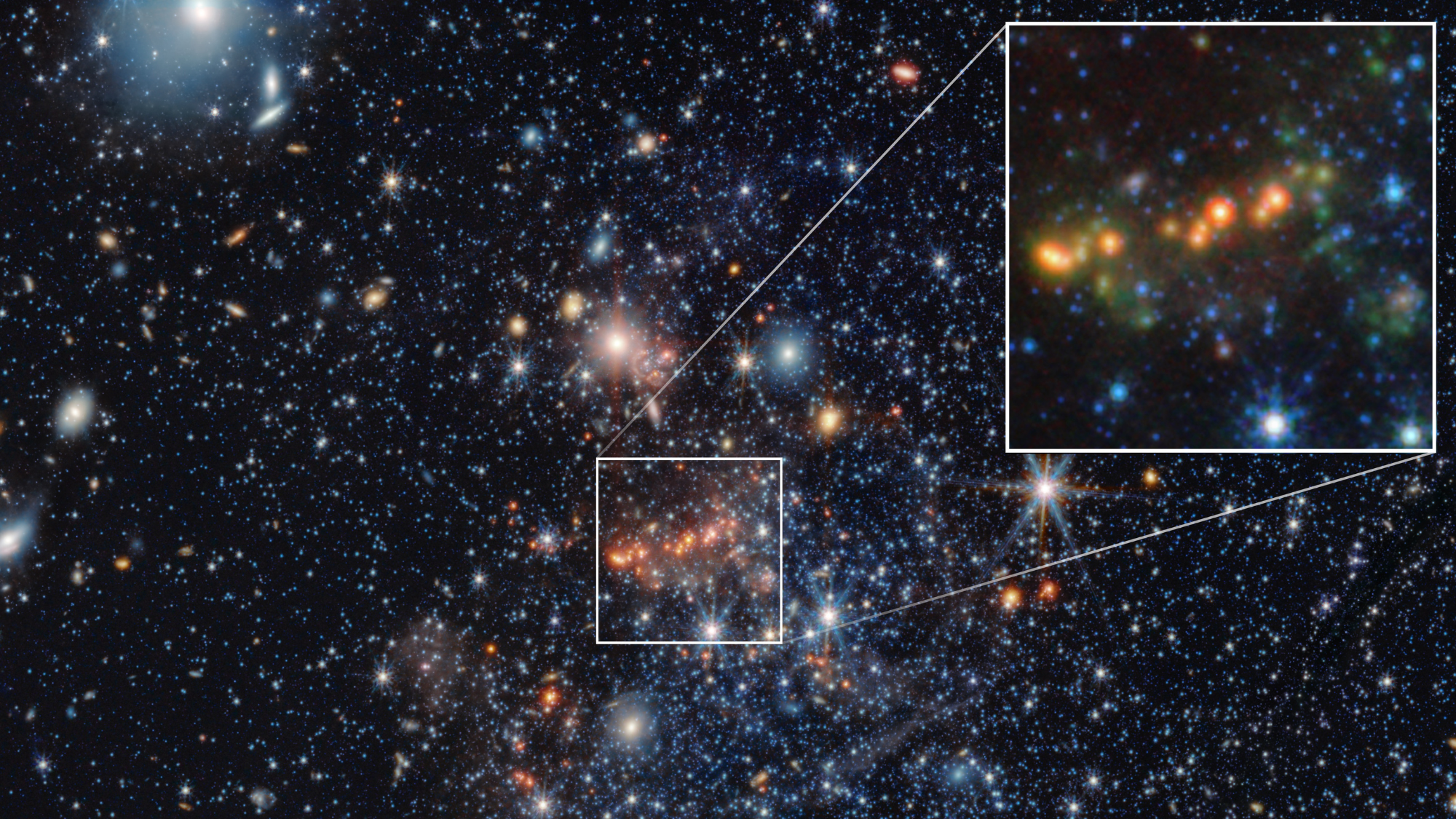
"The value of these data lies not only in the images, but in the ability to compare them with theoretical models and verify how correctly they describe the evolution of stars," notes team member Dr. Flavia Dell’Agli.
This research bridges a critical gap in our understanding. If we know how quickly dust accumulates in a dwarf galaxy, we can infer how long it takes for a primitive galaxy to evolve the chemical complexity required to support the formation of rocky, terrestrial-type planets. Furthermore, the findings published in The Astrophysical Journal serve as a testament to the JWST’s role as more than just a camera; it is a diagnostic tool that allows scientists to "stress-test" our current theories of stellar nucleosynthesis.
The Future of Galactic Archaeology
The success of the Sextans A study marks a turning point in galactic archaeology. Before the JWST, such detailed observations of individual AGB stars in a distant dwarf galaxy would have been largely impossible, lost in the noise of background radiation and limited resolution.
As the team looks ahead, the focus will shift toward applying these findings to even more distant and metal-poor galaxies. By using Sextans A as a "Rosetta Stone," astronomers hope to translate the faint signals coming from the dawn of time into a coherent story of cosmic growth.
The universe, as we see it today, is a tapestry woven from the remains of dead stars. Each iron atom in our blood and each grain of silica in our planet was once forged in the heart of an AGB star or scattered by a supernova. Through the lens of the James Webb Space Telescope, we are finally witnessing the assembly of that tapestry in real-time, learning how the cold, dark silence of the infant cosmos gave way to the vibrant, dust-rich universe we call home.
Reference:
Gavetti, C., et al. (2024). "Mapping the Dust Production in the Low-Metallicity Dwarf Galaxy Sextans A." The Astrophysical Journal.