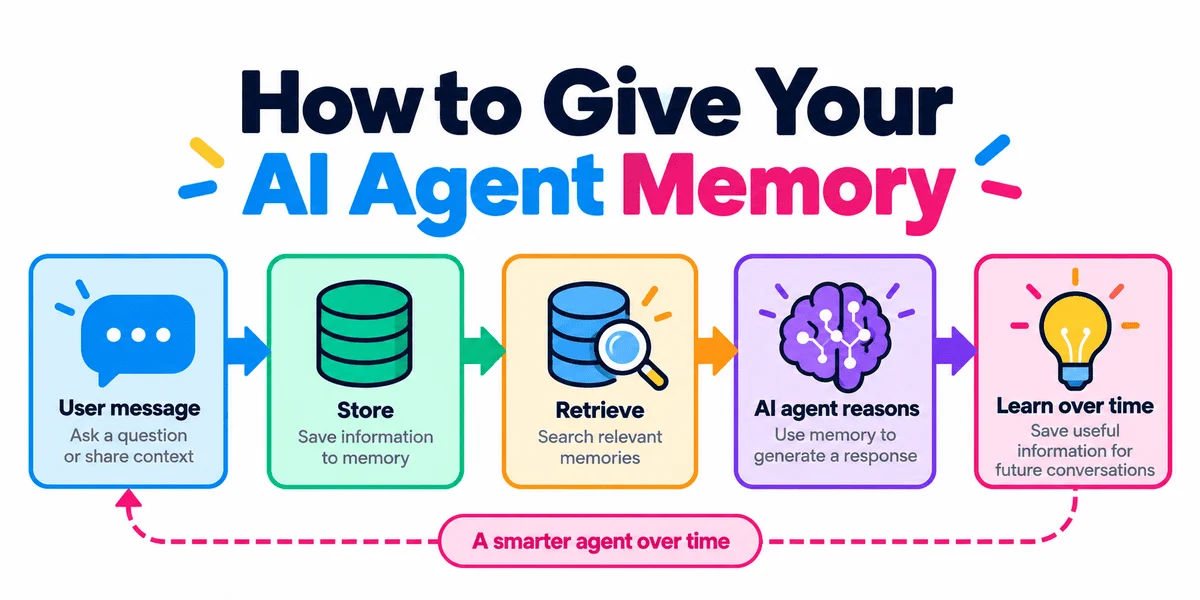
Modern artificial intelligence has reached a point where reasoning, tool utilization, and autonomous task execution are no longer theoretical—they are the standard. However, a significant "amnesia" problem persists: the vast majority of AI agents operate within ephemeral sessions. Once the connection closes, the agent returns to a blank slate, forcing users to repeatedly provide context, preferences, and project goals. This cycle of "starting from scratch" represents a major bottleneck in the evolution of truly intelligent assistants.
The solution lies in architectural persistent memory. By integrating specialized memory layers, developers can transform static AI tools into sophisticated, evolving assistants that grow alongside the user. This article explores how to bridge this gap using the OpenAI Agents SDK and Mem0, creating agents that retain knowledge across lifetimes, not just conversations.
The Core Problem: Ephemeral Intelligence
In a typical Large Language Model (LLM) deployment, the "context window" acts as the agent’s working memory. While sophisticated, it is strictly bound to the active conversation. Once the session ends, the vector representations and text inputs are discarded.
For a software engineer, this means explaining your preferred stack every time you open a coding IDE. For a project manager, it means re-summarizing team goals every Monday morning. Persistent memory changes the paradigm from Stateless Interactions to Stateful Evolution. An agent with long-term memory functions like a human colleague: it recalls your specific constraints, past decisions, and idiosyncratic workflows, leading to higher efficiency and a significantly reduced cognitive load on the user.
The Mechanics of Memory: A Technical Chronology
To understand how to implement memory, we must first look at the logical loop of a memory-enabled agent:
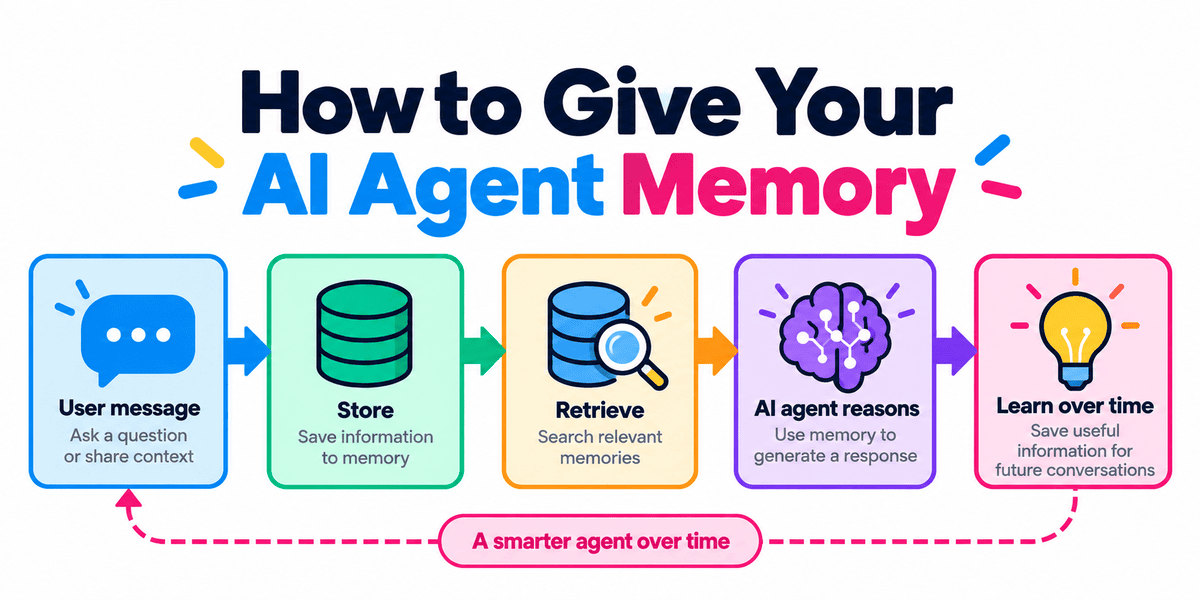
- Ingestion: The user provides information.
- Semantic Filtering: The agent determines if the information is "durable"—worth saving—or "transient," like a greeting.
- Storage: The data is sent to a dedicated memory layer (Mem0) where it is indexed.
- Retrieval: During a new session, the agent performs a semantic search based on the current prompt.
- Contextual Injection: The retrieved data is injected into the prompt as "prior knowledge," enabling the agent to act on past history.
The Role of Mem0 and OpenAI
The synergy between the OpenAI Agents SDK and Mem0 allows for a robust separation of concerns. The OpenAI SDK manages the reasoning engine and tool calling, while Mem0 acts as the specialized database that manages the lifecycle of memories. Unlike standard vector databases that store raw text, Mem0 is designed to understand the entity and intent behind a statement, prioritizing useful facts over redundant conversation logs.
Implementation: Building a Persistent Assistant
Building an agent with long-term memory requires bridging the gap between raw LLM inference and a persistent state layer.
Step 1: Foundation and Configuration
The implementation begins by installing the necessary dependencies. By using the following command, we prepare our environment:
pip install openai-agents mem0aiConfiguration requires setting up API credentials for both the OpenAI reasoning engine and the Mem0 memory service. This separation ensures that the memory layer can be swapped or scaled independently of the AI model.
Step 2: Designing the Memory Search Tool
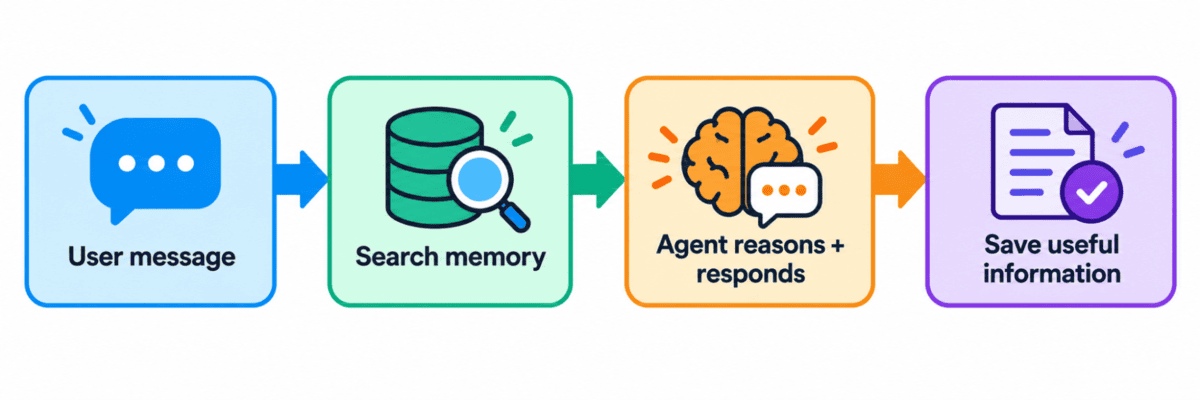
The agent needs a "window" into its memory. By defining a search_memory function as a function_tool, we grant the agent the agency to query its history.
@function_tool
def search_memory(query: str) -> str:
    """Search for relevant memories about the user."""
    results = memory.search(
        query=query,
        filters="user_id": USER_ID,
        top_k=5,
    )
    # ... logic to join and return results
The use of top_k=5 ensures the agent isn’t overwhelmed by data, adhering to the principle of "Retrieval Augmented Generation" (RAG). By focusing on relevance rather than volume, the agent maintains performance without sacrificing context.
Step 3: Crafting the "Save" Logic
Equally important is the save_memory function. This tool acts as the agent’s "journaling" mechanism. The instructions provided to the agent are crucial here: we must explicitly tell the model to filter out transient information. If the agent saves every "hello" or "goodbye," the memory becomes noisy and inefficient.
@function_tool
def save_memory(content: str) -> str:
    """Save useful long-term information about the user."""
    memory.add(messages=["role": "user", "content": content], user_id=USER_ID)
    return "Memory saved."
Implications for Development and Productivity
The ability to provide persistent memory to agents has profound implications for the software development lifecycle (SDLC) and beyond.
1. Developer Tooling: The Case of OpenCode
Integrating memory into coding environments like OpenCode represents the next frontier of IDE productivity. By connecting the Mem0 Model Context Protocol (MCP) server, an agent can "remember" that a developer prefers uv over pip for dependency management or that they follow specific linting configurations.
npx mcp-add --name mem0-mcp --type http --url "https://mcp.mem0.ai/mcp" --clients "opencode"Once established, the agent no longer requires initial configuration scripts in every session. It becomes a specialized tool tuned to the individual’s unique development habits.

2. Personalized Customer Support
Beyond coding, businesses can deploy memory-enabled agents to provide tailored customer service. Instead of a support bot asking for your order history or account tier in every interaction, the agent recalls these details instantly. This reduces resolution times and drastically improves the Net Promoter Score (NPS) by eliminating customer friction.
Challenges and Future Considerations
While the technical implementation is straightforward, several considerations remain for developers:
- Privacy and Data Governance: Storing user preferences requires robust security. Developers must ensure that memory stores are isolated by
USER_IDand that sensitive information can be deleted, updated, or anonymized upon request. - The "Hallucination of Memory": If an agent retrieves conflicting information, it may struggle to reconcile it. Advanced memory architectures must eventually incorporate conflict resolution strategies to ensure the most recent or relevant facts take precedence.
- Contextual Bloat: As the agent’s memory grows, there is a risk of "context pollution," where irrelevant memories interfere with current tasks. Ongoing research into hierarchical memory—where older, less-used memories are archived—will be the next major iteration for these systems.
Final Thoughts: The Evolution of AI Agents
The transition from stateless chatbots to persistent agents is the most significant development in the AI landscape since the inception of Transformers. As demonstrated, tools like Mem0 allow us to simulate human-like continuity, enabling agents that are not just smart, but context-aware.
Whether building internal tools for tracking enterprise decisions, developing personal coding assistants, or designing next-generation customer support interfaces, the mandate is clear: Memory is the bridge to utility. By moving away from the "fresh start" mentality and embracing persistent, searchable knowledge bases, developers can deliver AI experiences that feel less like a search engine and more like a partner.
As we look toward the future, the integration of these memory layers will likely become a default setting for all AI applications, effectively ending the era of the "amnesiac" AI.

About the Author: Abid Ali Awan is a certified data scientist and technical content strategist. With a background in telecommunications engineering and technology management, he is dedicated to the development of AI-driven solutions that bridge the gap between complex research and practical, user-centric application.