Mercury, the scorched, crater-pocked sentinel of our solar system, has long remained an enigma. As the smallest planet and the one closest to the sun, it presents a hostile, extreme environment that has defied comprehensive exploration for decades. However, a monumental shift is underway. The BepiColombo mission—a sophisticated, multi-stage collaborative effort between the European Space Agency (ESA) and the Japan Aerospace Exploration Agency (JAXA)—is currently executing the final, delicate maneuvers required to place two independent spacecraft into orbit around this mysterious world.
With the mission now entering its critical arrival phase, the scientific community stands on the precipice of a new era of discovery. By April 2027, researchers expect to be flooded with data that could fundamentally rewrite our understanding of how terrestrial planets form and evolve in the volatile shadows of a star.
The Mission: A Dual-Orbiter Approach
Launched in October 2018, the BepiColombo mission was designed with a unique architecture. Unlike previous missions that relied on a single craft, BepiColombo consists of two distinct orbiters bundled together for the long, arduous journey through the inner solar system:
- The Mercury Planetary Orbiter (MPO): Developed by the ESA, the MPO is a powerhouse of geological and atmospheric instrumentation. Equipped with 11 specialized scientific sensors, it is designed to map the planet’s crust, analyze its mineralogical composition, investigate its volcanic history, and measure its gravitational field with unprecedented precision.
- The Mercury Magnetospheric Orbiter (Mio): Developed by JAXA, the "Mio" is tasked with studying the planet’s complex, often erratic environment. It will focus on the magnetosphere, the planet’s wispy, transient atmosphere (exosphere), and the dust environment that clutters the region around the sun’s nearest neighbor.
By operating two separate spacecraft, scientists will be able to gather simultaneous, cross-referenced data—a luxury that was previously impossible. This coordinated observation allows for a dual-perspective view of the magnetic field, enabling researchers to distinguish between temporal changes in the solar wind and actual spatial variations in Mercury’s magnetosphere.
Chronology of a Seven-Year Journey
The path to Mercury is notoriously difficult. To reach the inner solar system, a spacecraft must shed immense orbital energy to avoid being accelerated by the sun’s immense gravity.
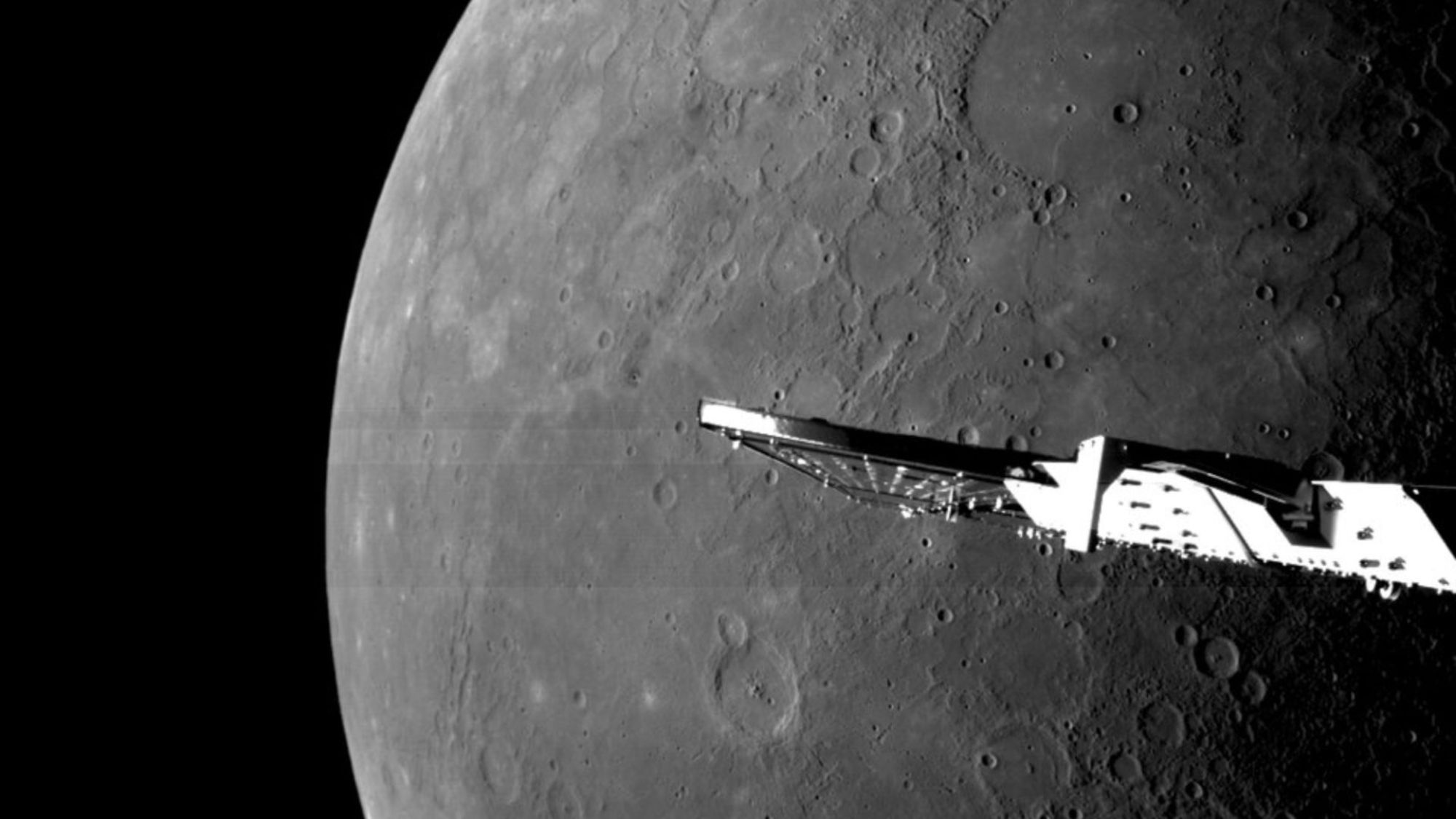
- October 2018: The mission launches, beginning a complex series of gravity-assist flybys.
- 2018–2024: The spacecraft conducts a series of nine planetary gravity assists—one at Earth, two at Venus, and six at Mercury—to slow its velocity and refine its trajectory.
- January 2025: The sixth and final Mercury flyby occurs, providing the craft with its final "brake" to prepare for orbital insertion.
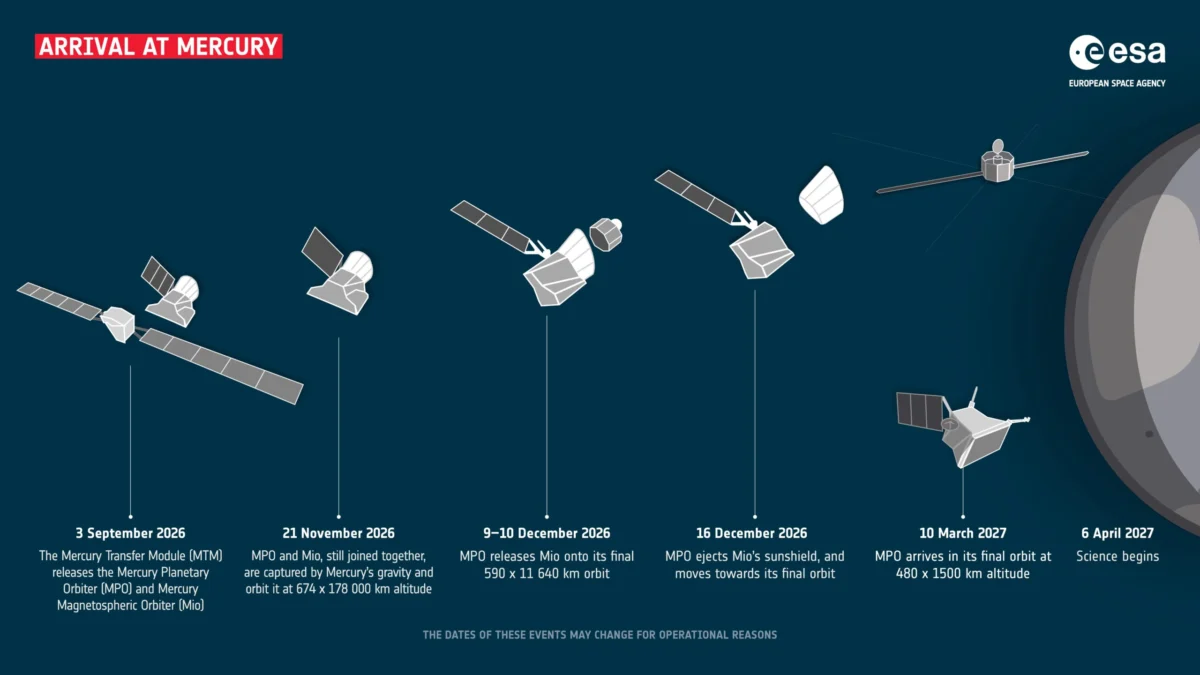
- September 2025: The mission initiates the critical separation maneuver. This process involves shedding the transfer module that acted as the "space tug" for the seven-year journey, allowing the MPO and Mio to move into their respective scientific orbits.
- December 2025: Official deployment of the two orbiters begins, marking the start of the full-scale observation phase.
- April 2027: Full scientific operations are expected to be in swing, with data streaming back to Earth from the planet’s orbit.
Historical Context: From Mariner to MESSENGER
To understand why BepiColombo is such a leap forward, one must look at the sparse history of Mercury exploration. For decades, the planet was largely a "blank space" on the map of our solar system.
NASA’s Mariner 10 provided the first, brief glimpse in 1974 and 1975. Through three flybys, it captured images of a cratered, moon-like surface and hinted at the existence of a magnetic field. However, it only saw roughly 45% of the surface, leaving the vast majority of the planet in shadow.
It took until 2011 for the next visitor: NASA’s MESSENGER mission. MESSENGER was a triumph, orbiting the planet for four years and providing the first global map. It discovered "hollows"—strange, steep-sided pits on the surface—and confirmed that Mercury is rich in volatile elements that should have, according to classical planetary formation theories, been lost to the sun’s heat long ago. Yet, even with MESSENGER’s success, questions remained. The craft was limited by its orbit, which left the southern hemisphere poorly imaged and its instruments unable to characterize certain minerals in the absence of iron.
Official Perspectives: The Scientific "Explosion"
For lead scientists like Sean Solomon, a planetary scientist at Columbia University and former principal investigator of the MESSENGER mission, the wait has been agonizingly long.
"I think being able to see new data come out about Mercury is going to be so fantastic," Solomon remarked, noting that while the flybys of the past seven years have provided "dribbles" of information, the true scientific return will begin only after the orbiters are fully established. "There is a growing literature of new results that have come from the BepiColombo flybys, but I expect that will explode once they go into orbit."
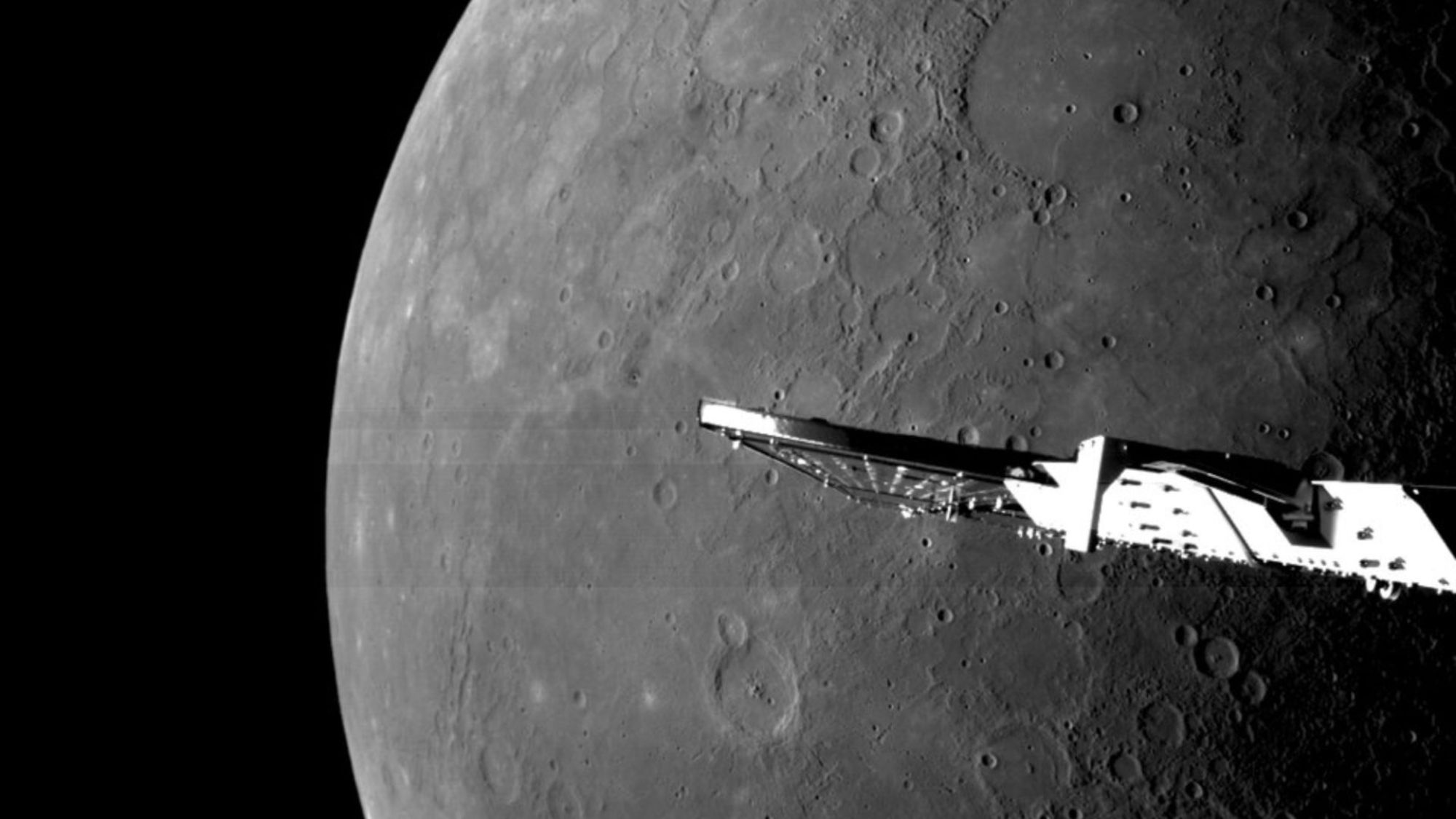
Rachel Klima, a planetary geologist at the Johns Hopkins University Applied Physics Laboratory, shares this sentiment. She emphasizes that Mercury is "just so weird and beautiful and interesting." Klima is particularly excited about the MPO’s ability to map elements and minerals using advanced technology that does not rely on iron signatures. This capability, she believes, will be the key to finally answering the question of how Mercury—and by extension, the terrestrial planets of our solar system—was assembled.
The Implications: Why Mercury Matters
Why go back to a place that is essentially a scorched rock? The answer lies in the fundamental physics of planet formation. Mercury is an outlier. It possesses a massive iron core that makes up the bulk of its volume, a feature that suggests a violent history, perhaps involving a massive collision in the early solar system that stripped away its outer silicate mantle.
By studying the composition of the surface in high resolution, BepiColombo will act as a "time machine." It will look for clues in the chemical abundance of the crust to determine if Mercury formed closer to the sun or if it migrated into its current position. Furthermore, the search for water ice in the permanently shadowed craters of the southern pole—a major objective for the mission—could provide evidence of how volatiles are delivered to inner planets.
Beyond Mercury itself, the mission serves as a crucible for planetary science. If we cannot explain the formation of the planet closest to our sun, our models for the evolution of the entire solar system—and the thousands of exoplanetary systems we are now discovering—remain incomplete.
Conclusion: A New Light on the Dark Side
As BepiColombo prepares to release its two orbiters, it carries the hopes of an international team of scientists who have dedicated decades to this endeavor. The mission promises to transform Mercury from an "enigmatic" neighbor into a fully mapped laboratory of planetary physics.
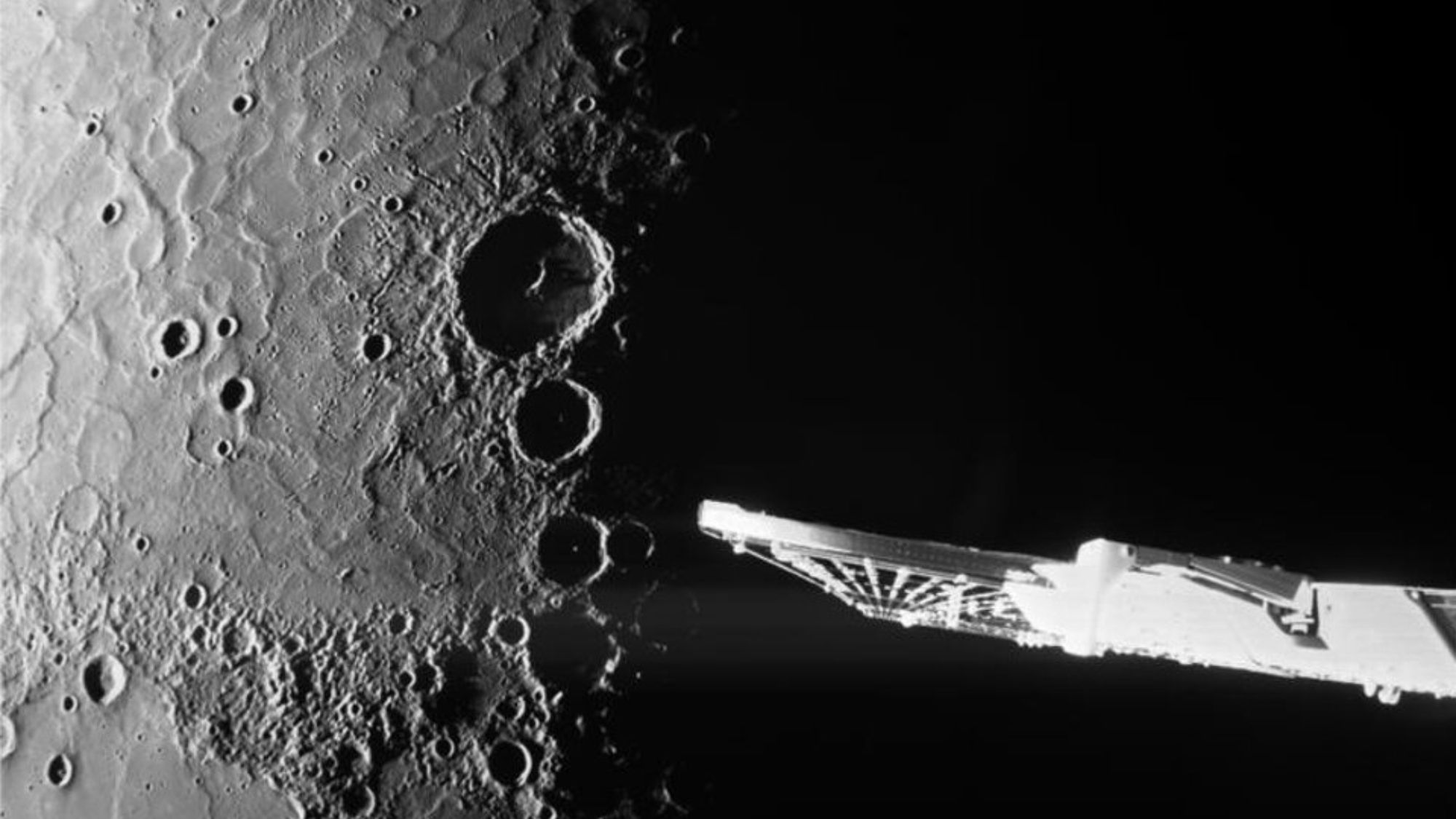
"It certainly doesn’t get the love and attention that Mars and Venus and everywhere else gets," Klima noted, expressing a hope that the upcoming data will finally place Mercury at the center of the public and scientific conversation.
As the mission transitions from a long-haul traveler to a permanent observer, the "blank pages" mentioned by Dr. Solomon are finally being filled. By the time the two orbiters reach their final, operational configuration, the world will have its first complete, high-resolution portrait of the solar system’s most elusive and mysterious world. The wait, as it turns out, was well worth it.