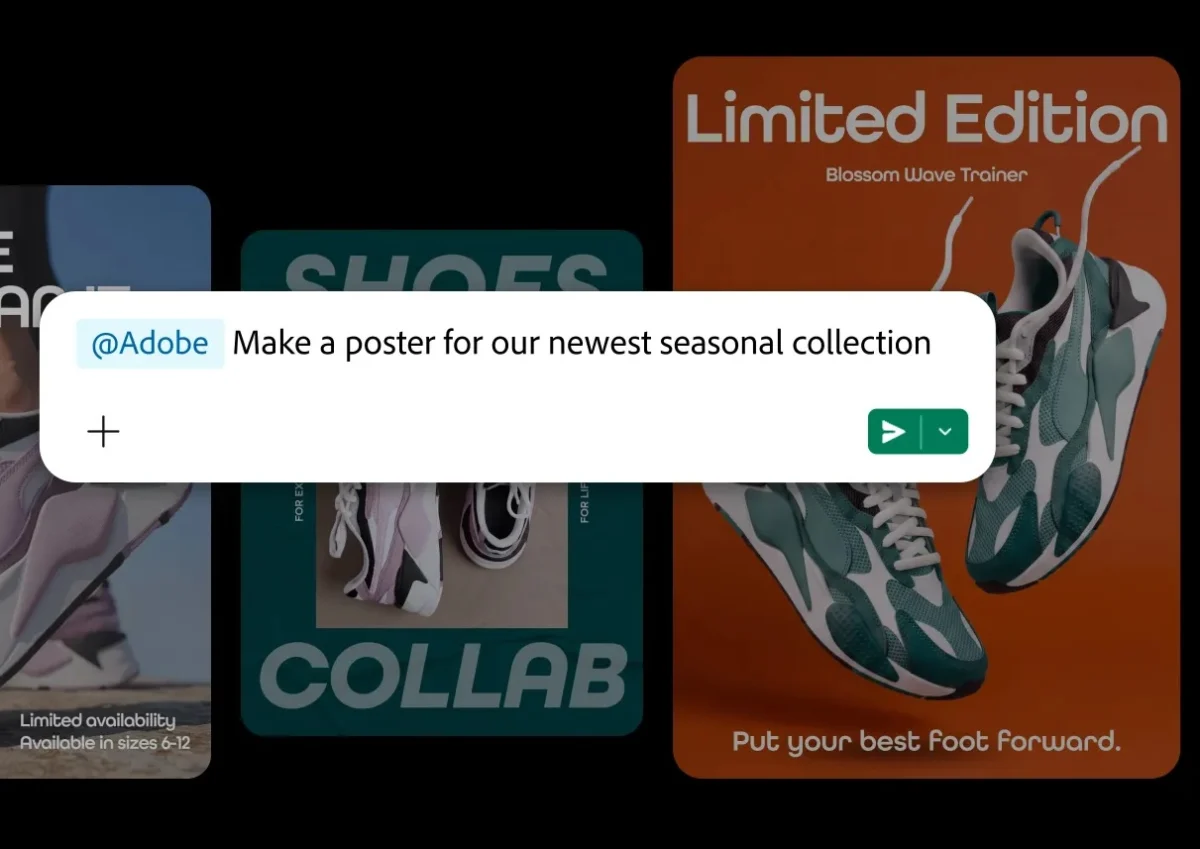
The boundary between where we discuss work and where we actually perform it is dissolving. In a significant shift for the creative industry, Adobe announced this week the launch of a new integration that embeds more than 70 Creative Cloud applications directly into Slack. By leveraging the Model Context Protocol (MCP), Adobe is bringing its powerhouse suite—including Photoshop, Premiere, InDesign, and Lightroom—into the familiar Slack interface, effectively turning the team communication app into a unified creative hub.
This integration represents a pivot in how organizations handle content production. As generative AI (genAI) lowers the barrier to entry for high-quality prototyping, the role of the creative professional is undergoing a profound metamorphosis: the manual labor of "starting from scratch" is being offloaded to machines, while the premium on human curation and editorial judgment has never been higher.
Main Facts: Bringing the Studio to the Chat Window
The Adobe-Slack integration is designed for speed and accessibility. By interacting with "Slackbot"—the platform’s AI-powered assistant—users can issue natural language prompts to initiate creative tasks without ever leaving their communication workflow.
The core functionalities include:
- Rapid Document Creation: Converting project plans and team conversations directly into PDFs, images, or videos.
- Data Visualization: Transforming spreadsheet data into professional-grade visuals or PDFs suitable for client presentations.
- Bulk Image Processing: Streamlining the management of event photos or headshots, with capabilities for lighting adjustments, tone correction, cropping, and resizing.
- Asset Management: Enabling instant search and retrieval of Creative Cloud assets directly within the Slack environment.
While this interface is optimized for speed, Adobe clarifies that it is not a total replacement for the full Creative Cloud desktop applications. Users seeking "pixel-level precision" and granular creative control retain the ability to jump back into the native Adobe apps. Currently available to Slack Business+ and Enterprise+ customers, the integration includes a mix of free and paid generative AI features, with specific advanced capabilities, such as high-end video generation, reserved for paid Adobe subscribers.
A Chronology of Integration: The "Work Hub" Evolution
The launch of the Adobe MCP integration is not an isolated event but rather the latest milestone in a broader strategy to decentralize professional software.
- Early 2024: Adobe begins aggressively pursuing integrations with third-party platforms, recognizing that the "walled garden" approach to software is losing favor with enterprise users.
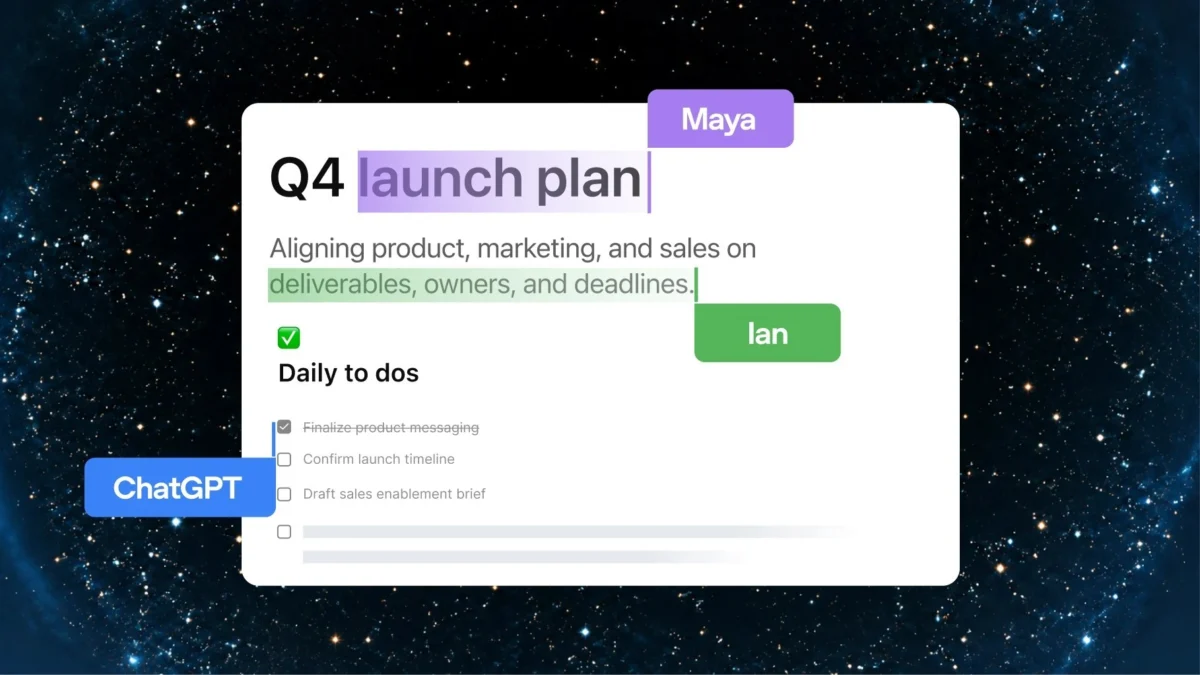
- Mid-2024: Adobe announces a strategic integration with ChatGPT, allowing users to invoke creative tools through OpenAI’s conversational interface.
- Late 2024: Slack releases "Slack Code," a dedicated AI-coding assistant, signaling the company’s commitment to making Slack a multi-functional "work hub" rather than just a chat client.
- September 2026: Adobe officially integrates the full weight of its Creative Cloud suite into Slack, marking a definitive shift toward the "conversational creative" model.
This timeline illustrates a clear trajectory: enterprise software is moving toward the worker, rather than forcing the worker to navigate a complex labyrinth of disparate applications.
Supporting Data: The Efficiency Paradox
Industry analysts view this shift as a response to the growing demand for frictionless productivity. Irwin Lazar, principal analyst at Metrigy, points to consistent research data suggesting that companies are desperate to centralize their workflows.
"We have consistently found in our research that companies want to use their team collaboration apps, like Slack, as work hubs," Lazar notes. The data supports the hypothesis that the more time a user spends "context switching"—the act of toggling between applications—the more cognitive load increases and productivity drops. By keeping the creative process within the context of team communication, Adobe and Slack are addressing the "fragmentation tax" that currently plagues modern knowledge work.
However, the ease of creation brings its own set of challenges. When prototyping becomes instantaneous, the volume of content generated is expected to skyrocket. According to Joe Cicman, principal analyst at Forrester, this creates an "efficiency paradox." While the creation of content becomes faster, the review and approval cycle becomes a potential bottleneck. Companies that previously produced one version of a creative asset might soon find themselves managing a dozen variations, necessitating more robust project management frameworks.
Official Responses: The Human Element in an AI-Driven Workflow
Adobe maintains that the goal of this integration is not to automate creativity, but to democratize the "expression of ideas." A company spokesperson emphasized that by removing technical hurdles, they are enabling team members—even those without formal design training—to contribute meaningfully to the creative process.
"By making Adobe’s pro-grade tools accessible through conversation, people across teams can more easily explore ideas, build on each other’s thinking, and collaborate on how to make the work better," the spokesperson stated.
Crucially, Adobe is quick to temper expectations regarding AI’s autonomy. "Making creation easier only makes human judgment more important. Adobe’s tools can accelerate the creative process, but people still bring the ingenuity, taste, and point of view that distinguish great work. For brands, that human perspective is ultimately what turns content into something that stands out."
Implications: The New Operating Model for Creative Teams
The most significant implication of the Adobe-Slack integration is the fundamental shift in the definition of a "designer."
The Rise of the Creative Curator
Historically, designers have spent a disproportionate amount of time on the "heavy lifting" of the creative process: setting up files, formatting assets, and drafting initial layouts. With AI-generated first drafts becoming the new baseline, the designer’s role is shifting toward that of a director or curator.
As Joe Cicman of Forrester observes: "A marketer with a concept can describe it in Slack, AI can generate several potential executions, and suddenly the organization has many more ideas moving through the pipeline."
In this new operating model:
- Ideation: Marketers and stakeholders contribute concepts via natural language.
- Prototyping: AI produces multiple variants of these concepts, significantly lowering the cost of experimentation.
- Refinement: Professional designers take these technically generated drafts and apply "creative excellence," human taste, and brand alignment.
The Challenge of "Low-Effort" Outputs
There is a legitimate concern regarding the potential surge of "low-effort" AI-generated documents. When it becomes trivial to generate a slide deck or a promotional graphic, organizations may face a glut of mediocre content. This shift requires a new level of internal management; leadership teams must implement new standards for quality control and brand integrity to ensure that the increased volume of content does not dilute the brand’s identity.
The Competitive Advantage
The organizations that will thrive in this environment are not necessarily those that generate the highest volume of AI content. Instead, success will be defined by the ability to blend high-velocity, machine-generated prototypes with high-fidelity human judgment.
The integration of Adobe into Slack is, at its heart, an acknowledgement that the future of work is collaborative and conversational. By bridging the gap between the "intent" of the creator and the "precision" of the professional software, Adobe and Slack are not just adding a feature—they are architecting a new way for teams to think, build, and iterate in real-time. As the industry moves forward, the competitive edge will belong to those who can master the art of the prompt while maintaining the soul of the creator.