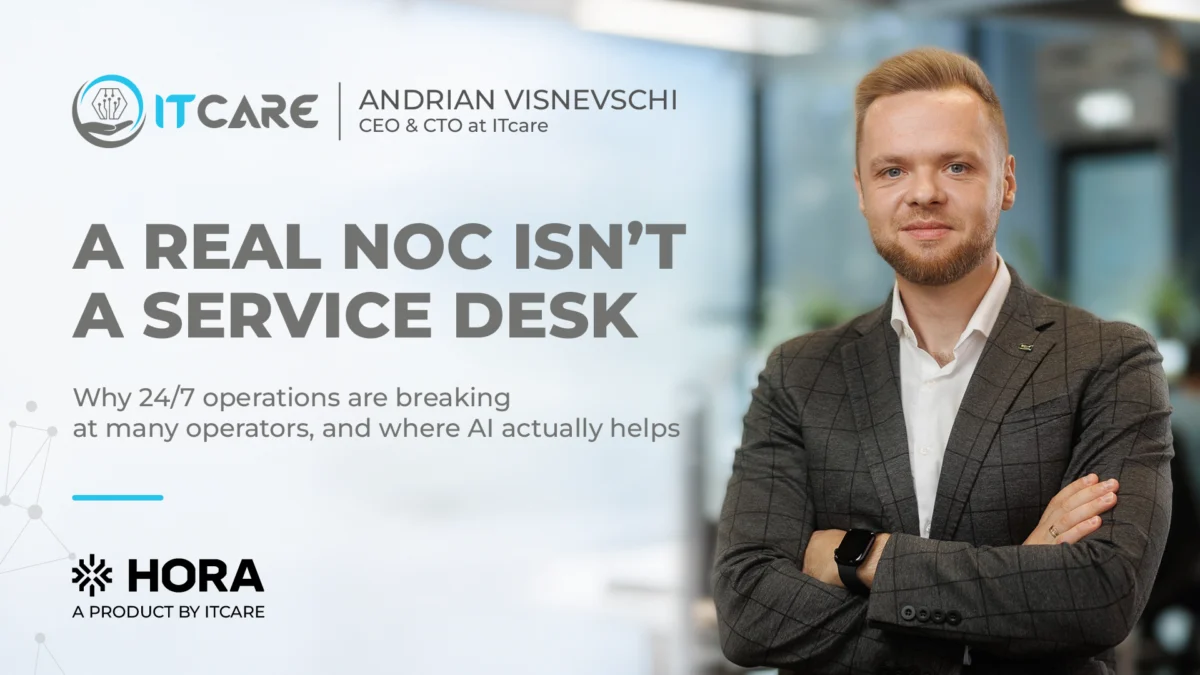
The telecommunications landscape, particularly within the UK’s rapidly expanding fibre sector, is currently navigating a critical pivot point. As the industry shifts its primary focus from rapid network deployment to long-term service quality and reliability, the operational models underpinning these vast digital infrastructures are being scrutinized as never before.
For major telecommunications giants, the solution to network stability has historically been the establishment of massive, 24/7 Network Operations Centres (NOCs). These facilities, staffed by teams of specialized engineers, provide constant oversight, fault management, and service assurance. However, for smaller players—the ISPs and regional fibre providers that constitute the backbone of the UK’s connectivity goals—the financial burden of maintaining such a facility is often prohibitive. This economic reality has led to a precarious reliance on junior staff or, worse, automated alert systems that lack the nuance to resolve complex outages in real-time.
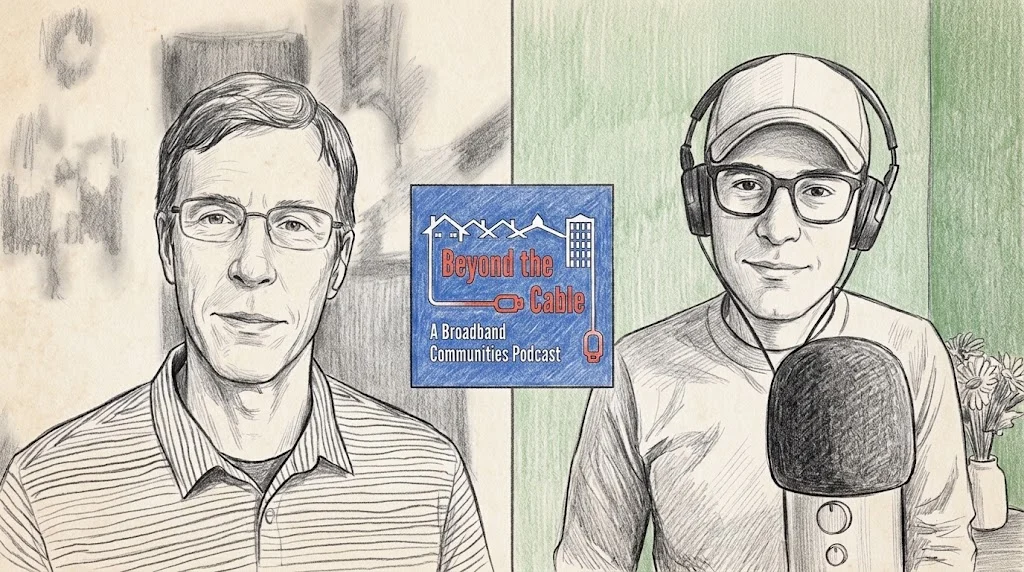
Andrian Visnevschi, co-founder, CTO, and CEO of ITcare, argues that this “operational gap” is not merely a logistical annoyance; it is a fundamental threat to the commercial viability of modern networks. In an exclusive interview, Visnevschi unpacked the challenges of scaling operations in a high-stakes environment and detailed how his company is leveraging AI to bridge the divide between manual oversight and the elusive goal of autonomous networks.
The Operational Paradox: Why Standard Alerting Systems Fail
The current industry standard for smaller operators often involves a “break-fix” cycle that relies heavily on automated notification tools, such as PagerDuty. While these platforms are effective at alerting engineers to a problem, they do little to solve the underlying issues, and the friction they introduce can be catastrophic to a service-level agreement (SLA).
“A lot of operators today simply don’t have 24/7 coverage,” says Visnevschi. “In many cases, senior NOC engineers operate on a standard 9-to-5 schedule. When an incident occurs at 3:00 AM, the best-case scenario is a junior colleague attempting to triage the issue. More often, it’s just an automated alert that gets ignored or delayed.”
The "human cost" of this current model is high. Visnevschi points to the logistical nightmare an on-call engineer faces when a midnight alert triggers. The process of waking up, finding a stable connection, and VPN-ing into the network creates a significant time lag. “That’s not a fast reaction,” he asserts. “The mean time to repair (MTTR) for these issues is rising, and the customers are the ones suffering the consequences.”
In a market where consumers have more choices than ever, service reliability is no longer a “nice-to-have”—it is the primary competitive differentiator. When fault repair is delayed, the commercial value of the network erodes, creating a churn rate that many smaller ISPs simply cannot afford.
A Different Model: The Senior-Led NOC
ITcare has positioned itself as the antithesis to the passive, dashboard-watching service desk. Instead of a traditional model where NOC staff serve as mere alarm-relays, ITcare employs a team of senior network engineers who work across multi-vendor environments. Their remit is not just to monitor, but to intervene.
“A real NOC isn’t a service desk,” Visnevschi emphasizes. “The engineers on our shifts are capable of logging into the device, identifying the root cause, and executing the fix at 3:00 AM without needing to wake anyone else up. They treat our customers’ networks as if they were their own.”
This high-touch, high-skill model has proven remarkably successful in a sector characterized by high volatility. According to Visnevschi, every NOC customer ITcare has signed remains with the company to this day—a testament to the value of shifting from reactive monitoring to proactive resolution.
HORA: Unifying the "Source of Truth"
The primary barrier to rapid incident resolution is rarely a lack of skill, but rather a lack of visibility. Network engineers often find themselves jumping between disparate tools, correlating logs, traffic flows, BGP monitoring, and configuration backups across multiple browser tabs. This fragmentation makes clear network topology—and therefore quick troubleshooting—nearly impossible.
To solve this, ITcare developed HORA, an AI-driven network operations platform. Built originally for ITcare’s internal use, HORA serves as the "single source of truth" for the entire network. It aggregates inventory, live network states, traffic metrics, and logs into a centralized interface.
The Technical Impact
By unifying these systems, HORA allows engineers to bypass the tedious manual correlation process.
- Inventory & Topology: Full visibility into network architecture.
- Change Management: Automated, documented, and controlled changes.
- AI Correlation: HORA identifies the root cause of an outage and instantly highlights which customers are affected.
“With all the network data in one place, engineers stop jumping between five different tools,” Visnevschi explains. “That makes them far more efficient, lets us automate the routine work, and drastically cuts response times.”
The impact on efficiency is quantifiable. In ITcare’s own NOC, the implementation of HORA reduced the median investigation time from 28 minutes to under four minutes—a seven-fold increase in speed. Furthermore, the platform addresses a notorious "pain point" for network engineers: documentation. By automating the change management process, HORA ensures that network documentation is always up to date, eliminating the "lazy engineer" syndrome where updates are skipped after critical configuration changes.
Guardrails and the Reality of Autonomous Networks
Despite the efficiency gains provided by AI, Visnevschi remains refreshingly pragmatic about the limits of automation. While the industry is abuzz with the potential of "Level 4" autonomy—where systems monitor and fix themselves without human intervention—Visnevschi warns that the industry is rushing toward a cliff.
“We’ve all heard horror stories about AIs connecting to databases, erasing data, or generating erratic configurations,” he notes. “You have to be incredibly careful. In HORA, the AI can propose a change, but an engineer must review and approve it. Nothing touches a device without that human ‘sanity check.’”
Visnevschi believes that the push for full, unmonitored autonomy is a dangerous oversimplification. Because every network—even those within the same ISP category—has unique architectures, vendors, and protocols, an autonomous system built for one environment often fails when faced with the complexity of another.
“As soon as something changes in the design or a new vendor is added, an L4 system often needs to be completely rebuilt,” he explains. “It is incredibly complicated to achieve true, reliable autonomy.”
Implications: Scaling Without Bloating
The future of network operations is not the replacement of the human engineer, but the "augmentation" of their capabilities. For operators struggling to balance cost-efficiency with service quality, the path forward lies in equipping human experts with the right tools.
By pairing a senior, round-the-clock engineering team with an intelligent platform like HORA, ISPs can scale their operations without the need for an exponential increase in headcount. An engineer, when properly armed with AI-driven insights, can manage significantly more infrastructure, handle complex multi-vendor troubleshooting, and maintain a high standard of service that was previously reserved for the largest network players.
Looking Ahead
As the UK fibre market matures, the operators that will survive are those that can solve the "service quality vs. operational cost" conundrum. ITcare’s approach highlights a vital lesson for the industry: technology is only as effective as the process it supports. By keeping expert humans in the loop and utilizing AI as a high-speed assistant rather than a decision-maker, ITcare is charting a sustainable course for the next generation of network management.
For now, the era of fully autonomous, "hands-off" networking remains an aspiration for the distant future. The immediate priority, however, is clear: making sure that when a network goes down at 3:00 AM, the person tasked with fixing it has the visibility, the tools, and the authority to resolve the issue in seconds, not hours.
About the Expert
Andrian Visnevschi is the CEO and CTO of ITcare and holds a JNCIE-SP certification (#2975). ITcare provides managed NOC and specialized network engineering services for ISPs, data centre operators, and hosting providers globally. The company’s flagship platform, HORA, is currently setting new standards for AI-assisted network operations.