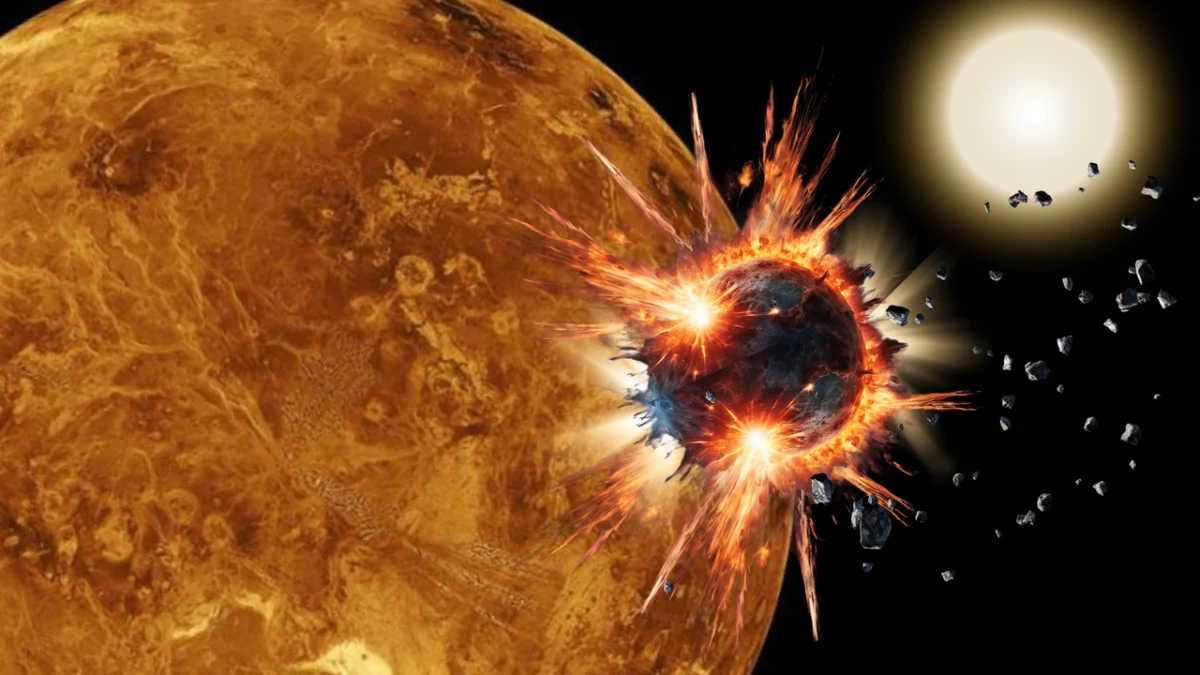
For eons, astronomers have looked at the inner solar system and noted a glaring architectural anomaly. Earth and Venus are frequently dubbed "twins." They share near-identical dimensions, similar masses, comparable rocky compositions, and occupy adjacent orbits within the sun’s habitable zone. Yet, they are fundamentally distinct in one haunting regard: while Earth enjoys the steady, gravitational embrace of a large, life-sustaining moon, Venus is entirely solitary. In fact, Venus and Mercury stand as the only two planets in our solar system completely devoid of natural satellites.
For decades, this absence prompted a fundamental question: Did Venus never possess a moon, or did it once have a companion that met a catastrophic end? New research suggests the latter is not only possible but perhaps inevitable, painting a violent portrait of a planet that may have quite literally consumed its own offspring.
The Case of the Missing Moon: A Cosmic Mystery
The fascination with this disparity is not merely academic; it strikes at the heart of planetary evolution. Stephen R. Kane, a planetary astrophysicist at the University of California, Riverside, and the leader of a recent study into this phenomenon, has long been captivated by the mechanisms of moon formation.
"Venus is Earth’s twin, and both are nearly identical in size, mass, and composition," Kane explained. "However, Earth has a large moon, and Venus has no moon at all, not even a small captured satellite. Venus undoubtedly experienced large impacts, just as Earth has, and so has had as much, if not more, opportunity to form a moon similar to what we see in our own skies."
The standard theory of moon formation—the Giant Impact Hypothesis—suggests that our own moon was born from a colossal collision between a protoplanet and the early Earth. Given that the early solar system was a chaotic, high-energy environment filled with debris and "planetary embryos," it is statistically probable that Venus was struck by similar objects. If those impacts were sufficient to create a moon, where did it go?
Chronology of a Catastrophe: How the Moon Was Lost
To solve the mystery, Kane and his research team turned to fundamental physics. They constructed a high-fidelity computer simulation designed to track the gravitational dance between a nascent Venus, a hypothetical moon, and the sun over the course of billions of years.
The model was calibrated by replicating the evolution of the Earth-moon system, ensuring that the team’s understanding of tidal interactions was sound. Once the model was validated, they subjected it to a wide range of variables, including varying rotation speeds for the young Venus and different mass estimates for the hypothetical satellite.
The results, according to the simulation, were stark. Unlike the Earth-moon system, where the moon is slowly drifting away at a rate of about 3.8 centimeters per year due to tidal interactions, the Venusian scenario followed a different trajectory.
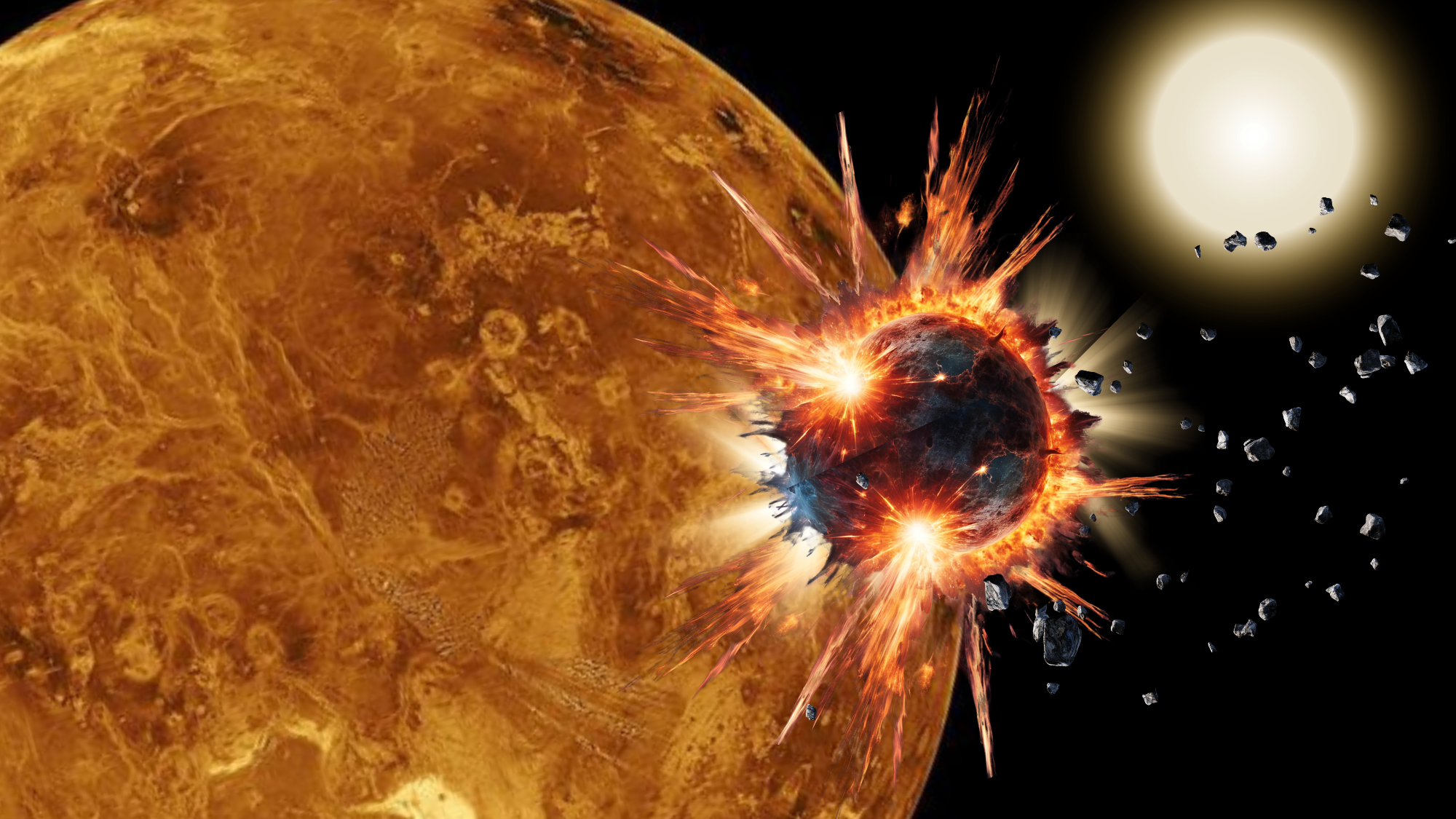
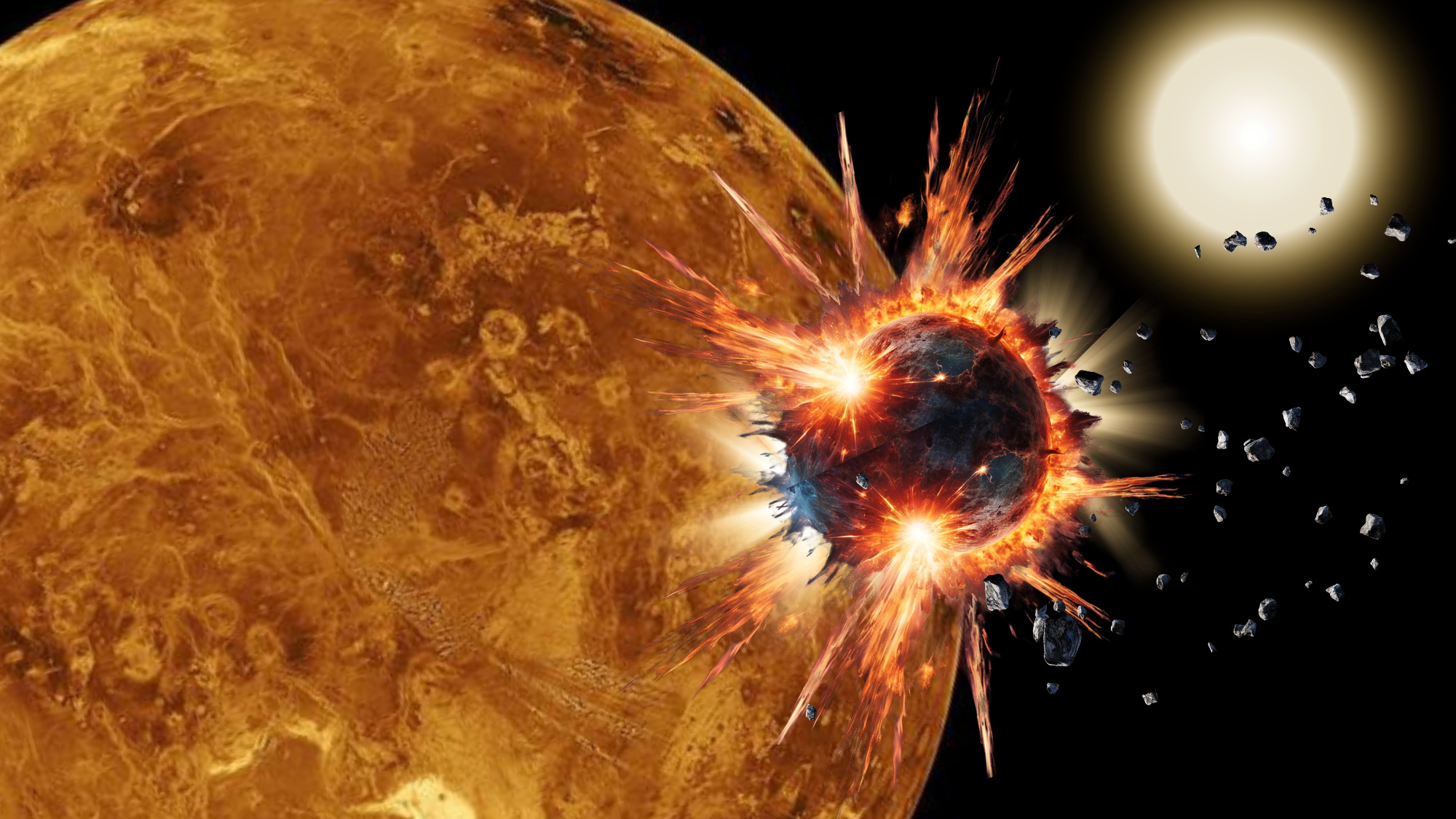
In most of the simulations, a moon orbiting Venus would not drift outward to a stable, long-term orbit. Instead, the gravitational tidal forces would cause the moon to lose orbital energy. Rather than moving away, the moon would begin a slow, inexorable spiral inward toward the planet. As it descended, the intense gravitational stresses would eventually reach a breaking point, tearing the satellite apart and raining its debris down upon the surface of the planet.
Supporting Data: The Physics of Tidal Decay
The mechanics of this "death spiral" are rooted in the interplay between planetary spin and tidal friction. When a moon orbits a planet, it exerts a "tidal bulge" on the planet’s surface. If the planet is rotating faster than the moon is orbiting, the planet’s gravity pulls the moon forward, pushing it into a higher, more distant orbit.
However, if the planet’s rotation is slower than the orbital period of the moon—or if the tidal dissipation is sufficiently high—the effect reverses. The moon begins to sap energy from the planet’s spin, causing the moon’s orbit to decay.
"An interesting aspect is that a heavier moon is destroyed faster, since a massive moon would drain Venus’s spin so efficiently that it hastens its destruction," Kane noted.
For a moon to have survived, the conditions would have had to be perfect: a rapidly rotating early Venus with a day lasting fewer than 12 hours, coupled with a relatively small moon. Because current models of early planetary formation suggest that Venus did not meet these specific, narrow criteria, the simulation points toward a history where any early Venusian satellites were doomed to be consumed.
Official Perspectives and Scientific Context
The scientific community has greeted these findings with significant interest, as they provide a logical framework for what has previously been a void in our understanding of the inner solar system. While the study is currently under peer review and available via the repository arXiv, it serves as a crucial building block for future planetary science.
The research also highlights the difficulty of finding direct evidence. A collision that occurred billions of years ago would leave little in the way of visible craters or structural remains. Instead, the evidence, if it exists, is likely chemical.
"A moon lost billions of years ago would leave little to no direct trace we can point a telescope at today," Kane admitted. "However, there are indirect avenues. If a moon was destroyed and its debris rained down on Venus, it could have left a chemical fingerprint in the planet’s surface or atmosphere."
The scientific hope now lies in upcoming missions, most notably NASA’s DAVINCI (Deep Atmosphere Venus Investigation of Noble gases, Chemistry, and Imaging) probe. By performing a high-resolution analysis of the Venusian atmosphere, researchers may be able to detect isotopic signatures or chemical anomalies that could serve as a "smoking gun" for the destruction of a primordial moon.
Broader Implications: Beyond Our Solar System
The implications of Kane’s work extend far beyond our own neighborhood. As astronomers turn their gaze toward distant exoplanets—planets orbiting stars light-years away—the question of moon formation becomes central to understanding planetary habitability.
"There’s a broader test beyond our solar system because our results predict that slowly rotating, Venus-like planets around other stars should generically lack large moons," Kane said. "As astronomers begin searching for moons around exoplanets, that’s a prediction that can eventually be checked against real data."
If the model holds true, it suggests that the "Earth-Moon" dynamic may be rarer than we previously thought, and that slow-rotating, dense, rocky planets are inherently prone to "moon-cannibalism." This could significantly alter our criteria for what constitutes a potentially habitable planet. A moon, after all, is not just a night light; it provides gravitational stability, influencing a planet’s axial tilt and climate stability over geological time.
Future Research and Final Thoughts
Kane and his team are far from finished. Their research agenda for the coming years is robust, aimed at refining the models of planetary interior structure, which currently remain a significant variable in their simulations.
"There are numerous implications of our work that I would like to explore further," Kane concluded. "These include the compositional and atmospheric effects of a Venusian moon consumption event that may be testable now. I would also like to explore similar effects for Mercury and Mars, and conduct further studies on exoplanet cases where such moon collision scenarios may have occurred."
The story of Venus, as we currently understand it, is one of extreme transformation. It is a world of crushing pressures, lead-melting temperatures, and sulfuric acid clouds. If this research proves correct, the history of this "hellish twin" is even more dramatic than its present state suggests—a history written in the literal destruction of its own natural companion. As we wait for data from the next generation of space probes, the "lost moon of Venus" serves as a poignant reminder that the solar system is not a static museum, but a dynamic, ever-changing environment where planets are shaped by the violent, beautiful, and often tragic forces of gravity.