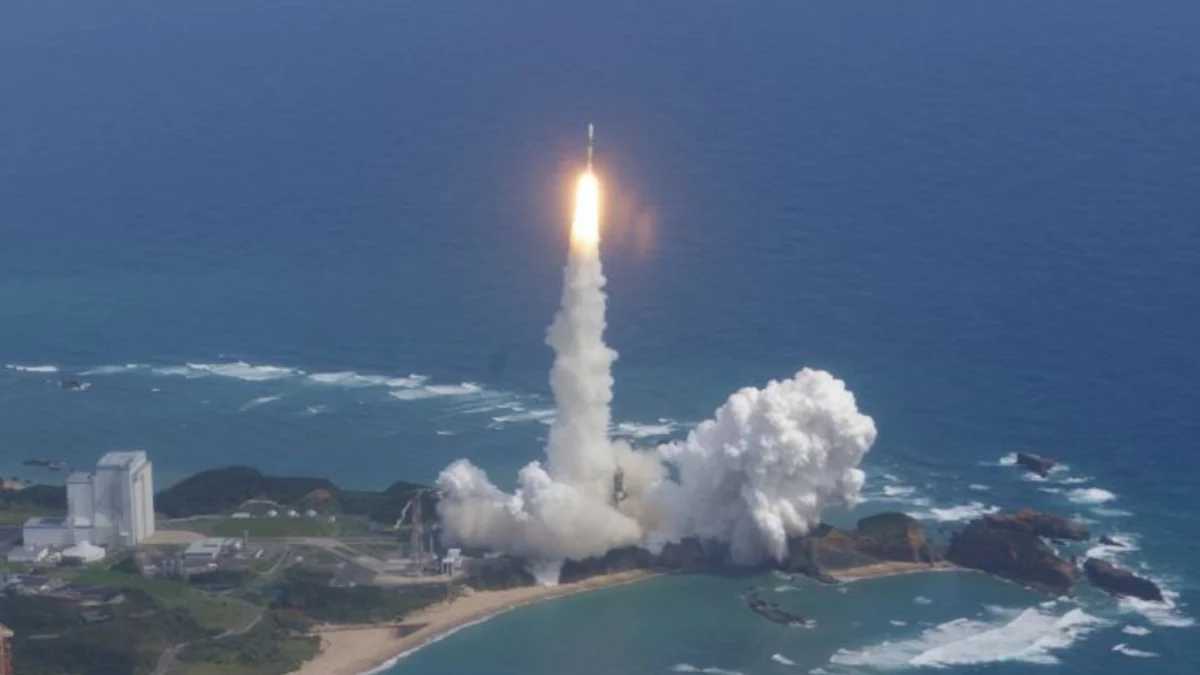
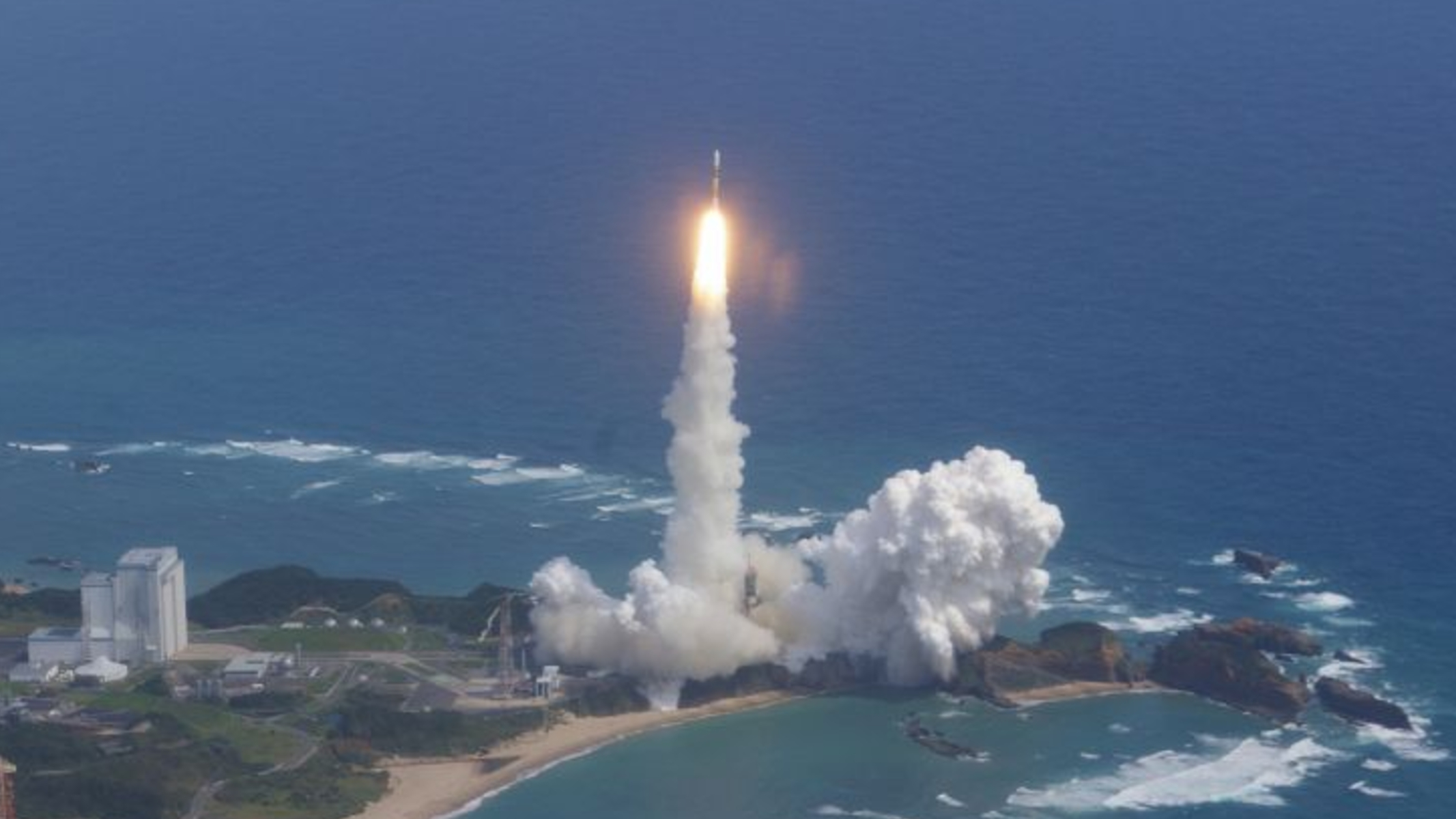
On September 13, 2007, the global space community turned its eyes toward the Tanegashima Space Center in Japan. As an H-IIA rocket pierced the sky, it carried more than just hardware; it carried the aspirations of the Japan Aerospace Exploration Agency (JAXA) to cement the nation’s status as a major player in deep-space exploration. The mission, formally designated as the SELenological and ENgineering Explorer (SELENE) but affectionately known as "Kaguya," would go on to fundamentally reshape our understanding of the lunar surface.
Named after the celestial princess from a classic Japanese folktale—a character who descended to Earth from the moon—Kaguya was far more than a technical experiment. It was a visual and scientific milestone that provided humanity with its first high-definition glimpse of the lunar frontier since the final Apollo missions of the 1970s.
Main Facts: The Anatomy of a Lunar Pioneer
Kaguya was not merely a single probe, but a sophisticated, three-part system designed to act as a comprehensive lunar laboratory. The primary mission architecture consisted of three distinct components:
- The Main Orbiter: A large spacecraft tasked with orbiting the moon at an altitude of approximately 100 kilometers (62 miles). It carried 14 distinct scientific instruments, including high-definition cameras, gamma-ray spectrometers, and radar sounders.
- Okina (Rstar): A relay satellite designed to maintain communication with the main orbiter when it passed behind the lunar far side.
- Ouna (Vstar): A satellite dedicated to radio source experiments, specifically designed to measure the moon’s gravitational field by monitoring precise shifts in orbit.
The launch, which occurred at 10:31 a.m. local time on September 14 (evening of September 13 in Eastern Time), initiated a journey that would take the spacecraft through two Earth orbits before it could break free of our planet’s gravity and begin the three-week trek toward the lunar environment.
Chronology: From Launch to Lunar Impact
The Kaguya mission was a masterclass in precision engineering. Below is the timeline of its most critical phases:
- September 13/14, 2007: Successful launch from Tanegashima Space Center aboard an H-IIA launch vehicle.
- October 2007: After a 20-day transit, the spacecraft performed a complex lunar orbit insertion. Once settled, it successfully deployed its two microsatellites, Okina and Ouna.
- Late 2007 – 2008: The mission entered its primary observation phase. During this time, the probe began transmitting high-definition imagery and conducting extensive gravitational mapping.
- October 2008: The primary mission objectives were officially completed, meeting or exceeding all scientific benchmarks.
- February 2009: After an extended mission period was hampered by a technical failure in one of the spacecraft’s reaction wheels, JAXA made the difficult decision to conclude operations.
- February 12, 2009: The orbiter was commanded to perform a controlled de-orbit, resulting in a planned crash landing near the Gill Crater on the moon’s surface.
Supporting Data: The Science Behind the Sight
The scientific output of the Kaguya mission was staggering. By integrating the data from its 14 instruments, JAXA was able to produce the most accurate topographical map of the moon ever created up to that point.
The gravity-mapping mission was particularly vital. Because the moon is not a perfectly uniform sphere, its gravity fluctuates depending on the density of the crust beneath the spacecraft. By using the Okina and Ouna satellites as tracking beacons, scientists could measure how the main orbiter’s velocity changed as it flew over lunar mascons (mass concentrations). This data remains a foundational resource for modern lunar researchers studying the moon’s internal composition and geological history.
Furthermore, Kaguya’s cameras were a revelation. In an era where grainy, low-resolution imagery had become the standard expectation for robotic lunar missions, Kaguya’s high-definition video capabilities brought the moon to life. The "Earthrise" footage captured by the probe—a sight that had not been seen with such clarity since the 1970s—became a viral sensation, bridging the gap between cold, hard scientific data and the public’s emotional connection to space exploration.
Official Responses and Technological Validation
The success of Kaguya served as a definitive vindication of Japanese space technology. Prior to Kaguya, Japan had launched the Hiten spacecraft in 1990. While Hiten was an ambitious project, it was hampered by technical issues and never achieved a stable orbit, serving primarily as a technology demonstrator.
JAXA officials noted that Kaguya was the "true" beginning of Japan’s lunar exploration era. In an official retrospective, NASA acknowledged the contribution, stating that the mission provided the first optical observations of the permanently shadowed interior of Shackleton Crater. This was a monumental achievement, as those dark, icy regions are considered prime candidates for future human exploration and potential lunar base construction due to the presence of water ice.
The international scientific community praised the transparency of the mission. JAXA made the unprecedented move of releasing the raw high-definition footage to the public, fostering a new generation of "space enthusiasts" and amateur astronomers who used the data to create their own maps and visualizations.
Implications for Modern Space Exploration
The legacy of Kaguya is clearly visible in the current landscape of the global space race.
1. The Precursor to Artemis
By accurately mapping the lunar south pole and studying the topography of areas like Shackleton Crater, Kaguya provided the foundational data necessary for the modern Artemis program. NASA and its international partners are currently using the topographical models established by Kaguya to select landing sites for the next generation of human lunar explorers.
2. Deep Space Networking
The use of a relay satellite system (Okina) to maintain constant communication with a probe on the far side of the moon was a proof-of-concept that paved the way for subsequent missions. This architecture is now a standard requirement for any serious lunar exploration effort, as communication blackouts remain one of the greatest risks for remote autonomous vehicles.
3. Public Engagement
Kaguya taught space agencies that the public craves high-quality, immersive content. The "Moon Princess" mission succeeded not just because it measured gravity anomalies, but because it invited the public to watch the moon in a way that was previously reserved for astronauts. This model of engagement has since been adopted by agencies like NASA and the European Space Agency (ESA) for missions such as the James Webb Space Telescope and the Perseverance Mars Rover.
Conclusion
The Kaguya mission represents a pivotal chapter in the history of space exploration. It was a bridge between the pioneering, exploratory spirit of the 20th century and the highly digitized, collaborative, and data-driven missions of the 21st century. While the probe itself now lies silent near the Gill Crater, its contributions continue to orbit our scientific understanding.
Japan’s decision to name the mission after a folktale princess who returns to the heavens was, in hindsight, fitting. Like the legendary Kaguya-hime, the spacecraft descended to our world, shared its wonders with those below, and then departed, leaving behind a legacy that continues to illuminate the path for those who seek to explore the stars. As humanity prepares to return to the lunar surface in the coming decade, the maps, images, and data gathered by this Japanese explorer will remain an essential guide, ensuring that we do not walk blindly into the vast, beautiful expanse of our closest celestial neighbor.