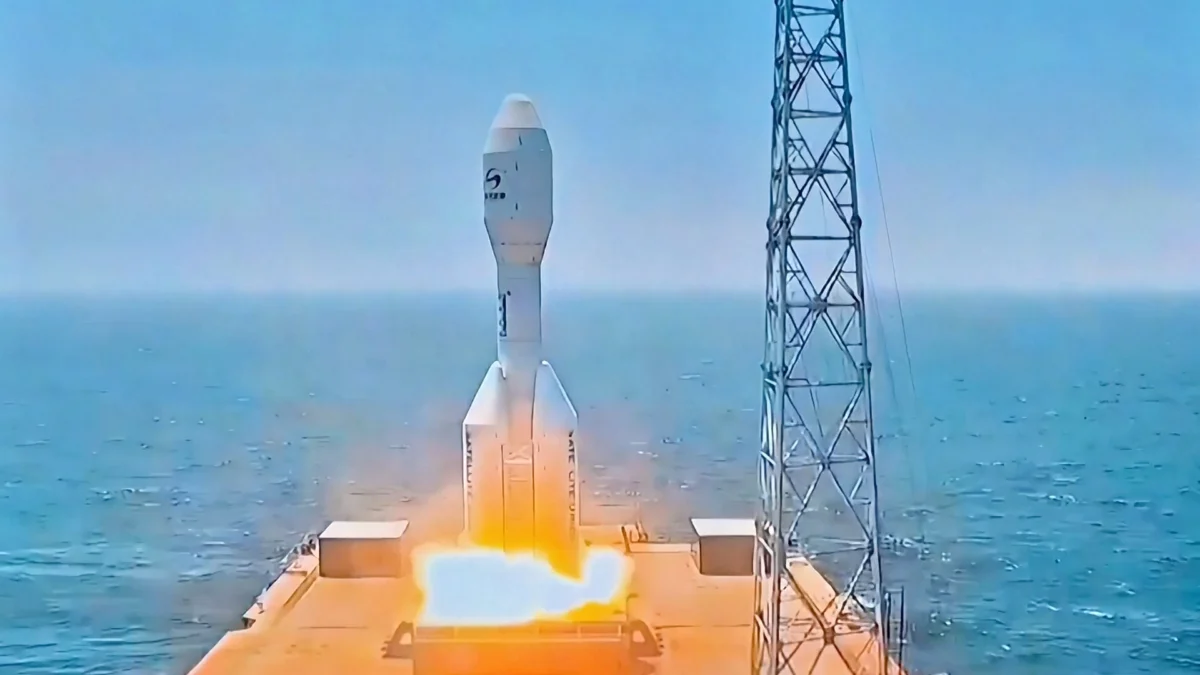
In a remarkable display of maritime aerospace engineering, China’s Orienspace successfully conducted the third flight of its Gravity-1 rocket on July 21, 2026. Launching from a specialized vessel positioned off the coast of Shanghai, the mission underscored a growing trend in the global space race: the strategic pivot toward sea-based launch platforms to maximize operational flexibility and safety.
Gravity-1, a distinctively squat, high-performance vehicle, successfully deployed a payload of nine satellites into their designated orbits. While the specific nature of the payloads remains classified, the success of the mission reaffirms Orienspace’s position as a burgeoning powerhouse in the commercial space sector. With three consecutive successful missions—all executed from oceanic platforms—the company is rapidly proving that the logistical hurdles of ship-based launches are not just manageable, but advantageous.
The Architecture of Power: Anatomy of the Gravity-1
Standing at approximately 100 feet (30 meters) in height, the Gravity-1 is dwarfed by industry giants like SpaceX’s Falcon 9, which looms nearly twice as tall. However, size is not the defining metric for this vehicle; its raw thrust-to-weight ratio and reliance on solid-fuel propulsion make it the most powerful solid-fueled rocket currently in operation globally.
The rocket’s architecture is a testament to modern modular design. It comprises three primary core stages bolstered by four strap-on boosters, all of which utilize advanced solid rocket motors. This configuration allows the vehicle to haul up to 14,300 pounds (6,500 kilograms) of payload into low Earth orbit (LEO). While this capacity is roughly one-third of the Falcon 9’s capability, the Gravity-1 is designed for a different market segment: rapid-response deployment, mid-sized constellation maintenance, and high-frequency orbital access.
The reliance on solid propellant—a departure from the liquid-methane or kerosene-based architectures favored by many Western commercial entities—offers unique advantages. Solid-fuel rockets are generally easier to store and transport, requiring less complex ground infrastructure. When combined with a mobile maritime launch pad, this allows Orienspace to bypass traditional land-based launch site constraints, effectively turning the ocean into a global spaceport.
A Chronology of Success: From Concept to Constellation
The trajectory of Orienspace has been nothing short of meteoric. The Shandong-based company has moved from prototype testing to full-scale operational capability in record time.
- January 2024: The maiden flight of the Gravity-1 took place, marking the first time a commercial Chinese solid-fueled rocket of this magnitude had successfully reached orbit from a sea-based platform. This flight served as the ultimate proof-of-concept for the company’s "ship-to-orbit" philosophy.
- October 2025: The second mission solidified the reliability of the launch system. By this point, industry analysts were already noting that the rapid turnaround between missions suggested a highly streamlined manufacturing and assembly process.
- July 21, 2026: The third mission confirmed that the platform is ready for sustained commercial operations. The successful deployment of nine satellites suggests that the vehicle is now in its operational phase, likely serving as a workhorse for domestic Chinese internet satellite initiatives.
The cadence of these launches is expected to accelerate. State-run outlet CGTN has already reported that a fourth mission is scheduled for the coming months, tasked with deploying a fresh batch of Chinese internet satellites. This rapid-fire approach is critical for competing in the dense LEO environment, where the race to build satellite mega-constellations is currently underway.
Strategic Implications of Maritime Launches
The decision to prioritize sea launches is not merely an engineering choice; it is a strategic necessity. By launching from international or coastal waters, operators can mitigate the risks associated with debris falling over populated areas. Furthermore, sea launches provide the flexibility to choose the ideal launch latitude for specific orbital inclinations, optimizing fuel consumption and increasing payload capacity.
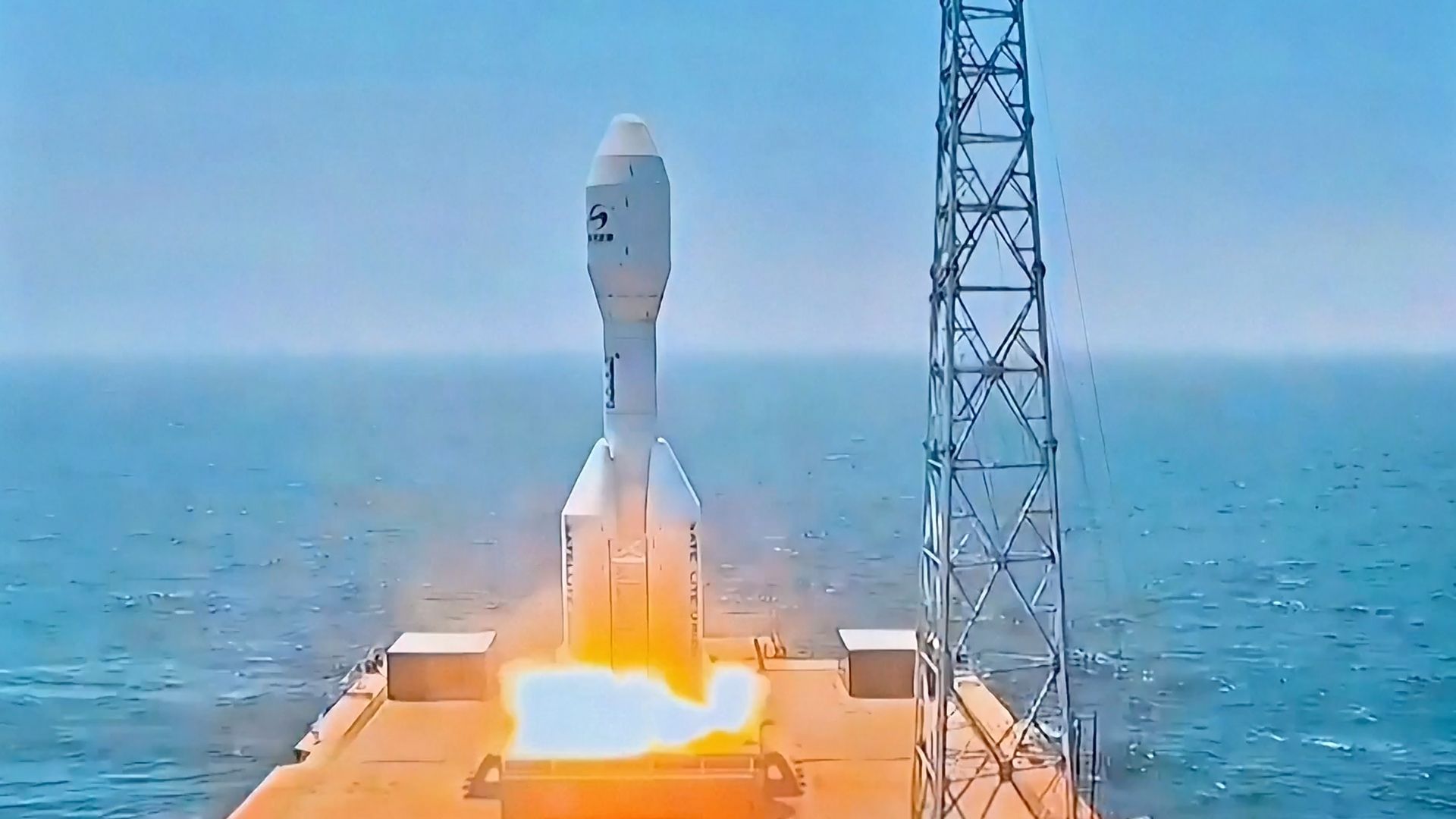
Gravity-1 chief designer Xu Guoguang has been vocal about the broader vision for the company. "Sea launch of solid-propellant rockets paves the way for future launch of liquid rockets at sea," Xu noted in a recent briefing. The current success with solid-fuel technology is merely a "stepping stone" toward a more sophisticated maritime infrastructure.
Orienspace is reportedly investigating the use of stationary drilling platforms as potential launch sites. These platforms, which offer more stability than standard cargo ships, could host larger, more complex liquid-fueled rockets, effectively turning the ocean into a permanent, mobile launch complex that is decoupled from traditional, land-constrained geographic limitations.
Future Horizons: Gravity-2 and Beyond
While the Gravity-1 has secured its status as a reliable heavy-lifter, Orienspace is not resting on its laurels. The company is already in the advanced stages of developing the Gravity-2 and Gravity-3 vehicles. These successors represent a significant leap in technology, transitioning toward liquid-fueled core stages—likely utilizing high-efficiency liquid oxygen and kerosene or methane cycles—complemented by solid rocket boosters for additional lift-off power.
Gravity-2, expected to debut by the end of 2026, will likely push the boundaries of what is possible at sea. By utilizing liquid-fueled cores, Orienspace will be able to compete directly with mid-to-heavy lift providers on the global stage. The ability to launch these larger, more sophisticated vehicles from the sea would give Orienspace a distinct competitive advantage in the international launch market, where available slots at traditional spaceports like Cape Canaveral or the Guiana Space Centre are increasingly difficult to secure.
The Global Context: A New Space Race
The success of the Gravity-1 arrives at a time when the global space industry is undergoing a paradigm shift. With the rise of private spaceflight, the barrier to entry has lowered, but the barrier to efficiency has risen. Every kilogram of payload and every hour of launch-window preparation counts toward the bottom line.
Orienspace’s performance suggests that China is aggressively closing the gap in commercial launch capabilities. By mastering the specific, high-stress environment of maritime launches, they have effectively created a niche that minimizes infrastructure costs while maximizing launch frequency.
As we look toward the remainder of the decade, the focus will undoubtedly shift from "can we reach orbit" to "how efficiently can we occupy it." With three successful missions in the logbooks and a roadmap that extends into the development of heavy-lift liquid rockets, Orienspace is positioned as a key player in this new era. The "squat and stubby" Gravity-1 may look unconventional, but its performance is as precise and powerful as any of its larger counterparts. As the company prepares for its next series of launches, the global aerospace community will be watching the waters off the coast of China, where the next chapter of orbital logistics is being written.