
As Europe grapples with a record-breaking summer, the irony is not lost on the residents of Wrocław, Poland. While the city swelters under an unrelenting heatwave, local property developer Citylink has unveiled a visionary, if perhaps poorly timed, proposal: integrating a massive new data center into the municipal district heating network. By capturing the waste heat generated by thousands of high-performance servers, Citylink aims to transform a traditionally energy-intensive facility into a vital component of the city’s energy infrastructure.
This move marks a significant pivot in how urban planners and technology firms view digital infrastructure, shifting from seeing data centers as isolated "black boxes" to viewing them as integral nodes in a circular energy economy.
The Core Concept: Turning Digital Exhaust into Urban Warmth
At the heart of the proposal is a fundamental thermodynamic reality: data centers are essentially massive heaters. Servers consume electricity to process data, and nearly 100% of that energy is eventually converted into heat. In conventional facilities, this heat is treated as a nuisance—a byproduct that must be expelled into the atmosphere via energy-hungry cooling towers and air conditioning units.
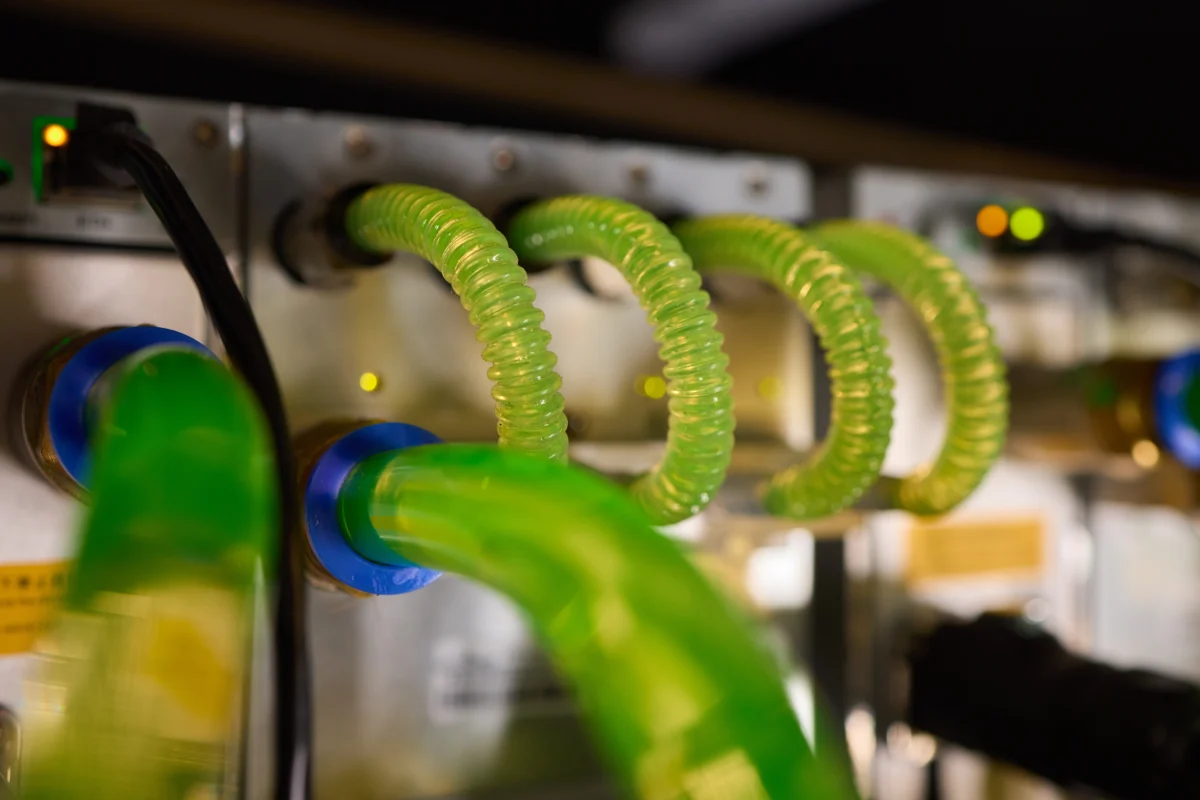
Citylink’s design for its new Wrocław facility takes a radically different approach. By installing advanced heat recovery systems, the developer intends to capture the thermal energy generated by server racks before it reaches the cooling systems. This captured heat will then be piped into the municipal district heating network managed by Kogeneracja, a local energy provider.
As the data center scales up—particularly to accommodate the growing demand for AI and high-density computing—the volume of "waste" heat will increase proportionally. This creates a scalable energy source that could potentially warm thousands of local homes and public buildings during Poland’s harsh winters, effectively offsetting the need for fossil-fuel-based heating.
Chronology: From Concept to Implementation
The evolution of this project reflects a broader trend in European infrastructure development.
- Q1 2024: Citylink begins the conceptual design phase for its Wrocław data center, prioritizing energy efficiency and sustainability certifications.
- Q2 2024: Initial feasibility studies are conducted in collaboration with Kogeneracja to determine the technical viability of linking the data center’s cooling loop with the city’s district heating pipes.
- Summer 2024: The announcement of the partnership is made public during a period of intense record-breaking heat across Poland.
- Future Outlook (2025–2026): Development of the physical infrastructure, including heat exchangers and pipeline integration, is scheduled to commence, with the first heat transfers expected as the facility reaches its initial operational capacity.
Supporting Data: The Energy Equation
The global rise of Artificial Intelligence (AI) has triggered an "unprecedented demand for computing power," according to Michaël Starybrat, development director at Citylink. To support this demand, data centers are becoming larger and more energy-dense.
According to industry reports, a typical modern data center consumes enough electricity to power a medium-sized town. If that energy is treated as a one-way street—electricity in, data out, heat into the atmosphere—the environmental footprint is staggering. However, the conversion efficiency of heat recovery systems is evolving:
- Thermal Grade: Modern high-density server racks operate at temperatures that, when coupled with heat pumps, can easily provide the 60°C–80°C water required for municipal district heating.
- Scalability: As AI nodes grow in density, the amount of waste heat per square meter of floor space increases, making the "heat-harvesting" model more economically viable over time.
- Global Precedent: Similar projects have gained traction elsewhere. In the UK, data center heat has been piloted to warm swimming pools and residential blocks, while in New Zealand, creative initiatives have explored using excess heat to support recreational and industrial facilities.
Official Responses and Strategic Vision
The collaboration between Citylink and Kogeneracja is being framed as a model for the "energy ecosystem of the future."
"The dynamic growth of the artificial intelligence and cloud technology markets generates unprecedented demand for computing power," Starybrat noted in a recent press release. "This collaboration demonstrates how modern digital infrastructure can actively contribute to building the energy ecosystem of the future."
By integrating these facilities into the city’s heat network, the partners argue that they are not just providing a service to their clients, but performing a civic duty by reducing the overall carbon intensity of the municipal heating sector. Kogeneracja’s participation is equally strategic, as the provider looks for ways to diversify its heat sources in compliance with the European Union’s increasingly stringent climate targets.
The Implications: A Balancing Act
Despite the technical promise, the announcement has been met with a mix of intrigue and public skepticism. The timing—occurring precisely when Poles are struggling to cope with extreme heat—has been criticized by some as "tone-deaf."
The Political and Psychological Hurdle
Announcing a project centered on "heat" during a heatwave presents a significant branding challenge. While the logic of using waste heat in the winter is sound, the optics of a corporation discussing "making homes hotter" during a climate-related emergency illustrate the gap between technical infrastructure planning and public sentiment.
Environmental Responsibility
There is also a broader debate regarding the sustainability of data centers. While heat recovery mitigates the waste, critics point out that the massive power consumption of AI models remains a primary contributor to planetary warming. The industry is currently facing pressure to prove that it is not merely "greenwashing" its operations, but actually reducing the total net-energy footprint of the digital economy.
Technical and Regulatory Challenges
Beyond the politics, the technical integration of a data center into a municipal network is complex. It requires:
- Infrastructure Synchronization: The heat output of a data center is relatively constant, whereas heat demand fluctuates based on the time of day and the severity of the winter. Storage solutions or sophisticated load-balancing systems are required to ensure the heat is useful when it is most needed.
- Regulatory Frameworks: Policies must be updated to allow private entities to contribute to public utilities, ensuring that the cost-savings of waste-heat recovery are fairly distributed between the developer, the utility provider, and the end-consumer.
Looking Ahead: The Future of Urban Data Infrastructure
The Wrocław project serves as a microcosm of a global trend. As cities become "smarter," the physical infrastructure that powers that intelligence must become more deeply embedded in the urban fabric.
If Citylink and Kogeneracja succeed, they will provide a blueprint for other European cities to follow. The goal is to move toward a model where "wasted energy" becomes an oxymoron. In this vision, the heat from an AI training cluster in the center of town could be the very thing that keeps a kindergarten warm during a January blizzard.
However, the success of this model will depend on more than just engineering. It will require a paradigm shift in how technology companies communicate their impact on the environment. For now, as the residents of Wrocław wait for the current heatwave to break, the project stands as a reminder of the complex relationship between our digital lives and our physical environment.
The data center of the future will not be a walled-off fortress of servers; it will be an active, breathing part of the city, trading bytes for warmth and turning the byproduct of the digital age into the lifeblood of the municipal grid. Whether the public will embrace this vision depends on the industry’s ability to demonstrate that it is solving the energy crisis, not just accelerating the warming of the planet.