
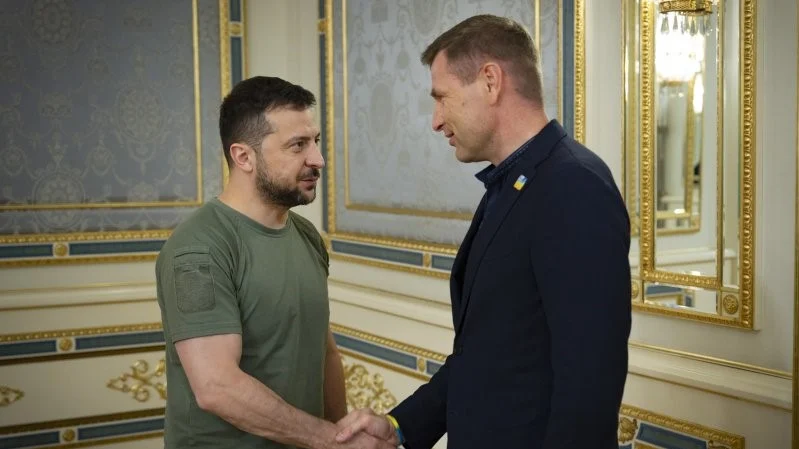
TALLINN – Hanno Pevkur, Estonia’s Minister of Defense since July 2022, has officially resigned from his post. His departure marks the culmination of a mounting procurement scandal involving €70 million ($81 million) in failed artillery shell deliveries intended for Ukraine. The resignation has sent shockwaves through the Estonian political landscape, raising urgent questions regarding the oversight of defense investments and the integrity of international military aid supply chains.
While the Estonian Ministry of Defense (MoD) publicly thanked Pevkur for his service during a period of unprecedented European security volatility, the official statement notably omitted any reference to the procurement irregularities that have dominated the national discourse for weeks.
The Core Controversy: A Breakdown in Oversight
The scandal centers on the Estonian Centre for Defence Investments (RKIK), the state agency responsible for military procurement. According to a scathing report released on August 28 by the Estonian National Audit Office (Riigikontroll), the agency engaged in high-risk financial practices that effectively bypassed parliamentary oversight.
The audit revealed that the RKIK had assumed significant financial liabilities on behalf of the state while simultaneously concealing these contractual obligations from the National Audit Office. Despite the Ministry of Defense’s assurances to the Riigikogu (Parliament) that defense mediation efforts would not risk taxpayer money, the audit found that the state budget is now exposed to a €70 million shortfall.
The crux of the issue lies in a series of failed contracts for artillery ammunition. Under the 2024-2025 State Budget Act, the MoD was permitted to facilitate the purchase of military equipment for partner nations, specifically Ukraine, using external funding mechanisms. However, the investigation found that the ministry had improperly managed these funds, leading to a situation where the Estonian state must now cover the costs of failed deliveries that were supposed to be funded through the European Union’s European Peace Facility.
Chronology of the Procurement Failure
The timeline of the failed initiative paints a picture of systemic negligence:
- Early 2024: The Estonian government, through the RKIK, enters into negotiations for artillery shells destined for Ukraine.
- August 2024: The RKIK signs an initial contract with Datasel SRL, an Italian-registered company owned by the India-based Neco Defense Munitions. Notably, neither entity possesses a track record in the defense sector, raising immediate red flags regarding the vetting process.
- Late August/October 2024: Estonia issues an initial advance payment of €15 million, followed by an additional €10 million in October.
- November 2024: The first shipment of projectiles, intended for the front lines in Ukraine, fails to arrive.
- Late 2024: Despite the failure of the initial batch, the RKIK proceeds to sign additional contracts, bringing the total financial commitment to €70 million.
- August 28, 2025: The National Audit Office publishes its annual report, exposing that the contracts were hidden from oversight and that the RKIK has been forced to initiate litigation against the supplier.
- September 2, 2025: The scandal erupts in the media, with Eesti Ekspress revealing that the supplier had no previous experience in manufacturing or selling munitions. Hanno Pevkur holds a televised interview, attempting to distance his office from the operational failures of the RKIK.
- September 2025: Facing intense public and political pressure, Hanno Pevkur announces his resignation.
Supporting Data: The Financial Gap
The financial implications for Estonia are significant. According to the National Audit Office, the MoD received €138.4 million in advance payments throughout 2025 for the purpose of mediating military equipment. However, because the €70 million paid to Datasel and Neco Defense Munitions resulted in no tangible goods, that capital is effectively frozen in legal limbo.
The audit office noted that this creates a "risk that costs of around €70 million will have to be paid for from the Estonian state budget at the expense of other planned expenses." This means that funds originally earmarked for Estonia’s own domestic defense capabilities—at a time when regional tensions with Russia are at an all-time high—are now being diverted to cover the fallout of a failed, third-party procurement contract.
Official Responses and the "Hands-Off" Defense
The response from Minister Pevkur in the immediate aftermath of the report’s release has been characterized by many analysts as a failure of ministerial responsibility. During an appearance on the ETV news program Aktuaalne kaamera, Pevkur admitted that he had not personally reviewed the artillery contracts.
"The defense minister does not conduct contract negotiations; the defense minister does not count stocks and ammunition," Pevkur stated. "It makes the fundamental decision to support Ukraine. The preparatory work for contract negotiations and finding contracting partners is RKIK’s responsibility."
While the MoD has remained largely silent on the specific legal proceedings, the agency is currently engaged in court action against the supplier. However, the lack of transparency regarding why an inexperienced, foreign-registered entity was selected for such a critical, time-sensitive contract remains a point of contention that the former minister failed to address satisfactorily before stepping down. Datasel SRL has remained silent on the allegations, failing to respond to multiple requests for comment.
Strategic and Political Implications
The fallout from this scandal extends far beyond the resignation of one cabinet official. It threatens to undermine the credibility of Estonia’s defense procurement processes, which are vital for the nation’s security as a frontline NATO member.
1. Erosion of Public Trust
In a small nation like Estonia, where defense spending is a cornerstone of national identity, the discovery that €70 million of state funds was gambled on a non-existent supply chain is a major blow to public trust. The opposition has already begun to call for a full parliamentary inquiry into the relationship between the RKIK and its third-party intermediaries.
2. Impact on Aid to Ukraine
Perhaps the most damaging implication is the potential delay in critical support for Ukraine. Artillery shells are the lifeblood of the Ukrainian defense effort. By tying up funds in failed contracts with shell companies, the Estonian procurement apparatus has inadvertently stalled the flow of much-needed munitions to the front. This will likely force a review of how the EU’s European Peace Facility funds are processed through smaller, individual member-state agencies.
3. Reform of Procurement Oversight
The scandal has necessitated an urgent overhaul of the RKIK’s vetting protocols. Industry experts argue that the incident exposes a "pathological reliance" on middlemen who lack the industrial base to fulfill high-volume defense contracts. Future procurements will likely be subjected to far more rigorous oversight, including mandatory disclosures of sub-contractor capacity and historical performance data.
4. Political Volatility
Pevkur’s resignation creates a vacuum at the heart of the Ministry of Defense. As Estonia navigates the complexities of the regional security environment, the appointment of a successor will be a litmus test for the ruling coalition’s ability to stabilize the institution and demonstrate to international partners that the Estonian military apparatus remains functional and accountable.
Conclusion
The resignation of Hanno Pevkur is not merely the end of a tenure; it is an admission of a systemic failure. By attempting to delegate the complexities of multi-million euro military procurement to an agency that lacked the necessary safeguards, the Estonian Ministry of Defense opened the door to a disaster that has cost taxpayers millions and jeopardized the delivery of critical lethal aid to Ukraine.
As Estonia looks to move forward, the focus must shift from political posturing to a total audit of how defense funds are managed. The "shell company" scandal serves as a stark warning to all European nations: in the race to arm Ukraine and bolster NATO’s eastern flank, speed cannot come at the expense of rigorous, transparent, and legally sound procurement practices. For Estonia, the road to restoring its reputation in the international defense market will be long and will require absolute transparency regarding the recovery of the lost €70 million.