By Editorial Staff
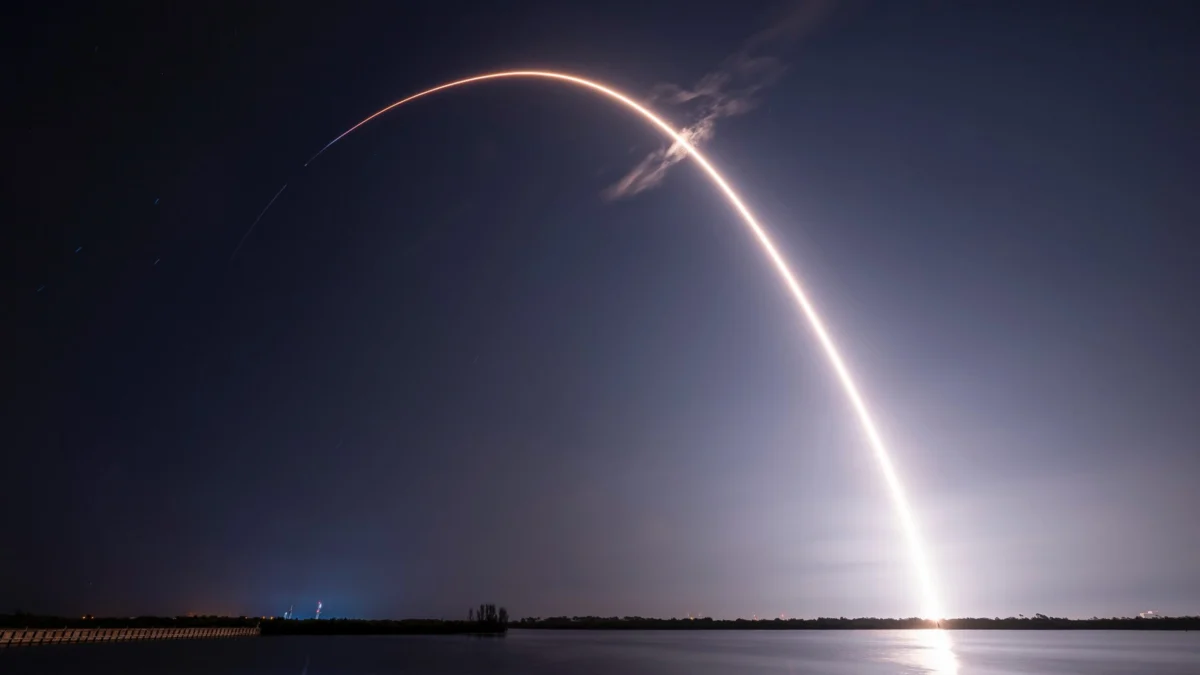
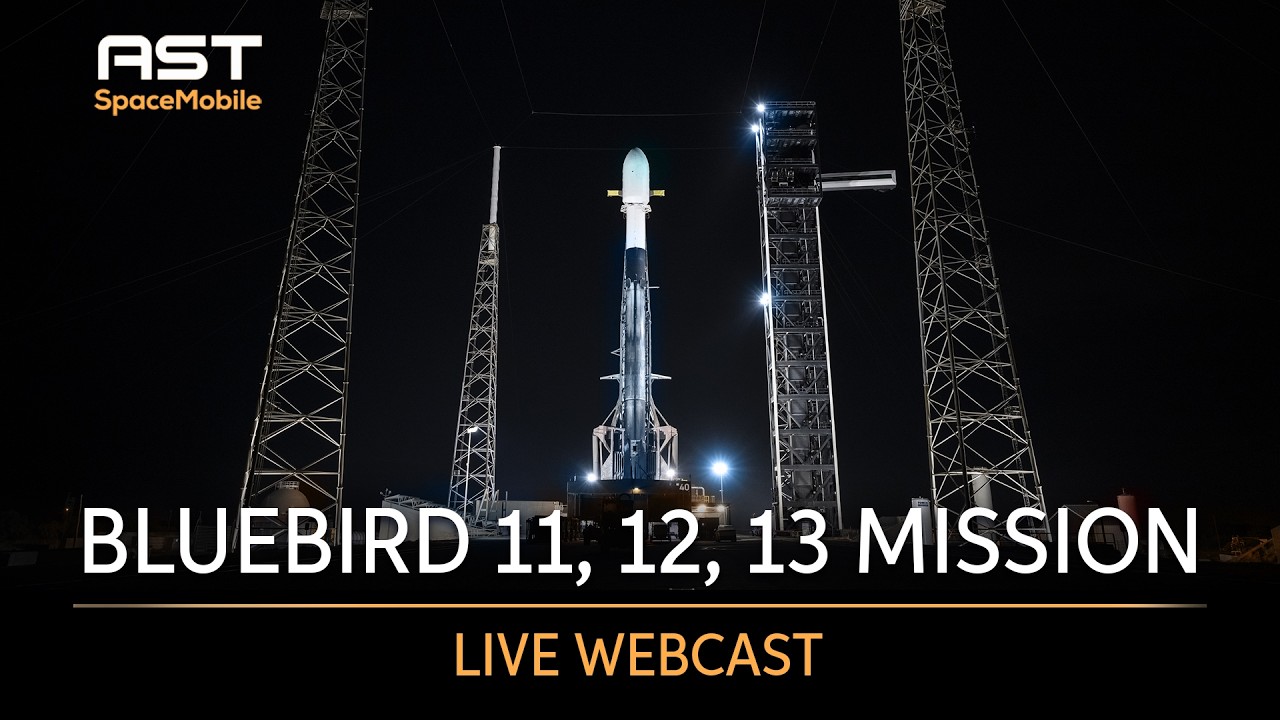
In the quiet, pre-dawn hours of Wednesday, August 5, the aerospace industry will turn its collective gaze toward Cape Canaveral, Florida. A SpaceX Falcon 9 rocket is poised to ignite the horizon, carrying a payload that represents more than just hardware; it marks a critical milestone in the democratization of global telecommunications. The mission, tasked with deploying the latest trio of AST SpaceMobile’s "BlueBird" satellites—designated 11, 12, and 13—is a pivotal maneuver in the company’s race to establish a space-based cellular broadband network capable of reaching standard, unmodified smartphones anywhere on the planet.
The Mission: Bridging the Digital Divide from Low Earth Orbit
The upcoming launch window, spanning 96 minutes and opening at 3:42 a.m. EDT (0742 GMT), serves as the next chapter in a high-stakes infrastructure project. As the world becomes increasingly reliant on constant, high-speed connectivity, the "dead zones" that still plague rural, mountainous, and maritime regions remain a significant barrier to universal digital inclusion.
AST SpaceMobile’s solution is bold: by leveraging a massive constellation of low Earth orbit (LEO) satellites, the company aims to eliminate these gaps. Unlike satellite phones of the past, which required bulky, specialized hardware, the BlueBird constellation is designed to communicate directly with the handheld devices already in the pockets of billions of users.
This launch is not merely about adding capacity; it is about scaling a technology that has already proven its mettle in limited trials. With a total of ten BlueBird spacecraft already in orbit, the successful deployment of this next trio will bring the total to 13, providing the critical mass required for the company to move from experimental testing to commercial beta services.
A Chronology of Innovation: From Concept to Constellation
To understand the gravity of Wednesday’s mission, one must look at the rapid evolution of AST SpaceMobile’s engineering.
The Early Days: The Block 1 Foundations
The company’s initial foray into the LEO environment was characterized by the "Block 1" satellite class. These satellites featured formidable communications arrays, measuring 693 square feet (64.4 square meters) when fully unfurled. While impressive for their time, they served primarily as a proof-of-concept, demonstrating that it was indeed possible to bridge the gap between orbital hardware and terrestrial cellular protocols.
The Pivot to Next-Gen: Expanding the Aperture
In December 2025, the company shifted its strategy with the launch of BlueBird 6, the first of its "next-generation" satellites. Carried into orbit by an Indian LVM3 rocket, this unit was a technological leap forward. With antenna arrays spanning a massive 2,400 square feet (223 square meters), these next-gen platforms offer significantly higher gain and sensitivity. This increased surface area is the secret sauce behind the company’s ability to maintain a stable, high-bandwidth link with devices that were never designed for satellite communication.
The Recent Trajectory
The path has not been without its obstacles. In April 2026, the mission to deploy BlueBird 7 suffered a heartbreaking setback when an anomaly occurred following its launch on a Blue Origin New Glenn rocket, leaving the satellite in an unusable orbit. However, the industry’s resilience was on full display just two months later. On June 17, 2026, a SpaceX Falcon 9 successfully delivered BlueBirds 8, 9, and 10 to orbit. This success provided the necessary confidence to push forward with the current mission.
Technical Specifications and Performance Data
The transition from the Block 1 design to the next-generation architecture is driven by the demand for higher throughput. According to internal performance data provided by AST SpaceMobile, the results are promising.
Throughput and Speed
The initial Block 1 satellites have already achieved peak download speeds of 98.9 Mbps in controlled environments. While this is an impressive baseline for space-to-phone connectivity, the company expects the next-generation BlueBirds—including the three launching Wednesday—to nearly double these peak speeds. For the end-user, this means the difference between basic messaging and the ability to stream high-definition video or engage in seamless video conferencing from the middle of an ocean or the depths of a desert.
The Rocket: A Veteran Workhorse
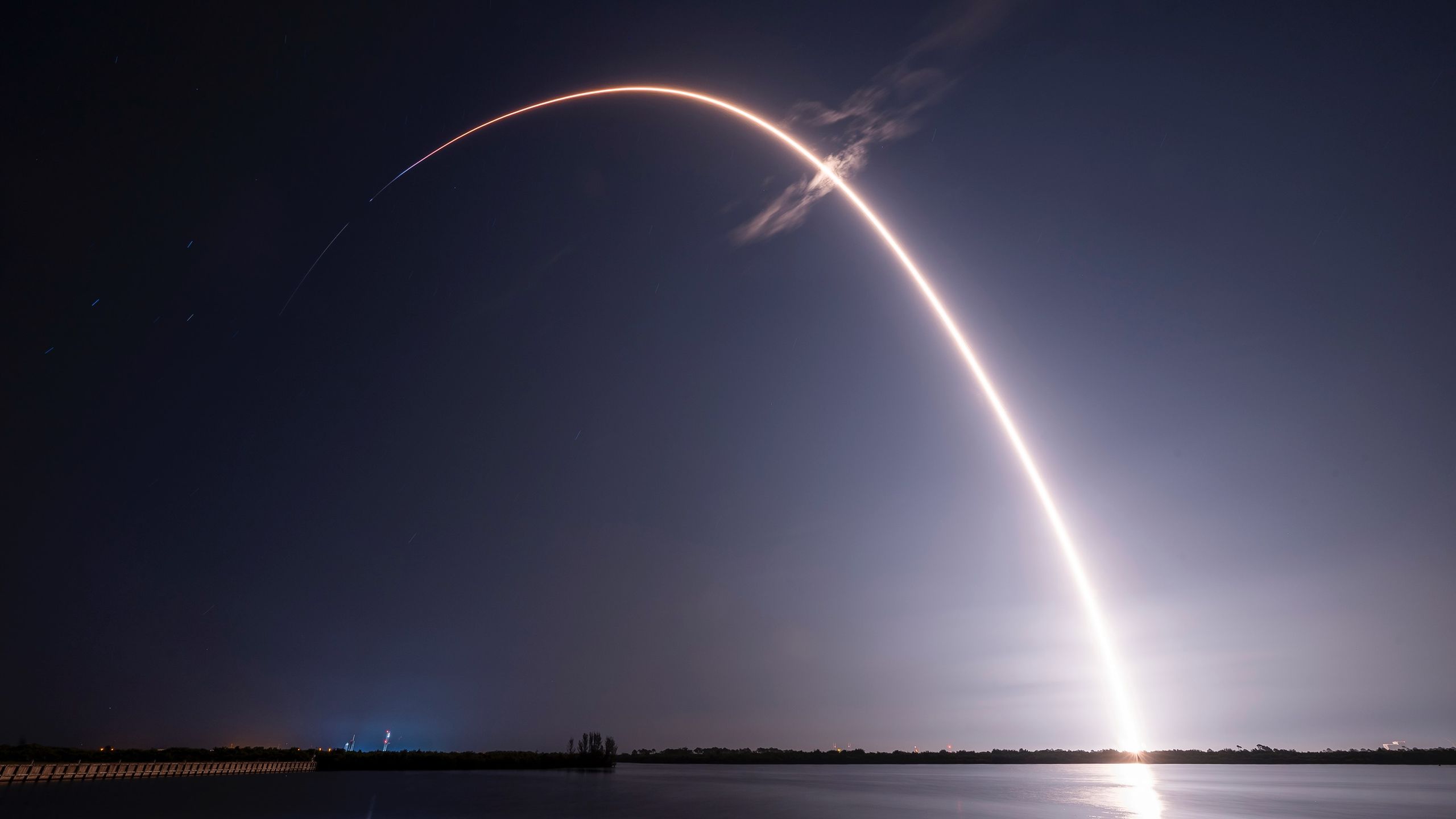
SpaceX’s reliability remains a cornerstone of the project. The Falcon 9 booster slated for Wednesday’s mission is a veteran of the fleet, marking its 30th flight. This level of reusability has been a fundamental driver in the economic viability of the LEO satellite industry, allowing companies like AST SpaceMobile to focus capital on satellite manufacturing rather than launch costs.
Approximately 8.5 minutes after liftoff, the first stage is expected to execute a precision landing on the drone ship A Shortfall of Gravitas stationed in the Atlantic. Meanwhile, the upper stage will continue its journey, initiating a complex deployment sequence 53.5 minutes after liftoff, during which the three BlueBirds will be released into their designated orbital slots over an 11-minute window.
Official Perspectives: The Path to Beta Services
The management at AST SpaceMobile is keenly aware of the market pressure to deliver. In a statement released on July 28, Scott Wisniewski, the company’s president, highlighted the strategic importance of this specific launch.
"This orbital launch, combined with expanded manufacturing capacity and the recent successful launch and deployment of BlueBird satellites 8, 9, and 10, position us for beta services later this year," Wisniewski stated.
The phrase "beta services" is the most anticipated term for investors and potential telecommunications partners. It suggests that the company is moving past the "research and development" phase and into the "service delivery" phase. For the millions of people who live in areas currently underserved by terrestrial cell towers, this represents the transition from a vision to a tangible utility.
Implications: A New Paradigm for Global Connectivity
The implications of a fully operational BlueBird constellation are profound, extending far beyond the convenience of a smartphone user.
Economic and Social Impact
In developing nations, the lack of traditional fiber-optic or copper-based infrastructure often hinders economic growth. By providing "space-based cellular broadband," AST SpaceMobile is effectively leapfrogging the need for expensive ground-based cable deployments. Small businesses, educational institutions, and healthcare providers in remote regions will gain access to the same digital ecosystem as those in major metropolitan hubs.
Emergency Response and Resilience
Natural disasters frequently incapacitate traditional cellular networks by damaging ground-based towers or severing fiber backhaul. A space-based network is inherently more resilient. During events like hurricanes, wildfires, or earthquakes, the ability to maintain cellular connectivity—independent of the ground infrastructure—could prove to be a life-saving asset for first responders and civilians alike.
Regulatory and Spectrum Challenges
Of course, the path forward is not without complexity. The use of cellular spectrum from space requires rigorous coordination with international regulatory bodies and existing terrestrial mobile operators. As AST SpaceMobile expands, they must navigate the delicate balance of spectrum sharing to ensure that their satellites do not interfere with the terrestrial networks they intend to supplement. The company has already begun building partnerships with major mobile network operators (MNOs) globally, a strategy designed to integrate their satellite coverage into existing cellular plans, rather than replacing them.
Looking Ahead: The Road to Global Coverage
As we look toward Wednesday morning’s launch, it is clear that the "New Space" era has entered a stage of maturity. The focus has shifted from merely putting objects into orbit to building complex, high-performance networks that solve terrestrial problems.
If the deployment of BlueBirds 11, 12, and 13 goes according to plan, AST SpaceMobile will have successfully demonstrated the ability to scale their manufacturing and orbital deployment strategies. The upcoming beta launch will be the final hurdle. Should that succeed, the company will have effectively rewritten the rules of telecommunications, turning the entire planet into a single, connected cell zone.
For the spectators and engineers gathered at Cape Canaveral, and for the millions watching via the live webcast, this launch is a reminder that the ceiling for innovation is not the sky—it is the limit of our ambition. Whether it is a hiker in the Rockies or a merchant in the Sahara, the promise of a "no-dead-zones" future is closer than ever, riding on the back of a 30-flight-proven Falcon 9.