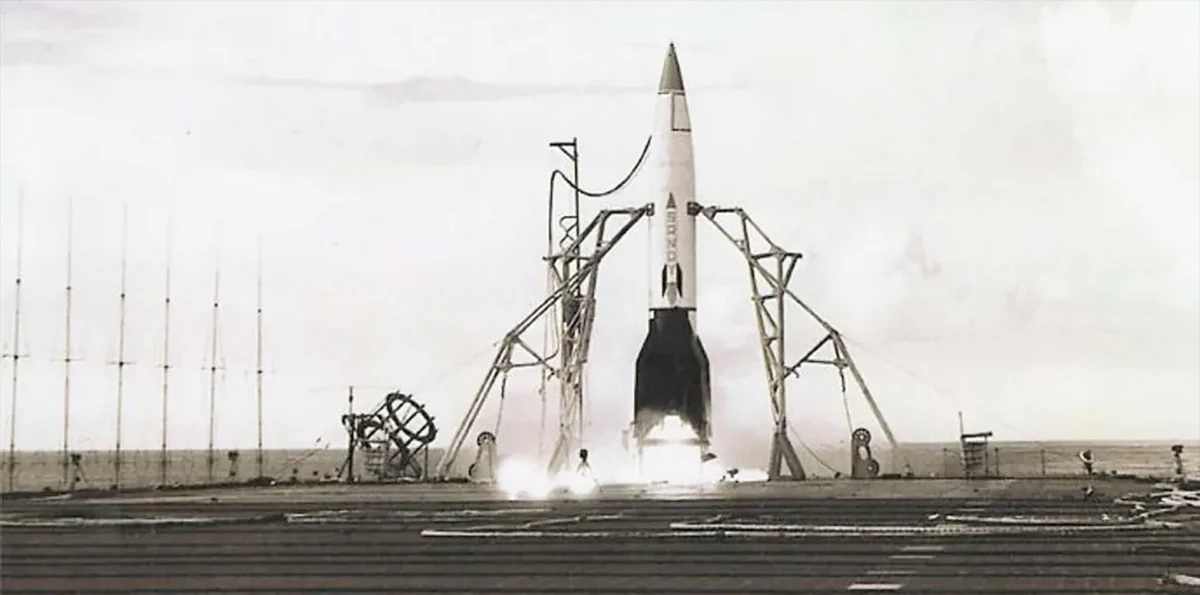
On September 6, 1947, the history of naval warfare and aerospace engineering collided in the turbulent waters south of Bermuda. As the aircraft carrier USS Midway cut through the Atlantic, the deck became the launchpad for a piece of technology that had, only two years prior, rained terror upon European cities. This event, known as "Operation Sandy," marked the first time a ballistic missile had ever been launched from a vessel at sea. While the flight itself was modest—a brief, wobbling ascent that ended in a premature descent—the implications of that day would ripple through the next century, transforming the world’s oceans into mobile bastions of strategic power and setting the stage for the Space Age.
The Origins of a Cold War Catalyst
To understand the significance of Operation Sandy, one must first look at the origins of the V-2 rocket. Known technically as the Vergeltungswaffe-2 (Vengeance Weapon 2), the rocket was the brainchild of Wernher von Braun and his team of German engineers. It represented the world’s first long-range, guided ballistic missile—a terrifying advancement in military technology that bypassed traditional defensive barriers.
As the Third Reich collapsed in 1945, a frantic "intellectual arms race" ensued between the Allied powers. The United States, recognizing the immense potential of this German hardware, launched "Operation Paperclip." This clandestine initiative sought to secure German scientists—most notably von Braun—and critical missile components before they could fall into the hands of the Soviet Union. Von Braun and his colleagues, along with scores of V-2 parts, were whisked away to the White Sands Missile Range in New Mexico. There, amidst the high desert, American scientists and their new German counterparts began the arduous process of reassembling, testing, and ultimately domesticating the V-2.
A Chronology of Operation Sandy
The transition from land-based testing to ship-borne deployment was not merely a matter of moving the launch site. It required a complete rethink of naval logistics and safety.
- 1945–1946: Integration and Experimentation: Following the conclusion of World War II, the U.S. military prioritized the adaptation of V-2s for American defense. Scientists conducted a series of static and flight tests at White Sands to better understand the guidance systems and structural integrity of the missiles.
- Early 1947: Preparing the Midway: The U.S. Navy identified the Midway-class aircraft carriers as the ideal candidates for these tests due to their size and robust deck structures. Engineers modified the flight deck to accommodate the massive, 46-foot-tall rocket and the complex ground support equipment required for its liquid-fuel propulsion system.
- September 6, 1947: The Launch: The Midway sailed into position south of Bermuda. The operation was tense; never before had a liquid-fueled rocket of this magnitude been fired from a pitching, rolling vessel. At the signal, the V-2 ignited. The roar of the engine signaled a new era, though the flight was short-lived.
- The Flight Profile: Shortly after clearing the deck, the V-2 began to pitch erratically. It reached an altitude of approximately 15,000 feet (4,600 meters) before its internal guidance failed and it tumbled back toward the ocean. While not a "successful" flight in terms of range or stability, it was a profound success in terms of proof-of-concept.
The Technical Challenges of Maritime Launching
The challenges faced by the crew of the Midway were multifaceted. The V-2 was designed for stable, solid ground launch pads. The volatile mixture of liquid oxygen and alcohol required for its engine posed a severe fire risk on the deck of an aircraft carrier, which was already laden with aviation fuel and ammunition.
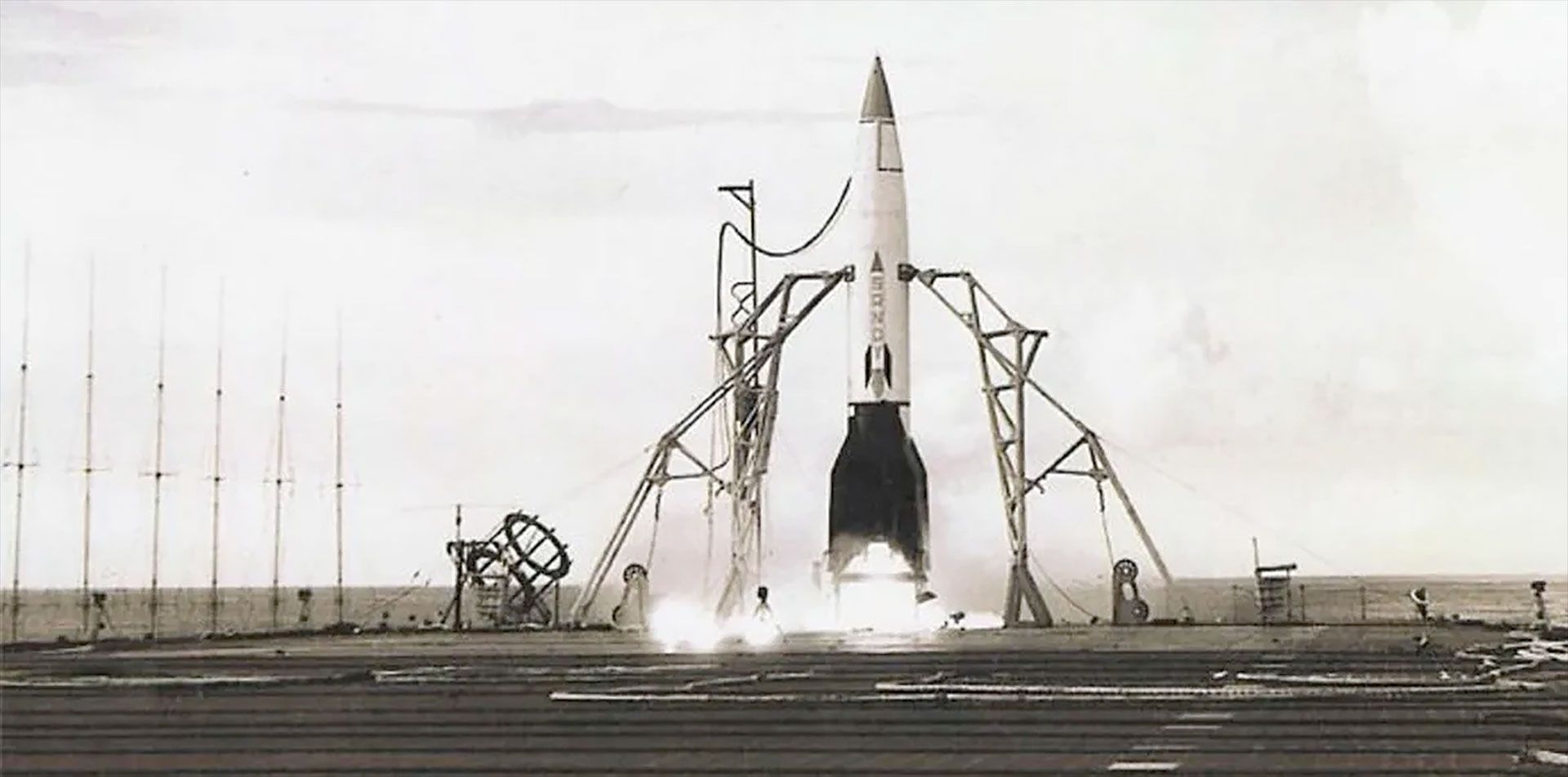
Furthermore, the mechanical stress of a ship moving in the open ocean introduced vibrations and gyroscopic anomalies that the V-2’s primitive guidance system struggled to compensate for. Data retrieved from the flight confirmed that the rocket began to veer off course almost immediately. According to reports from the Midway historical archives, the vehicle eventually broke apart at roughly 12,000 feet. Despite this, the telemetry data gathered during those few seconds proved that a rocket could survive the ignition process on a moving platform—a discovery that paved the way for the Polaris and Trident missile programs that would define the naval nuclear deterrent in later decades.
Implications for Modern Defense and Space Exploration
The legacy of Operation Sandy is dual-faceted: it serves as both the genesis of the modern sea-based ballistic missile arsenal and a foundational moment for American space exploration.
Military Strategic Evolution
Operation Sandy shattered the notion that ballistic missiles were limited to static, land-based silos. By demonstrating that a carrier could serve as a launch site, the U.S. Navy signaled to the world that its reach was effectively limitless. This directly influenced the development of Submarine-Launched Ballistic Missiles (SLBMs). Today, the ability to launch precision-guided missiles from mobile maritime platforms remains a cornerstone of international security, ensuring that no adversary can accurately predict the origin point of a potential counter-strike.
The Bridge to Orbit
Beyond the military, the V-2 was the "Great Ancestor" of the rockets that would carry humanity to the stars. The expertise gained by von Braun and the American engineers during these early tests—including the maritime trials—provided the data necessary to refine liquid-fuel propulsion and aerospace structural engineering. Just over a decade after the Midway test, the same fundamental principles were scaled up to launch the first American satellites and, eventually, the Saturn V rockets that powered the Apollo moon missions.
Reflections on a Controversial History
The history of the V-2 is inextricably linked to the moral complexities of the 20th century. While the technology was undeniably revolutionary, its origins in the forced labor camps of Nazi Germany—where thousands of prisoners died building the V-2—remain a somber footnote to its technical success.
The U.S. government’s decision to prioritize scientific gain over the ethical baggage of the scientists involved—a reality that characterizes Operation Paperclip—is a subject of ongoing historical debate. When the V-2 soared from the Midway in 1947, it was an American weapon, but it carried the technological and moral DNA of a war that had left the world in ruins.
Conclusion: The Horizon Ahead
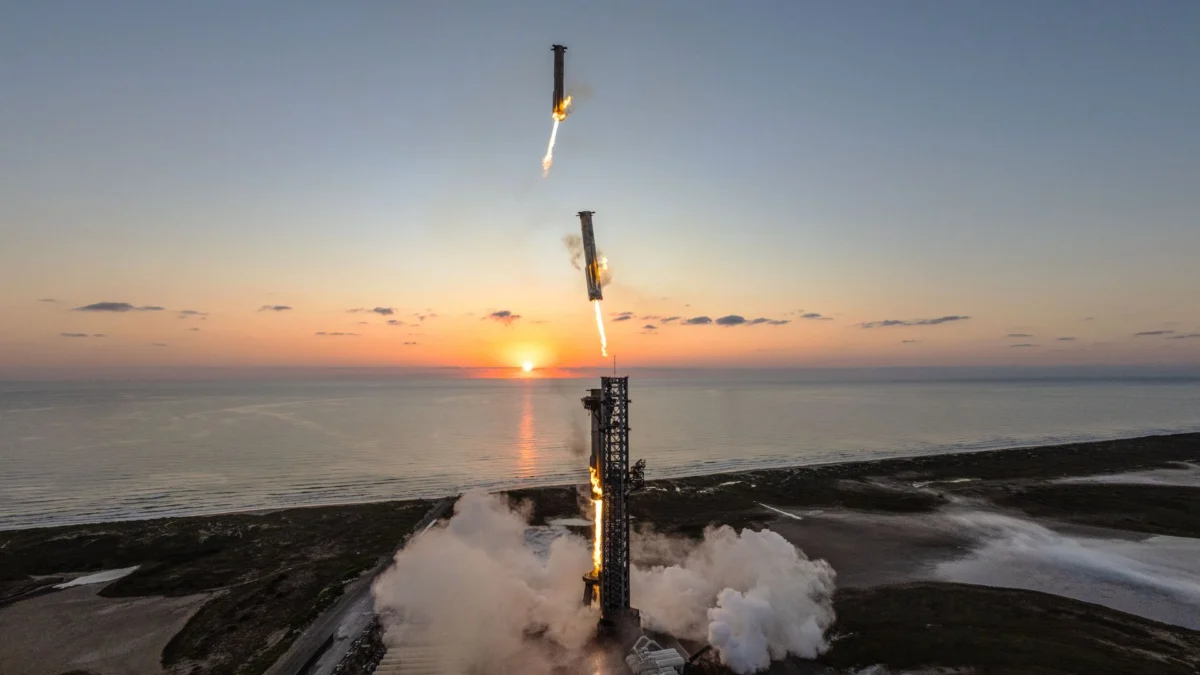
Today, the Midway is a museum ship, and the V-2 is a relic of a bygone age of rocket science. Yet, the lessons learned on that September day remain relevant. Every time a modern rocket launches from a floating platform—such as those used by private aerospace companies today—or when a Navy vessel conducts a missile defense test, the spirit of Operation Sandy is present.
The test on September 6, 1947, was a messy, precarious, and ultimately limited endeavor. It was, however, the necessary first step into an era where humanity would stop being tethered to the ground. As we look toward the future of deep-space exploration and the continued evolution of global security, the flight from the Midway serves as a stark reminder: even the most ambitious journeys begin with a single, trembling step into the unknown. The transition from a weapon of war to a vehicle of discovery was not instantaneous, but it was set in motion the moment that German rocket ignited on an American flight deck, forever changing the way we look at the sea, the sky, and the space beyond.