In the vast, silent theater of the cosmos, humanity’s reach often exceeds its grasp. While crewed missions capture the public imagination, the true heavy lifting—the dangerous, solitary, and groundbreaking work of exploration—is performed by an elite cadre of robotic emissaries. These mechanical pioneers are the first to venture into the "dark and scary places" of our solar system, serving as the eyes, ears, and scientific instruments for a species eager to understand its origins.
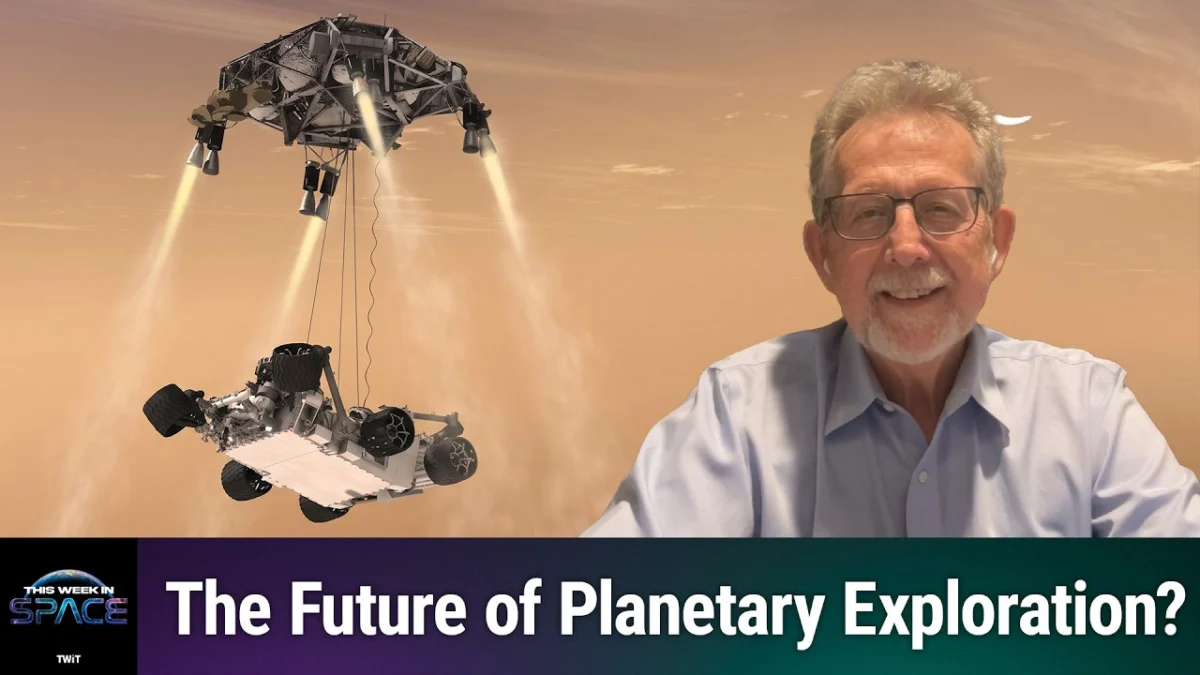
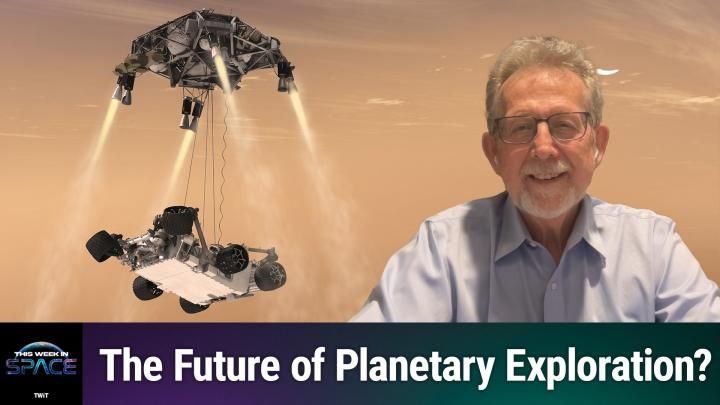
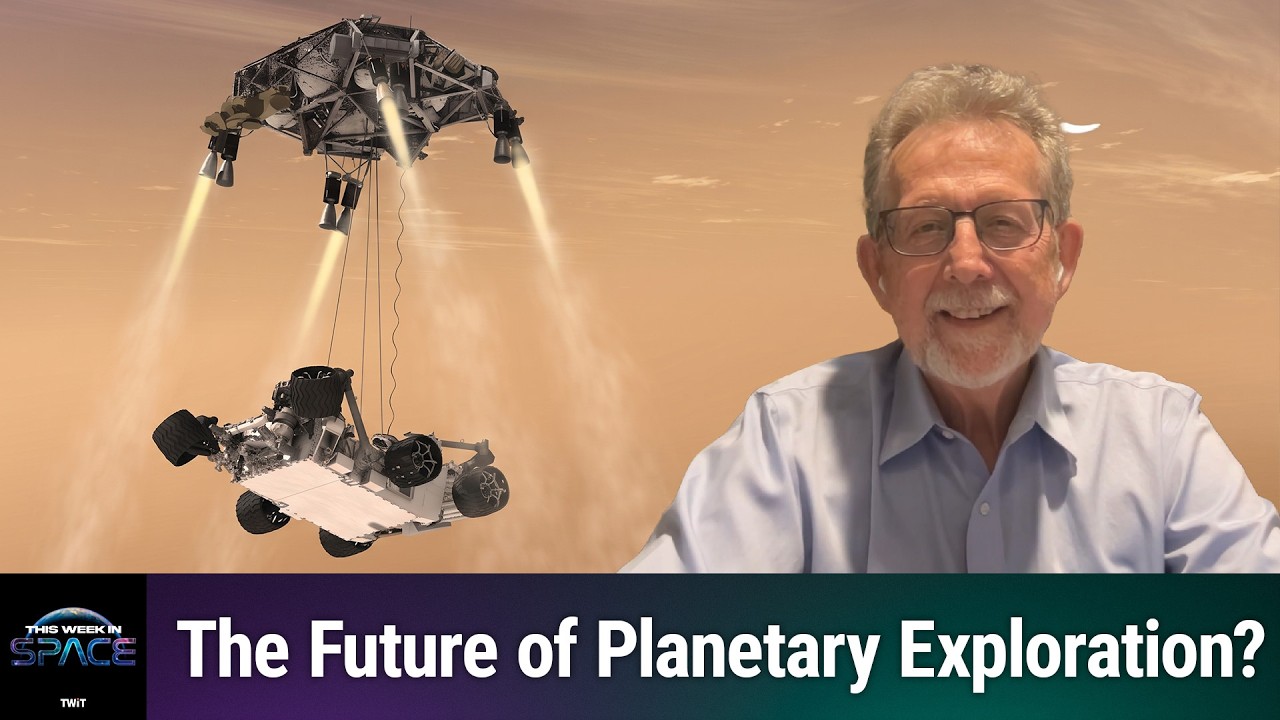
On Episode 235 of This Week in Space, hosts Tariq Malik and Rod Pyle sat down with Dr. Jim Green, the former Chief Scientist of NASA, to discuss the past, present, and future of these robotic voyagers. Their conversation provided a profound look at how these machines have redefined our understanding of the universe and why the search for extraterrestrial life is no longer a matter of "if," but "when."
The Robotic Vanguard: Exploring the "Dark and Scary"
For decades, Dr. Jim Green stood at the helm of NASA’s scientific agenda, overseeing missions that pushed the boundaries of technology and human knowledge. As he explained to Malik and Pyle, the primary role of robots in space is to act as the vanguard.
"Robots have, and always will, be the first to go to the dark and scary places in space," Dr. Green noted. These environments—be they the radiation-blasted surface of Europa, the crushing depths of Venus, or the frigid, shadowed craters of the lunar poles—are often lethal to human physiology. Robotic probes, however, are immune to the psychological toll of isolation and the biological fragility that limits human endurance.
The Evolution of Robotic Capability
The journey began with simple flyby missions, but has evolved into sophisticated, autonomous operations. From the early Mariner probes to the complex, self-driving capabilities of the Perseverance rover on Mars, we have moved from remote-controlled observation to artificial intelligence-driven exploration. These robots are now capable of identifying geologic samples of interest, navigating treacherous terrain, and performing complex chemical analyses that would have required a fully equipped laboratory on Earth just thirty years ago.
A Chronology of Discovery
To understand where we are going, we must look at the trajectory of our mechanical proxies.
- 1960s-70s (The Era of Reconnaissance): The Mariner and Viking programs marked our first serious attempts to look at other worlds. These missions were foundational, providing the first clear imagery of Martian topography and demonstrating that Venus possessed an atmosphere of extreme pressure and heat.
- 1990s-2000s (The Era of Mobility): With the arrival of Sojourner (the Mars Pathfinder rover), the paradigm shifted. We were no longer just looking; we were driving. The Spirit and Opportunity rovers, originally intended for 90-day missions, lasted for years, turning into the "geologists" that confirmed water once flowed on the Martian surface.
- 2010s-Present (The Era of Sophistication): Missions like the Mars Science Laboratory (Curiosity) and the Perseverance rover represent a quantum leap. Equipped with lasers (SuperCam), advanced drilling rigs, and high-resolution imaging suites, these robots are searching for biosignatures—the chemical breadcrumbs that might prove life once existed elsewhere.
Supporting Data: The Search for Life
Dr. Green’s tenure at NASA was defined by an unwavering commitment to astrobiology. He emphasized that the data we are receiving from our current fleet is unprecedented.
The detection of methane plumes on Mars, the confirmation of subsurface oceans on Enceladus (a moon of Saturn) and Europa (a moon of Jupiter), and the mapping of complex organic molecules on distant asteroids provide a compelling dataset. These findings suggest that the building blocks of life are not unique to Earth; they are, in fact, abundant throughout the solar system.
"We’re quite likely to find life off-Earth in the near future," Dr. Green stated during the podcast. This is supported by the sheer volume of "habitable zones" we have identified. When we consider the thousands of exoplanets discovered by the Kepler and James Webb Space Telescopes, the statistical probability that life exists elsewhere shifts from a philosophical question to a scientific certainty.
Official Perspectives and Future Implications
The implications of these robotic missions extend far beyond mere data collection; they are the precursors to human arrival.
The Artemis Program and Beyond
NASA’s Artemis program, which aims to return humans to the moon, relies heavily on the work done by Lunar Reconnaissance Orbiter (LRO) and other robotic precursors. These machines have mapped water ice concentrations in the lunar south pole, a resource that will be critical for generating oxygen and fuel for future deep-space missions.
Dr. Green advocates for a "partnership" model: robots go first to secure the site and verify the environment, and humans follow to perform the nuanced, complex tasks that only human intuition can navigate. This synergy between human explorers and robotic assistants is the cornerstone of the "New Space Age."
Economic and Educational Impacts
The excitement surrounding these missions has sparked a surge in public interest, reflected in the growing demand for high-quality space-themed education and hobbyist hardware. For instance, the recent release of the Estes SpaceX Falcon 9 scale model—a detailed, launchable recreation of the industry-standard launch vehicle—highlights the democratization of space interest.
At a retail price of $149.99, these models serve as more than toys; they are educational tools that teach aerodynamics and engineering principles. By making the hardware of the current space race accessible to the public, companies like Estes are helping to inspire the next generation of engineers and scientists who will eventually build the robots of the future.
The Road Ahead: What’s Next?
As This Week in Space hosts Tariq Malik and Rod Pyle frequently discuss, we are in a period of rapid acceleration. The next decade will likely see:
- Sample Return Missions: Bringing Martian soil back to Earth to be analyzed by the most sensitive equipment we possess.
- Ocean World Explorers: Missions specifically designed to drill through the icy crusts of moons like Europa to search for hydrothermal activity.
- Autonomous Swarms: Using clusters of small robots to explore caves and lava tubes on the Moon and Mars, places that would be too dangerous for a single, expensive rover.
Conclusion: A Legacy of Curiosity
The mission of organizations like NASA, and the commentary provided by experts like Dr. Jim Green, serves a fundamental human need: to explore. Whether it is a small robot crawling over the red dust of Mars or a sophisticated telescope peering into the dawn of time, these tools are the extension of our senses.
As we look toward the future, the work of these robotic pioneers remains the most critical investment we can make. They are our scouts, our proxies, and our heralds. They go into the dark and scary places so that one day, we might walk there with the confidence of those who have already paved the way.
For those interested in following these developments, This Week in Space continues to provide a weekly deep dive into the industry’s most pressing questions. From the race to the Moon to the eventual colonization of Mars, the conversation is only just beginning. As Dr. Green suggests, keep your eyes on the horizon—the answer to whether we are alone in the universe may be just one robotic mission away.
For more information on the current state of space exploration and to stay updated on the latest launches and discoveries, tune into the weekly episodes of "This Week in Space," hosted by Tariq Malik and Rod Pyle, available on all major podcast platforms.