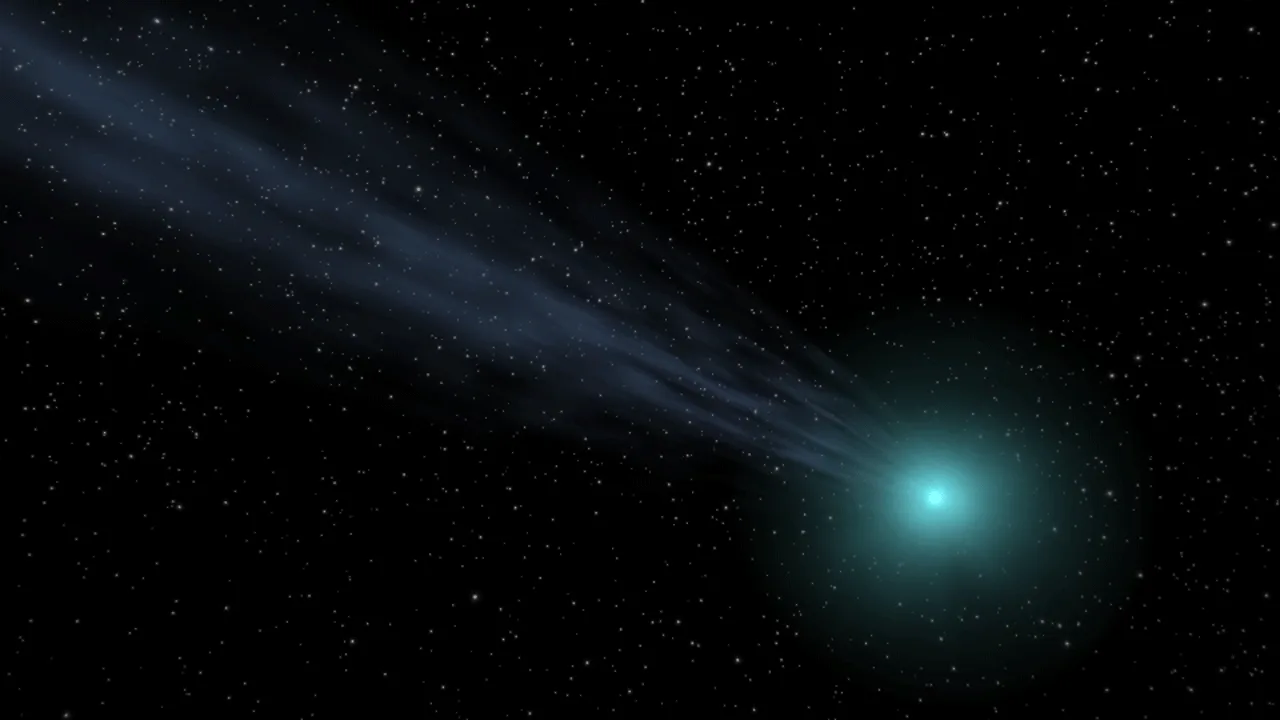
In the vast, frigid reaches of our solar system, between the lumbering orbits of Jupiter and Neptune, reside the "Centaurs"—enigmatic, icy wanderers that bridge the gap between distant, frozen primordial bodies and the short-period comets that occasionally grace our inner solar system. For decades, astronomers have theorized about how these inactive objects transition into active, tail-bearing comets, but the process has remained largely theoretical—until now.
Recent observations of a specific Centaur, 450P/LONEOS, have provided scientists with a "smoking gun." Researchers, led by planetary scientist Charles Schambeau of the University of Central Florida, have successfully documented the precise moment an inert Centaur begins its transformation into a Jupiter-family comet. This rare observation offers an unprecedented window into the evolution of small solar system bodies and the thermal processes that govern their behavior.
The Nature of the Centaur: A Missing Link in Solar System History
To understand the significance of 450P, one must first understand its classification. Centaurs are minor planets that occupy unstable orbits in the giant planet region. It is widely accepted in the astronomical community that these objects are refugees from the Kuiper Belt, the vast ring of icy debris orbiting beyond Neptune.
Gravitational tugs from the gas giants, or occasionally the passing influence of a nearby star, can nudge these objects out of their stable Kuiper Belt homes and into the chaotic inner solar system. Because their orbits cross the paths of Jupiter, Saturn, Uranus, and Neptune, their trajectories are inherently unstable. Over millions of years, they are either ejected from the solar system entirely or pushed toward the sun, where they eventually become "Jupiter-family comets"—short-period comets with orbital cycles of less than 20 years, deeply influenced by the gravity of our solar system’s largest planet.
450P/LONEOS, first identified in 2004 by the Lowell Observatory Near-Earth Object Survey (LONEOS), serves as the quintessential example of this evolutionary path. Currently possessing an orbital period of 22 years, it sits on the cusp of becoming a true Jupiter-family comet, providing a "missing link" that researchers have been desperate to study in real-time.
A Chronology of Discovery: From Inert Rock to Active Comet
The transformation of 450P was not an overnight event, but rather a slow, calculated process of thermal activation. The chronology of its recent behavior began in earnest around 2019, as the object approached its perihelion—the point in its orbit where it is closest to the sun.
The 1992 Catalyst
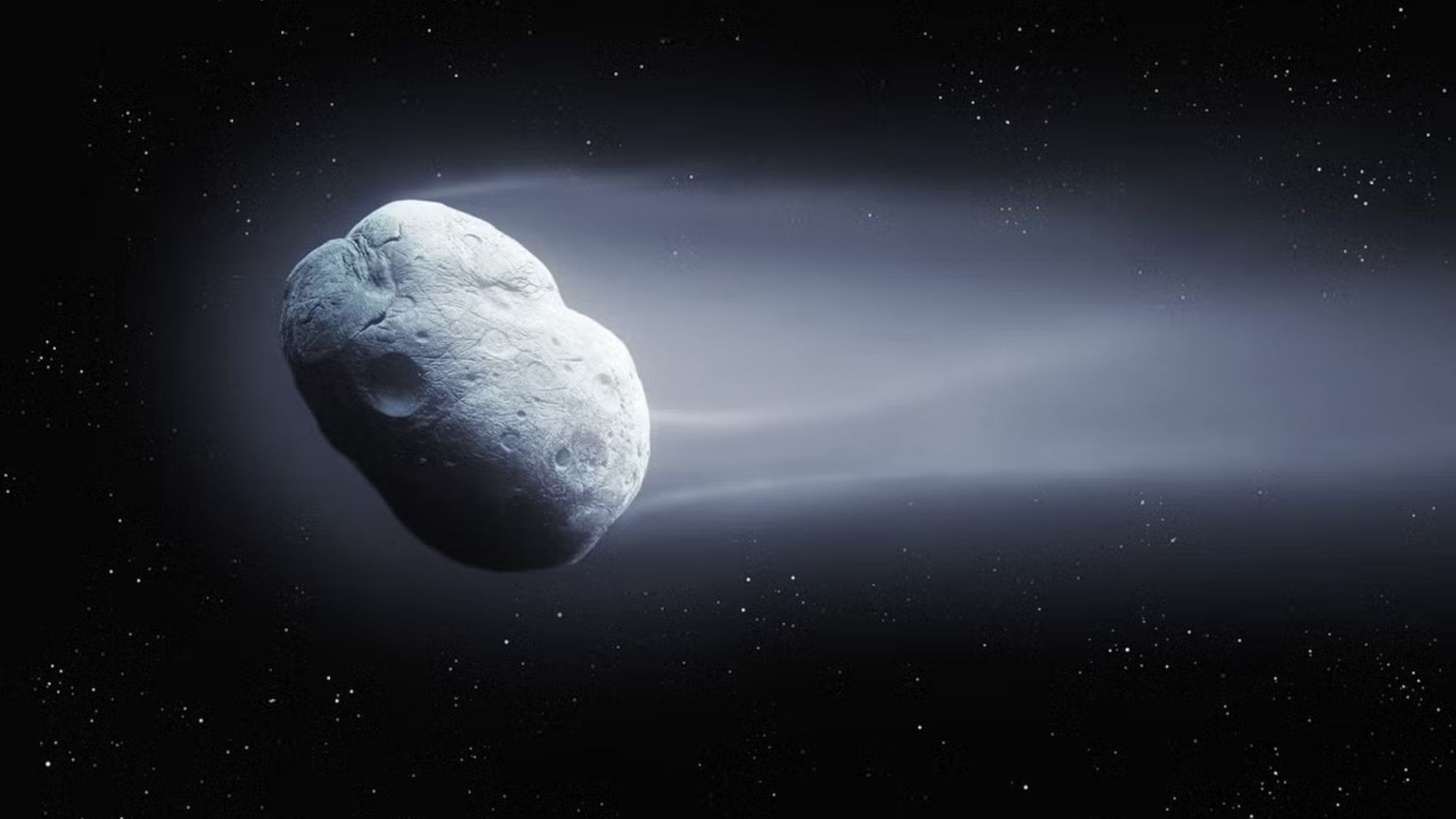
By back-calculating its orbital history, astronomers determined that 450P’s current trajectory was set by a close encounter with Saturn in 1992, passing within a mere 2.9 million miles (4.6 million kilometers). This gravitational interaction significantly shortened the object’s orbit, pulling it into a region where solar heating would eventually become intense enough to trigger outgassing.
The 2019–2024 Observation Window
Between 2019 and 2024, utilizing the Gemini North telescope in Hawaii, Schambeau’s team monitored the object’s brightening. They observed the formation of a "coma"—a glowing, diffuse cloud of gas and dust that envelops the nucleus. As 450P moved toward its August 2024 perihelion, the increased solar radiation began to penetrate the object’s surface layers.
This transition marks a critical juncture. While 450P is not yet a Jupiter-family comet by the strict definition of its orbital period, it is behaviorally indistinguishable from one. Should it receive one more gravitational nudge from a giant planet—a likely occurrence given its current orbital path—it will be fully integrated into the Jupiter-family population.
Supporting Data: The Chemical Fingerprints of Evolution
The most revealing data regarding 450P came from the James Webb Space Telescope (JWST). By analyzing the light reflected from the burgeoning coma, the team identified the specific substances being "cooked" out of the nucleus.
Carbon Dioxide vs. Water Vapor
Surprisingly, the JWST data revealed a distinct lack of water vapor. Instead, the coma was dominated by carbon dioxide gas. This discovery is pivotal: at 450P’s current distance from the sun, the object is simply too cold for water ice to sublimate (transition from solid to gas) in significant quantities. The presence of carbon dioxide indicates that this volatile gas is the primary driver of the object’s current activity.
The Role of Crystalline Ice
Perhaps most fascinating is the detection of solid particles of crystalline water ice. In pristine Kuiper Belt objects, water ice is typically found in an "amorphous" state—a disordered, porous structure that traps gas within its lattice. As 450P nears the sun and experiences increased solar heating, this amorphous ice undergoes a phase change, reorganizing into a structured, crystalline form.
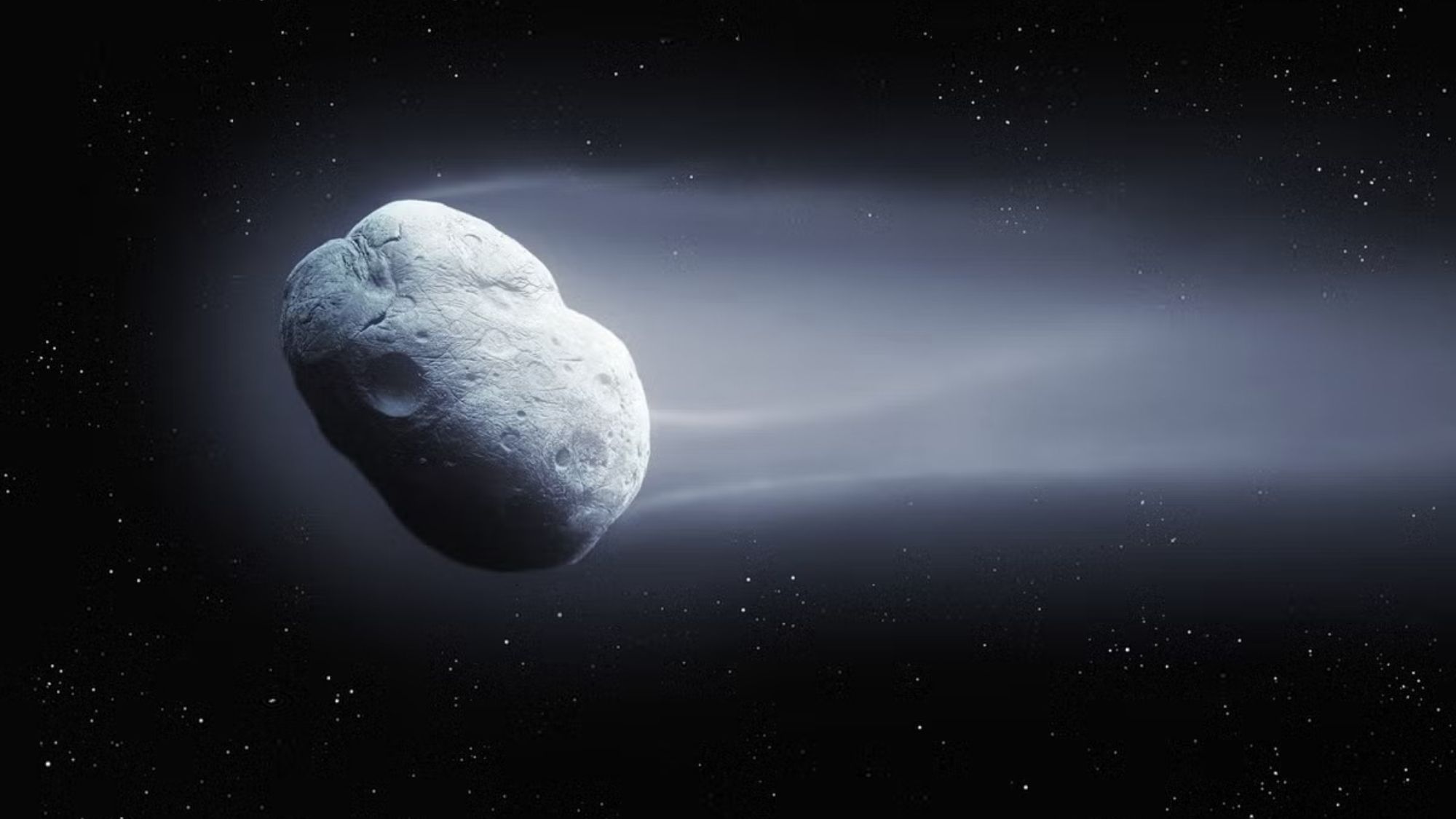
This transition acts like a pressure release valve. As the ice structure shifts, trapped gases are released, dragging dust and ice particles into space and creating the coma. The presence of this crystalline ice serves as a physical record of the "thermal processing" the object is currently undergoing, effectively telling the story of its transition from a deep-space relic to an active comet.
Official Perspectives: The Scientific Implications
In a formal statement, Dr. Charles Schambeau emphasized the importance of 450P as a laboratory for planetary evolution. "Studying objects like 450P helps us connect different stages of small-body evolution," Schambeau noted. "By studying their activity, surface properties, and volatile composition, we can learn how comet nuclei change as they move inward through the solar system, how long they preserve primitive ices, and what physical processes turn an otherwise quiet icy body into an active comet."
The research highlights a fundamental scientific truth: comets are not just "dirty snowballs" that arrive fully formed; they are dynamic entities that change physically and chemically as they interact with the sun’s influence. 450P is a living specimen of this transition, allowing scientists to see how the solar system preserves material from 4.5 billion years ago before the sun’s warmth eventually strips that history away.
Looking Forward: Why 450P Matters
The study of 450P/LONEOS, which has been accepted for publication in the Planetary Science Journal and is currently available on the arXiv pre-print server, is a landmark in small-body astronomy. Only a tiny fraction of known Centaurs have ever exhibited signs of activity, making this specific perihelion passage a "once-in-a-career" opportunity for researchers.
The Future of Small-Body Research
The findings from the JWST and Gemini North telescope provide a roadmap for future observations. By understanding that carbon dioxide, rather than water, is the initial trigger for cometary activity in the outer solar system, astronomers can better target their observations of other Centaurs. This knowledge refines our models of how volatile substances are distributed throughout the solar system and how they contribute to the formation of planetary atmospheres and potentially the delivery of organic compounds to terrestrial planets.
As 450P continues its journey, it remains under the watchful eyes of the global astronomical community. It is a celestial traveler caught in a moment of change, serving as a bridge between the cold, static archives of the outer solar system and the volatile, active bodies that define the inner solar system’s history. Through 450P, we are not just looking at a rock in space; we are witnessing the very mechanics of solar system evolution in motion, a process that has been ongoing since the dawn of our sun.